Committee advances tax-incentive pilot to test four-day workweek
Loading...
Summary
The Committee on Housing and Economic Development cleared language for LD 1865, a tax-incentive pilot encouraging businesses to try a four-day workweek; analysts and the bill sponsor said tax-review issues were resolved and an external institute will collect data at no cost to the state.
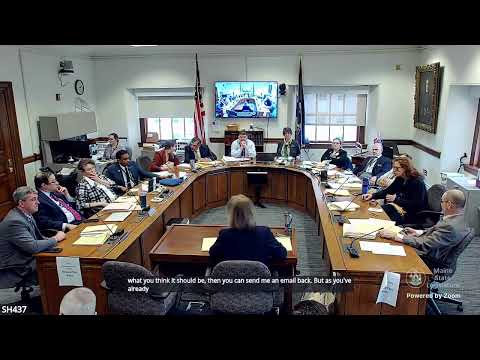
Sen. Chip Curry opened the work session and the committee conducted an initial language review of LD 1865, a bill to create a tax-incentive pilot encouraging businesses to adopt a four-day workweek. Analyst Sophie Patton told the committee the bill had been routed for tax-expenditure review but reviser and tax-committee consultations showed the pilot structure obviated a full tax-expenditure review, clearing the draft for reporting out.
Sophie Patton, the committee analyst, summarized the bill: "This is a result to create a tax incentive pilot project to encourage business to adopt a 4 day work week." She flagged a removal of an earlier "notwithstanding" clause in section 2 that previously referenced Title 36 as having created confusion; that removal, she said, had addressed concerns raised by the reviser's office and Maine Revenue Service staff.
Sen. Rick Bennett, who identified himself as the bill sponsor, said he had worked with the administration on the language and urged colleagues to support the measure when it reaches the floor. "We also have, the folks down at the Ruh Institute are keenly interested in working with the Dean of CD and collecting this data and willing to do that with no cost to the state," Bennett said.
Committee members asked only clarifying questions; no formal vote was recorded in the session transcript. The committee chair indicated the bill can be moved forward for reporting out, with final Ross (reviser) edits and the usual follow-up materials to be sent electronically to members.
If the committee reports the bill out, the next steps are the reviser's final formatting and any required fiscal note before the measure moves to the full chamber for consideration.