Greening partners, CAL FIRE urge LAUSD to streamline approvals as millions in grants await projects
Loading...
Summary
Green Schoolyards America and CAL FIRE told LAUSD's committee that contract templates, fragmented approvals and expensive environmental testing slow third-party greening projects despite roughly $55 million in state and federal awards to LAUSD campuses since 2022.
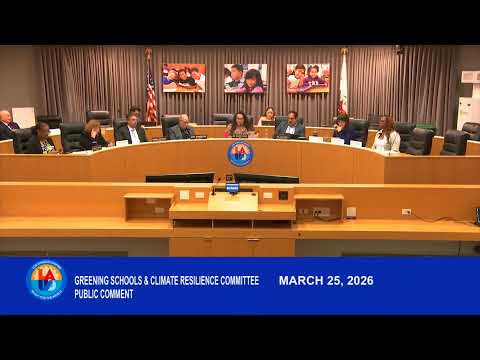
Representatives from Green Schoolyards America and CAL FIRE told the LAUSD Greening Schools and Climate Resilience Committee that procedural hurdles and design standards are reducing the pace and scale of schoolyard greening projects.
"The agreement that is used for third party led greening projects is not appropriate," said a presenter from Green Schoolyards America, and CAL FIRE's Henry Herrera added that testing and remediation requirements frequently raise costs and extend timelines. Herrera said CAL FIRE has "invested approximately $55,000,000 across 51 LAUSD campuses since, 2022," and he outlined recent and pending grant rounds including a $13,500,000 Aliso Canyon solicitation and additional state funds expected this fall and in 2027.
Presenters and CAL FIRE officials described common project losses of scope when escalating costs force scope reduction: several example campus plans were pared down because construction-cost increases raised budgets, one project's planned removal of tens of thousands of square feet of asphalt and large tree plantings were significantly reduced in the final plan.
Speakers recommended practical changes: create a greening-specific agreement template with clear partner roles and milestone payments; proactively test sites so grantees can budget remediation; revise district technical standards to allow nature-based details (for example, minimizing concrete edging in forested areas); and designate a single LAUSD decision-maker or a streamlined approval path to reduce repeated reviews.
District staff said they have begun several of these steps, including a tiger team to work with greening partners, allocating $3,000,000 to help cover district fees for externally funded projects, and updating lead-paint and asphalt-removal protocols to reduce costs. Partners recommended expanding that work and adding trained inspectors and milestone-based reviews to shorten project timelines.
Committee members responded positively to practical guidance and asked staff to share agreement templates and implementation timelines. Presenters said they will provide example templates (one used with Sacramento City Unified) and recommended bringing outside landscape and greening specialists into any standards update.