Get Full Government Meeting Transcripts, Videos, & Alerts Forever!
Get email alerts on the Audits topic
No spam. Unsubscribe anytime.
Auditors report no material weaknesses in bond funds; oversight panel presses for broader performance scope and more transparency
Summary
Auditors gave the West Contra Costa Unified bond program an unmodified financial opinion and a performance audit with no findings for FY 2024–25, but committee members read written concerns about past transparency and asked the auditors and district to expand the audit scope and share the work scope and appendices before finalizing the draft report.
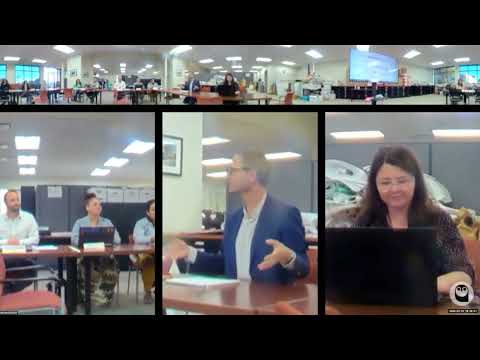
Hugo Luna, the district’s financial auditor, told the Citizens’ Bond Oversight Committee on April 15 that he issued an unmodified opinion on the fiscal‑year financial statements for Measure D (2010), Measure E (2012) and Measure R (2020), saying the reports “present fairly in all material respects” the bond building fund balances and activity for the year ended June 30, 2025.
Nathan Edelman, who led the performance audit for Aide Bailey, said the draft performance report likewise identified no findings and that auditors tested a representative sample of invoices, contracts and approvals to verify that expenditures complied with Proposition 39 allowability rules. “We issued an unmodified opinion with no material weaknesses identified, no significant deficiencies to report, and no material noncompliance,” Luna said.
The committee pressed auditors on what “no findings” signifies for a bond program of this size and whether the performance audit looks at the program’s overall health, staffing and management. “The state audit guide is the minimum requirement,” Edelman said, adding that auditors can perform an expanded scope if the committee or board requests it in the work scope. He described the audit process: large items above a materiality cutoff are tested in full; smaller items are randomly sampled, and any exception triggers expanded testing.
Committee member and former CBOC member Don Gosling’s written comments were read into the record by a committee member, asserting that past committee members and other sources were not solicited and urging greater transparency. “We were routinely lied to by the facilities manager,” the comments said, urging auditors to reach beyond management when appropriate. Edelman replied that the audit team requests accounting records and supporting invoices directly and that appendices in the draft show the transactions and contracts examined; he also said comments from the committee could be incorporated before the report is finalized.
The auditors explained how the documents are requested and provided: they obtain the district’s accounting records and support for selected sample items and say there is no acceptable substitute if support is missing. Hugo Luna clarified that Fund 21 is the district building fund that includes bond measures plus other projects; the auditors reconcile measures D/E/R within that fund but do not audit every non‑bond project just because it appears in Fund 21.
The committee asked the district to provide the performance audit work scope and the appendices that document which transactions were tested; staff committed to follow up with the requested materials. The performance audit presented Thursday was explicitly labeled a draft so the committee could offer comments before the auditors remove the watermark and issue a final report.
Next steps: auditors will consider committee comments before finalizing the performance audit, and district staff agreed to provide the work scope and required documentation to clarify what was requested of management and what the auditors examined.