Get Full Government Meeting Transcripts, Videos, & Alerts Forever!
Get email alerts on the Economic Development topic
No spam. Unsubscribe anytime.
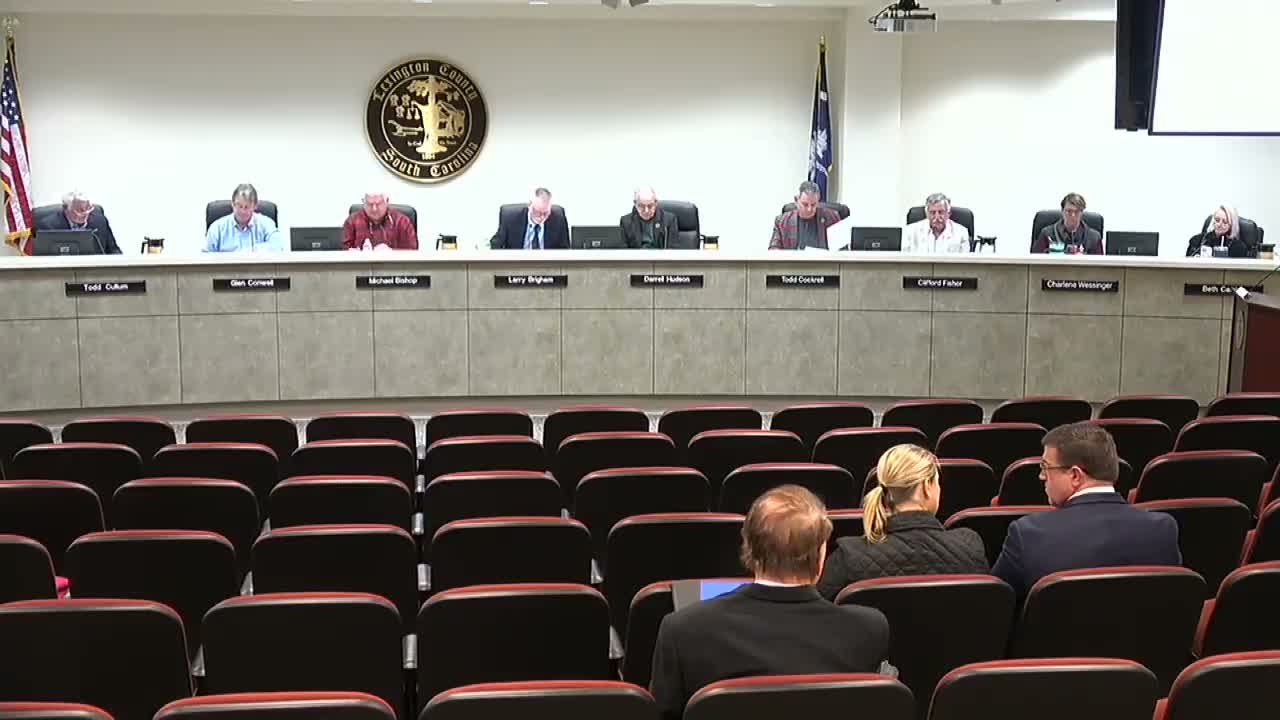
Lexington County Council unanimously approves three ordinances to convey property and extend industrial-park benefits
Summary
The Lexington County Council approved three third‑reading ordinances Dec. 9 that authorize a property conveyance to Cason Development Group LLC and fee/credit agreements to make industrial-park benefits available to projects identified as Project Badger and Project Watch.
The Lexington County Council on Dec. 9 approved three ordinance measures on third and final reading that clear the way for a real‑estate conveyance and two industrial-park incentive agreements.
The council unanimously approved ordinance 25‑16, authorizing conveyance of real estate from Lexington County to Cason Development Group LLC. Chairman Cullum called for the final vote after a motion and second; the clerk recorded an affirmative roll call from all members.
Council also approved ordinance 25‑18, which the meeting record cites as being authorized under “chapter 44 of Title 12 and chapter 1 of Title 4 of the South Carolina Code of Laws of 1976, as amended.” The ordinance authorizes execution and delivery of a fee agreement among Lexington County, US Venture Incorporated (previously identified in the agenda as Project Badger) and Gateway 4 LLC to make multi‑county industrial and business park benefits available to the project.
Separately, the council approved ordinance 25‑19, a special source revenue credit agreement between Lexington County and Hoffman Columbia LLC (previously identified as Project Watch) to extend multi‑county industrial‑park benefits. All three ordinances passed on third and final reading by unanimous roll call.
Why it matters: The fee and special source revenue credit agreements are the legal mechanism counties often use to make infrastructure or tax‑related incentives available to industrial or commercial projects; the council cited state code authority in the ordinance text. The ordinances move the identified private projects toward eligibility for those local incentives while the county proceeds with required contracting and administrative steps.
What’s next: Officials recorded the approvals and did not elaborate further on implementation timelines at the meeting. Any subsequent contract execution, site work, or incentive disbursement will be subject to the county’s procurement and implementation processes.