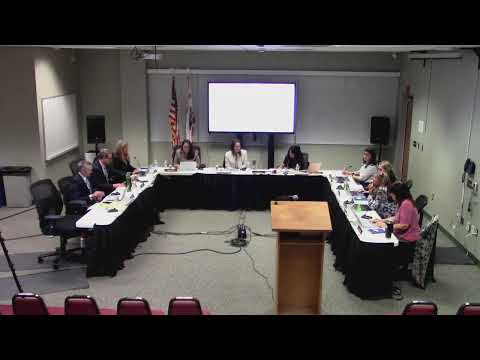
Carlsbad Unified trustees debate LCAP assessment measures, targets and student supports
Loading...
Summary
At a March 25 study session, the Carlsbad Unified School District Board discussed changing LCAP success indicators — including how the district measures student growth, whether to explore alternate screeners and how to capture access to advanced and career pathways — and directed staff to return with revised wording, options and cost estimates in April–May.
The Carlsbad Unified School District Board of Trustees spent its March 25 special meeting reviewing community feedback and debating revisions to the district’s Local Control and Accountability Plan, focusing on how the district measures student growth, how it defines access to advanced coursework and career pathways, and what supports (counselors, MTSS staff) should be budgeted.
Superintendent Dr. Brockett opened the session by noting the LCAP’s role as a three‑year plan and saying the board would be asked to approve goals in April and actions with cost estimates in May. “The LCAP is a 3 year plan that describes our goals, actions, services, and expenditures to support positive student outcomes,” he told trustees, adding staff would return with recommended revisions to success indicators and associated costings.
Public commenters urged caution and clarity. Shawna Hurst, a district resident, told the board she repeatedly heard concerns about counselors, class size and MTSS and urged clearer explanations of funding sources and durations; she suggested, “If you couldn't afford the actual counselors, what about classified support for the counselors” to free counselor time for students. Jamie Rushing, a kindergarten facilitator and parent, warned that moving to full‑day kindergarten without added staff or space “will undoubtedly increase the class size ratio for our youngest students” and could disrupt families who already made enrollment choices under the district’s current model.
Much of the trustees’ discussion centered on two related questions: is the current measurement approach (Renaissance STAR growth windows) the right districtwide screener, and how should success indicators be written so they capture meaningful, progressive growth rather than noisy year‑to‑year shifts? Several trustees said STAR is a useful universal screener but asked staff to present alternatives or reframed metrics — for example, measures that show students moving out of low‑achievement/low‑growth quadrants rather than only reporting a fall‑to‑spring growth rate. Staff replied STAR is computer‑adaptive and administered three times a year, but agreed to return in April with proposed alternate wording and options for capturing progressive growth.
Staff also recommended lowering some percent‑growth targets tied to state assessments (CAASPP/CAST) to levels the district considers attainable based on statewide and peer‑district data. Trustees debated whether lowering targets equates to lowering standards; some argued for ambitious goals to close achievement gaps while others favored sustainable, measurable increments.
On college/career readiness metrics, trustees debated whether the advanced‑learners indicator should measure students enrolled in honors/AP/community‑college classes, students who complete those courses, or both. Staff said about 49% of high‑school students currently access work‑based learning opportunities; trustees asked staff to return with historic data, and with options to report both enrollment (access) and successful completion or a paired data approach that distinguishes academic advanced coursework from CTE pathway completers.
Trustees also asked staff to sharpen how student well‑being and safety are measured. Staff described a Kelvin student perception survey used to track student emotional and social indicators; some trustees said the board needs an additional, more targeted success indicator on student safety and behavior (to track bullying, vaping, bathroom incidents and disrespect toward adults) and requested clearer metrics and evidence on discipline practices and their effectiveness. Staff agreed to develop options and provide site‑level and grade‑span disaggregation where feasible.
The board took two formal, procedural votes during the meeting: it approved the meeting agenda and, separately, received the teachers’ association (CUDA) reopeners for consideration; both motions passed 5–0. Trustees directed staff to return at upcoming meetings with revised success‑indicator language, baseline data where missing, and cost estimates for ongoing counselor/MTSS support and other actions discussed.
The special meeting adjourned at 9:51 p.m.; trustees scheduled the next LCAP checkpoint and further action items for April and May.