Get Full Government Meeting Transcripts, Videos, & Alerts Forever!
Get email alerts on the Land Development Manual topic
No spam. Unsubscribe anytime.
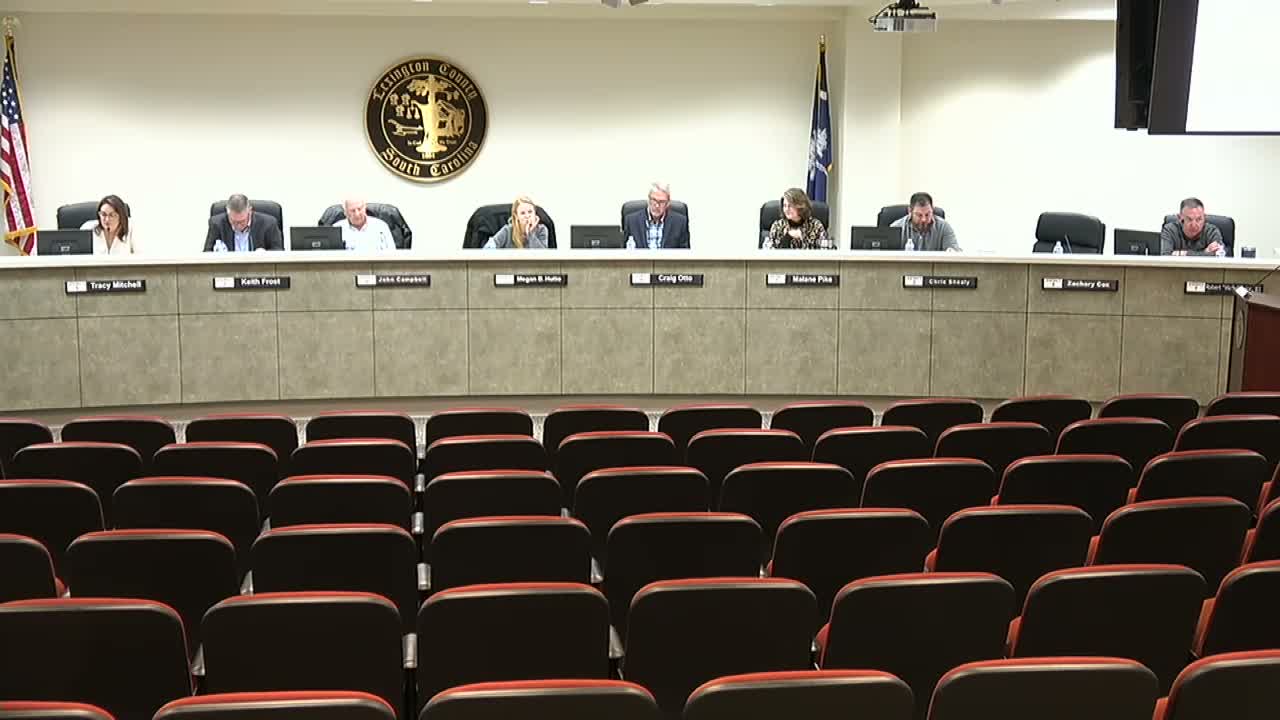
Planning commission recommends stormwater text to council, urges site-sensitivity checklist and Lake Murray protections
Summary
After a lengthy debate over acreage thresholds and enforcement, the Lexington County Planning Commission voted to forward proposed Land Development Manual stormwater changes to county council with four conditions: add a site-sensitivity checklist, reassess maximum-size policy for commercial projects, consider special protections for Lake Murray, and evaluate stop-work order fee policy.
The Lexington County Planning Commission voted to recommend draft amendments to the county's Land Development Manual addressing disturbance thresholds and stormwater best management practices to county council, but added a set of conditions to guide further work.
Vice Chairman Frost moved the recommendation, asking council to further evaluate site-characteristics in addition to size limits, whether a maximum acreage is appropriate for commercial projects, protections for Lake Murray and its contributing creeks, and the county's fee policy tied to stop work orders; another commissioner seconded the motion and the commission approved it by voice vote.
Why it matters: The proposed text would change how many acres may be disturbed before additional design or review is required and adjust enforcement for improperly installed BMPs — issues that affect both environmental risk and the practical pace of large development projects. Commissioners framed the discussion as a balance between protecting sensitive watersheds and maintaining the county's attractiveness to economic development.
What staff presented: Planning staff said the stormwater advisory board recommended clarifications, including an explicit definition for ‘‘impervious area,’’ language that prevents residential projects from advancing past 75 acres at any given time, and a requirement that expanded master plans include additional BMPs and an 80% stabilization requirement before advancing disturbance. Staff also outlined a proposed enforcement approach that would allow corrective action plans to begin before formal approvals to speed remediation.
Key debates: - Stop-work authority: Several commissioners said staff must keep the ability to issue an immediate stop work order for improperly installed BMPs; advisory-board members suggested issuing a notice of violation with a seven-day cure period as an initial step. "I think you need the ability to say stop immediately," a commissioner said during the discussion. - Acreage thresholds vs. site sensitivity: Multiple commissioners argued numeric caps (25/50/75) are arbitrary and urged a sensitivity checklist that would consider slope, proximity to surface waters, soils, and other site conditions when requiring additional BMPs. "If you're looking to change the speed of growth, then maybe the acreage would play more into it. But I think I see the acreage as an arbitrary number," one commissioner said. - Lake Murray protections: Commissioners urged stronger measures for the Lake Murray watershed. A commissioner asked staff to explore overlays or other targeted controls to protect the lake and its direct tributaries.
What the commission requested of council: The motion forwarded the draft language with four specific items for council consideration: (1) develop a site-characteristics/sensitivity checklist in addition to size-based thresholds; (2) further evaluate whether a maximum acreage is appropriate for commercial projects; (3) consider targeted protections for Lake Murray and its contributing creeks; and (4) evaluate the stop work order fee and when a fee should or should not be assessed.
Next steps: Staff will take the commission's recommendations to county council for further consideration and for any additional ordinance drafting or revisions. The planning commission will receive further reports as council and staff continue to refine the language.