Get Full Government Meeting Transcripts, Videos, & Alerts Forever!
Get email alerts on the Budget Lcap topic
No spam. Unsubscribe anytime.
La Mesa–Spring Valley board hears LCAP update and a draft budget showing an $11 million unrestricted shortfall
Summary
District staff presented the Local Control and Accountability Plan annual update and a draft 2025–26 budget that projects an approximately $11 million unrestricted deficit, driven largely by rising special-education costs and increased insurance and benefit expenses; staff said a $2.7 million reduction is needed to meet minimum reserve policies.
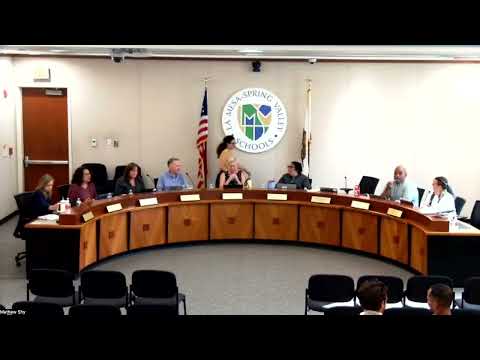
At its June 10 meeting, La Mesa–Spring Valley School District staff delivered the annual Local Control and Accountability Plan update and walked the board through planning assumptions for the proposed 2025–26 budget.
The LCAP presentation summarized three district goals — achieve, engage and equip — and highlighted instructional priorities, including a continued focus on comprehension of informational text, expanded VAPA work, collaboration release time for teachers and training for paraprofessionals. The presenter said the district will pilot a new elementary math curriculum and relaunch an early-literacy intervention TOSA position for next year.
Finance staff then reviewed the budget outlook and multiyear projections. They said the district is contending with declining enrollment and attendance, rising special-education expenditures and higher insurance and benefit costs. A staff presentation estimated a year-over-year special-education cost increase of about $3.5 million and projected an unrestricted deficit of roughly $11,000,000 in 2025–26.
“Some of the planning factors that are going into our multiyear projection include rising PERS and health premiums and increased special-ed expenditures,” a district budget presenter said. The presentation noted a planning assumption of roughly a 7.5 percent increase in health/welfare benefits and specifically called out AB 218 (a change to reporting deadlines that removed a statute of limitations) as a statewide factor that has driven up liability insurance costs for school districts.
Staff said the district will need about $2.7 million in reductions to meet a 3 percent minimum reserve by year three and that further reductions may be required before the first interim report if the state budget changes materially. The presenter emphasized that some funding is restricted and that one-time funds may alter projections once the state budget is finalized.
Board members asked clarifying questions about attendance gains and the mechanics of the local-control funding formula. Staff said the district is using a three-year rolling average for LCFF calculations while staffing projections use current-year enrollment estimates.
The district did not adopt the 2025–26 budget at the meeting; staff said final adoption is scheduled for a later board meeting after any necessary adjustments tied to the state budget.
What happens next: staff will continue refining projections and return with the first interim report in December and any material budget revisions required by the county office of education.