Get Full Government Meeting Transcripts, Videos, & Alerts Forever!
Get email alerts on the Human Resources topic
No spam. Unsubscribe anytime.
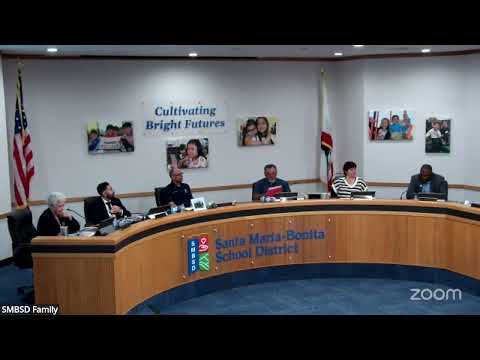
Santa Maria Bonita board approves new site coach, academic support teacher model after lengthy teacher objections
Summary
After hours of public comment from teachers and union representatives, the Santa Maria Bonita School District board voted to approve new job descriptions that reallocate instructional coaching and intervention roles into a site coach and academic support teacher model; administrators said staffing totals would not decrease and allocations would be driven by a weighted student-need formula.
The Santa Maria Bonita School District board voted to approve new job descriptions that replace the current mix of instructional, ELD and RTI coaches with a site coach at every campus and 1–3 academic support teachers (ASTs) per school, a proposal administrators said is intended to focus resources where student need is greatest.
District assistant superintendent Wainchula Changbu framed the change around student achievement data, saying roughly "3 out of 4 students here ... are not meeting grade level literacy expectations," and presented a formula that weights indicators such as English learner counts, ELPAC growth, SBAC results and newcomer students to determine AST allocations. Changbu told trustees the district expects to preserve the current total number of specialized positions (about 64) and that matching funds could increase staffing to as many as 70 positions in high-need schools.
The proposal drew sustained opposition from classroom teachers, coaches and union leaders who said the rollout excluded the educators who do the day-to-day work. "The board allows district leaders to make decisions about us without us," said Eric Voss, an eighth-grade history teacher and district leader, during public comment. Teachers argued the district had not bargained changes that affect workloads and assignments and urged the board to pause approval until implementation details and protections for current staff were agreed with labor partners.
SMEA president Kristen Lore told the board the process felt like an "administrative ambush," arguing that changes to duties, caseloads and evaluation procedures are mandatory subjects of bargaining and that the district had gone beyond the parameters of existing memoranda. Several classroom coaches and instructional staff—citing student gains tied to current coaching structures—asked trustees to preserve differentiated roles for ELD, RTI and instructional coaching rather than consolidating them.
District presenters said the allocation committee used a transparent, data-driven approach. They described three AST staffing bands (one, two or three FTEs) determined by weighted site scores and said every site would receive a site coach. The administration also described an alternative transfer process and a tentative MOU that had been discussed with the union regarding how vacancies and transfers would be managed if the model is implemented.
Trustees discussed concerns about communication, space for itinerant staff, substitute coverage and the timing of the transfer process. Trustee Valencia moved to approve the job descriptions; a second was recorded and the motion passed by roll call.
The board directed staff to proceed with HR posting and implementation steps for next school year, with district leaders stating they would monitor rollout, provide opportunities for feedback and refine the model as data from implementation cycles become available.
The vote marks a significant restructuring of how instructional support is organized in the district; officials said next steps include filling positions via the transfer process and working with labor partners on implementation details.