
Merced USD outlines Vision 2030 and sixth‑grade transition to career‑pathway middle schools
Get AI-powered insights, summaries, and transcripts
Sign Up Free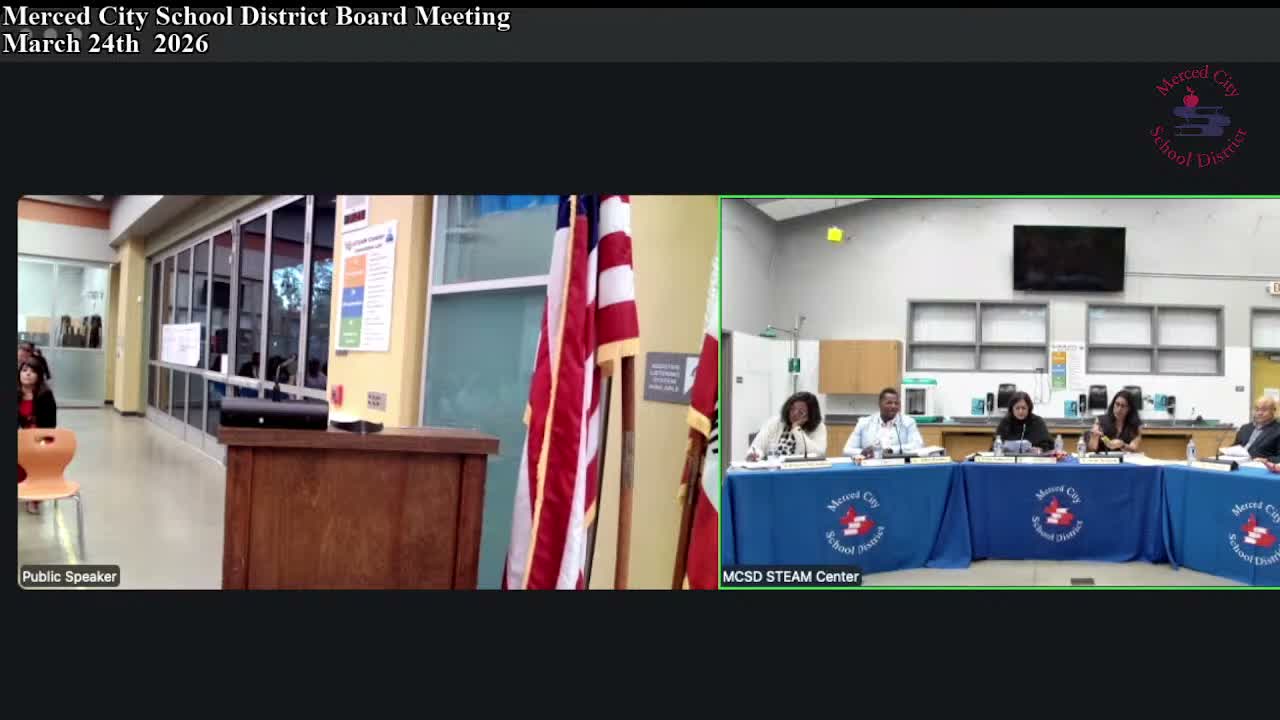
Summary
Deputy Superintendent Francisco Grama presented the Center for Model Schools progress and Vision 2030 plan to transition sixth graders into career discovery pathways; principals described coaching impacts and the district reported survey participation rates and an April deep analysis.
Merced City School District leaders on March 24gave a detailed update on the district’s Center for Model Schools work and a Vision 2030 plan to shift some middle schools toward career‑pathway models as sixth graders return to middle school.
Deputy Superintendent Francisco Grama said the work has two halves this year — professional development and intensive coaching — and that the district exceeded survey participation thresholds: "students 77%, teachers 76%, parents 38%," figures Grama offered while previewing a deeper analysis scheduled for the April 14 board meeting. He said principals will receive site‑level data this week so they can prepare roll‑outs at their schools.
Three principals described how coaching has affected classrooms. "So far, I have had five full days of five hours with my coach ... She affirms my interactions with families," said Jennifer Bolter, principal at Fremont Elementary, describing goal setting and in‑person coaching. Margo Padilla and Jared Garce recounted similar team‑based coaching that emphasized routines, trust‑building and targeted instruction.
Romo, presenting the Vision 2030 concept for middle‑school programming, framed the transition as "sixth grade exploratory, seventh grade deep dive and an eighth‑grade capstone" that will connect middle‑school experiences to high‑school CTE pathways. The district is planning a four‑year backwards map from 2030 to align curriculum and enrollment.
Board members asked specifics about staffing, support for English learners, and how campus supervision and nursing needs will be met as sixth graders move to middle sites. Grama said some staffing reallocations and site‑by‑site operational plans are under way and that more details — including specific answers to frequently asked questions — will be posted in the board’s weekly packet.
Why it matters: The shift affects every student in the feeder pattern, changes staffing and facilities needs, and ties directly to the district’s Local Control and Accountability Plan goals. The board asked for continued transparency and site‑level detail as plans move from design to implementation.
The district will present a full data analysis and planned next steps to the board on April 14; principals will use site data to prepare staff and family communications in the coming weeks.