Get Full Government Meeting Transcripts, Videos, & Alerts Forever!
Get email alerts on the Accessibility topic
No spam. Unsubscribe anytime.
Blind advocacy groups press Essex County to expand audible pedestrian signals; commissioners pledge follow-up
Summary
Members of the National Federation of the Blind and other residents urged Essex County to install audible pedestrian signals and improve building accessibility; commissioners and administration agreed to gather an inventory of existing devices and explore broader deployment and outreach.
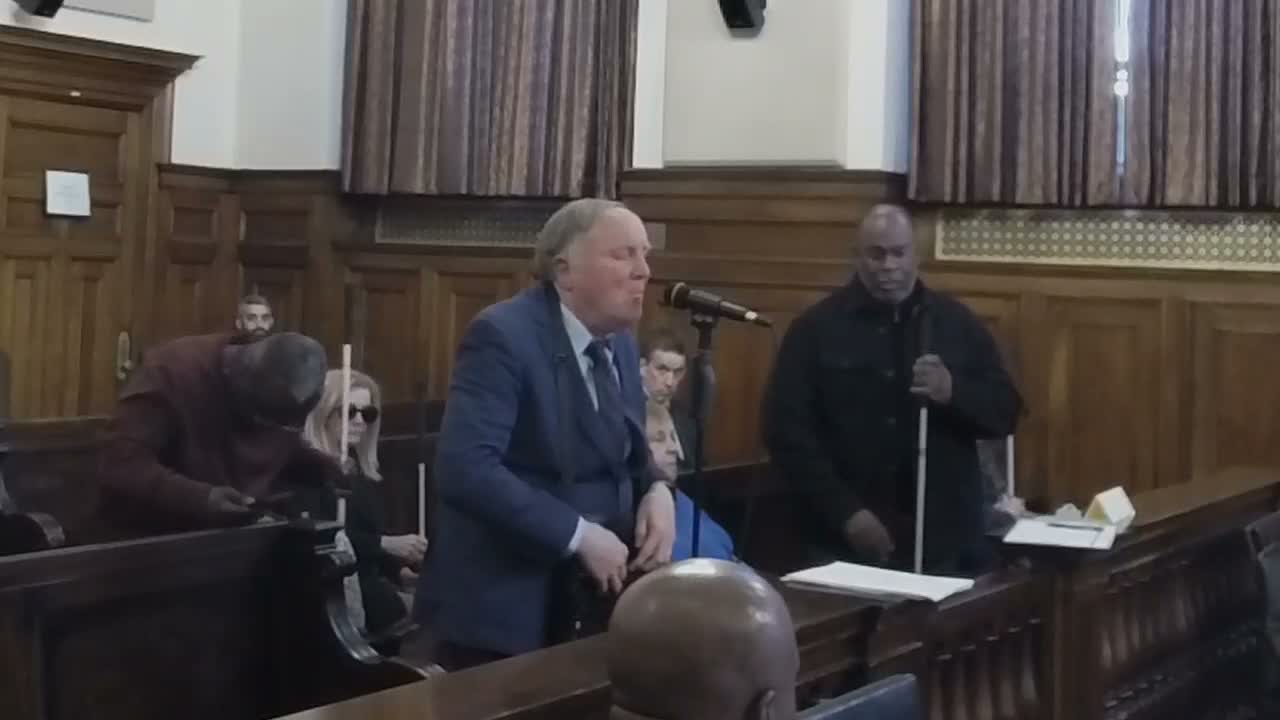
Multiple public commenters at the April 3 meeting urged Essex County officials to accelerate installation of audible pedestrian signals (APS) and other accessibility measures at busy intersections and county buildings.
Rick Fox, president of the Northern Chapter of the National Federation of the Blind of New Jersey, described APS devices that "beep softly" and provide a synthetic voice to indicate when it is safe to cross. "These devices have been life changing," Fox said, and he requested a list of county intersections that already have APS and a process for notifying local residents when devices are installed.
Other commenters said local intersections remain difficult and at times dangerous for blind and low-vision pedestrians. Everett Dupree asked county staff to follow up to determine whether a specific crossing near his home is on a county road and whether improvements are possible. Ellen Sullivan and Michael Gibson described successful APS installations in South Orange and Verona and urged expanded deployment. Crystal Allen (transportation committee chair, Northern Chapter NFB) urged ongoing collaboration and suggested the county consider training and public events such as White Cane Safety Day to raise awareness.
Commissioners and administration responded on the record: President Pomeras asked staff to have Adam (county staff) follow up directly with speakers and to seek an inventory of APS devices. Commissioner Mary Thomas and Vice President Cooper commended the speakers and urged the administration to assess costs and feasibility; Commissioner Mercado asked for an estimate of county-wide cost to install the technology on county roads. County staff indicated compiling an inventory and following up with constituents would be feasible.
What happens next: Administration agreed to provide a list of existing APS devices, follow up directly with speakers about specific locations, and consider integrating APS requirements into future intersection upgrades. Commissioners expressed interest in convening further study or a committee discussion and exploring federal grant opportunities (for example, Safe Streets for All funding) to support installations.
Speakers quoted: "These devices have been life changing," Rick Fox said of APS installations. "We would like to partner with the county to give input as to what intersections our members say would be helped by these devices," he added. Commissioner Mary Thomas said the county should be proactive and consider a committee of the whole to address accessibility concerns.
Speakers and contacts listed for follow-up include Rick Fox (NFB Northern Chapter president), Everett Dupree, Ellen Sullivan, Michael Gibson, Richard Whitten, Crystal Allen, Laura Fitzgerald and county staff member Adam (for follow-up logistics).