Get Full Government Meeting Transcripts, Videos, & Alerts Forever!
Get email alerts on the Solid Waste topic
No spam. Unsubscribe anytime.
Essex County commissioners delay vote on incinerator contract after lengthy public opposition
Summary
After hours of public comment from Newark and Ironbound residents and environmental advocates, the Essex County commissioners voted to reconsider and then table ordinance O-2025-00013 — a proposed amendment that would prepare the county to send up to 425,000 tons per year to the Real World (incinerator) facility — until the board's next meeting on Oct. 22.
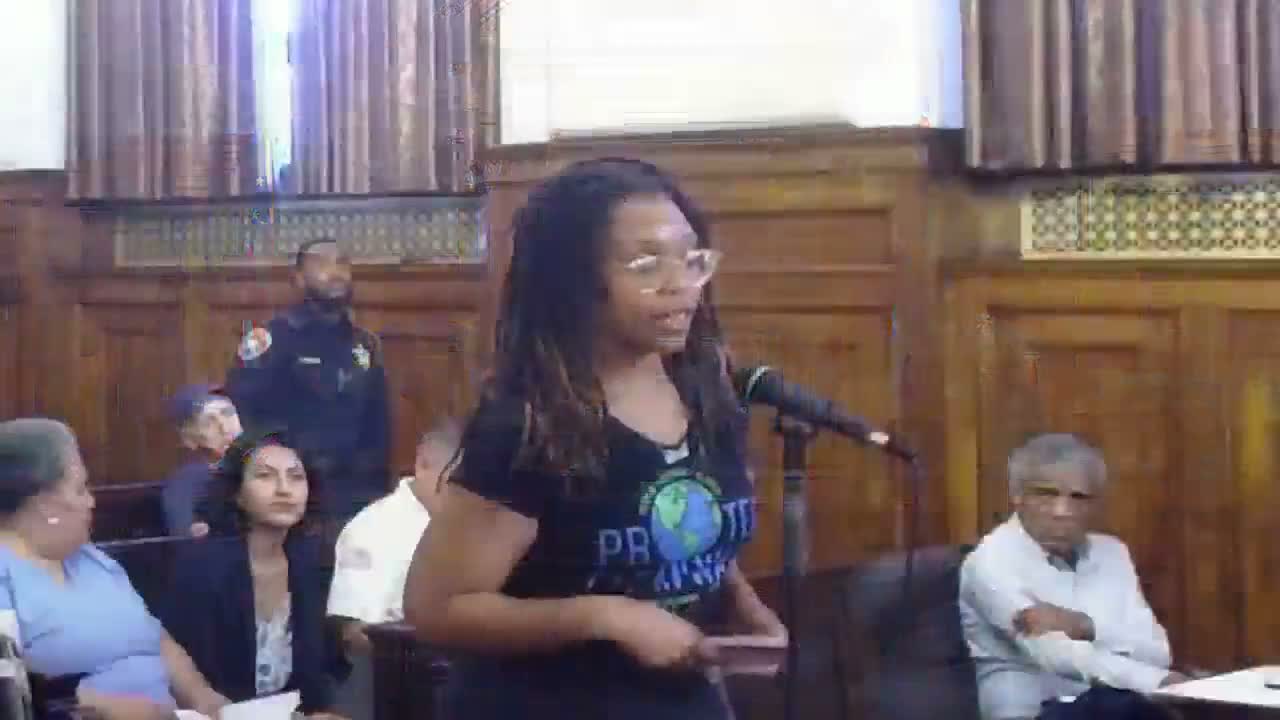
Essex County Board President Pomeras on Wednesday moved the meeting into a prolonged public hearing on an amendment to the county's solid-waste plan, ordinance O-2025-00013, after dozens of residents and advocacy groups pressed commissioners to reject a proposed contract extension with the Real World incinerator in Newark.
The hearing drew sustained testimony from Ironbound Community Corporation, Food & Water Watch and other community groups who described the facility as a longstanding environmental-justice concern and urged the board to pursue alternatives such as waste diversion, stronger recycling enforcement and composting. Alejandra Torres, Director of Advocacy and Organizing at the Ironbound Community Corporation, told commissioners: "This incinerator is choking us" and urged them to "disapprove of this ordinance and work towards enacting real environmental activities."
Real World representatives defended the plant. Michael Van Brunt, vice president of environmental and permitting at Real World, told the board the facility reports emissions to the New Jersey Department of Environmental Protection and operates below permitted thresholds, and said recent equipment upgrades (a baghouse installed in 2017'18) substantially reduced particulate and metal emissions. Van Brunt also acknowledged the facility had experienced a visible iodine plume in 2019 caused by a prohibited generator in the waste stream but said dispersion modeling showed ground-level concentrations well below health thresholds.
County and utility authority officials described the proposed amendment as a planning step, not a guaranteed delivery of material. Wayne DeFeo, a consultant to the Essex County Utilities Authority, said the amendment would allow the county to plan for up to 425,000 tons per year of processable waste but that the contract as written contains "no put-or-pay" guarantee and does not automatically increase the plant's permit. DeFeo said actual tonnage delivered will depend on what communities generate and on municipal recycling behavior.
Commissioners repeatedly pressed vendors and county staff for specifics about current tonnages, where waste originates and what alternatives exist. A vendor representative said roughly 360,000 tons a year arrive from New York City and about 400,000 tons from Essex County in recent years, and stressed that the plant operates near its current capacity.
After staff and vendor remarks and extended commissioner questions, the board first conducted a roll-call vote that left the ordinance without the required majority. County counsel advised of procedural options, and the board recessed for legal consultation. On returning, the board voted to reconsider the earlier tally and then considered motions about the ordinance's disposition. A motion to table the ordinance to the board's next meeting (scheduled for Oct. 22) carried, with the clerk recording a count of 5 yes, 3 no and 1 abstention.
Commissioners who supported tabling said more time was needed to gather data, hold community meetings and explore concrete alternatives; those opposing the delay said the county must secure disposal capacity in planning for 2026. Several commissioners noted the tradeoffs: landfills, incineration and other disposal options all have different environmental and community impacts.
The board asked administration staff and the utilities authority to provide additional data and to schedule a public hearing and information sessions between now and Oct. 22 so community groups and the vendor can present details and alternatives. The ordinance remains deferred until that next meeting.
Ending: The board did not adopt ordinance O-2025-00013; commissioners moved the matter to the next meeting and asked for further materials and public engagement before any final vote.