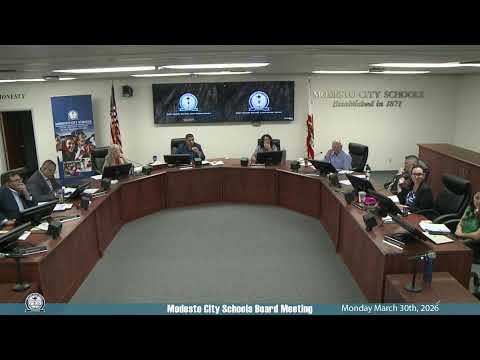
Board directs stricter device rules after debate; staff to update conduct code for April
Loading...
Summary
After extended debate and public comment, the board gave staff direction to revise the district's device policy (AB 3216 compliance) to extend strict off-and-away rules for younger grades, remove an instructional-use exception and adjust enforcement for older students; the board voted unanimously to proceed with the recommended language.
The Modesto City Schools board on March 30 directed staff to revise the district's electronic signaling and communication device policy to align with Assembly Bill 3216 and to adopt a stricter, more consistent approach across sites.
David Haug presented survey results from more than 8,000 students, 3,700 parents and 1,200 staff and summarized task-force recommendations: an "off and away" model for TK-6, tighter restrictions during instructional time for grades 7-12 and progressive, parent-notified consequences for repeated violations. Haug said the task force favored consistency because inconsistent enforcement had eroded expectations.
Student members and other speakers urged the board to avoid overly punitive first-offense responses and proposed educational interventions and practical containment solutions (phone pouches/lockboxes) so phones are inaccessible but available in emergencies. A student representative said a first'and'second-offense model that required office pickup had limited deterrent effect in practice.
Trustees debated developmental, mental-health, enforcement and equity considerations at length. Trustee Maestas proposed language to extend the TK model through grade 8, remove the "unless used for instructional purposes" exception districtwide, and modify the first-offense parent-pickup requirement for high school students; Trustee Marks seconded that direction.
The board voted unanimously to give staff direction to move forward with the Maestas-recommended language and return the revised conduct code for formal approval at the April meeting. Staff said they will prepare communications, update the student conduct code and provide implementation guidance and training for sites.
The board emphasized that the March 30 vote directed staff to draft conduct-code language for formal adoption; enforcement practices and any pilot designs will be addressed in subsequent work and communications.