District presents inclusion progress and co-teaching expansion; trustees press for funding and scale-up plan
Loading...
Summary
Modesto City Schools outlined progress increasing access to general education for students with disabilities, cited co-teaching growth and elementary "All In" pilots, and trustees raised staffing and funding concerns as the district lays out next steps.
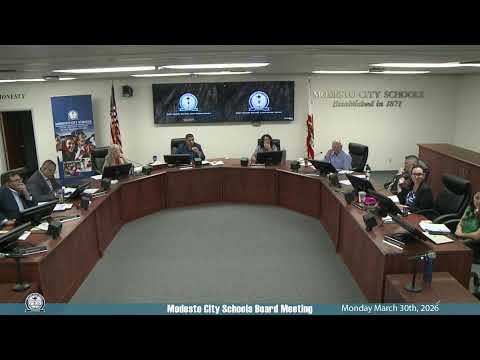
Executive Director Christina Romero told the Modesto City Schools board on March 30 that the district is expanding inclusive practices with co-taught classes, site innovations and professional development, but that scaling remains constrained by staffing and funding.
Romero framed inclusion as a legal and cultural priority rooted in the Individuals with Disabilities Education Act (IDEA) and highlighted local measures: co-taught secondary classes increased by 62% since 2023 and several elementary sites reported meaningful gains in access to general education for students with functional skills needs. "Inclusion makes our vision not just a statement, but an action," Romero said, adding that success depends on cross-departmental collaboration and intentional professional learning.
Site principals and program leaders offered examples. Monica Lombardo, principal at Beard Elementary, described the All In program, a rotating model where teachers swap groups weekly for targeted social-emotional learning and core instruction. A Johansen music teacher described a United Sound chapter and bucket-drumming class that pair peer mentors with students with disabilities and have produced public performances and statewide recognition.
Board members asked detailed operational questions about co-teaching models, the role of paraprofessionals, academic outcomes in mathematics and how the state's measure of access (bands for percentage of time in general education) captures progress. "How do we scale that?" Trustee Maestas asked. Staff said co-teaching cohorts are voluntary and supported by targeted PD leaders and that the district reports midyear and annual data on inclusion measures.
Several trustees emphasized funding limits: "The federal and state mandates exist, but they don't fund us to reach the goals," Trustee Brown said, urging persistent advocacy for increased special education funding. Romero said next steps will focus on mindset, continued PD, and partnership-based expansion rather than a rushed districtwide rollout.
No formal action was taken; staff will continue to report results and provide co-teaching data for board review.