
Cherry Hill School District official outlines zero‑based budgeting as state aid and reserves shrink
Get AI-powered insights, summaries, and transcripts
Sign Up Free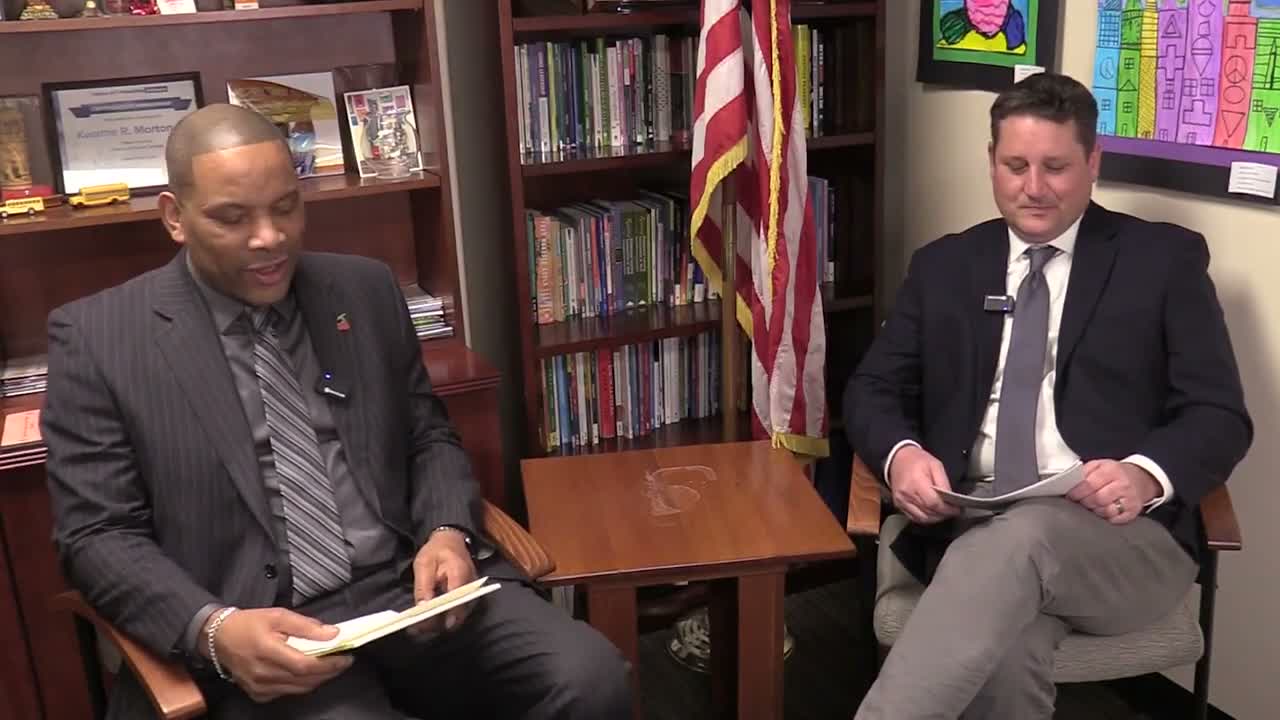
Summary
Assistant Superintendent Jason Shimpf said the district has lost nearly $9 million in state aid since 2023‑24, is using a new zero‑based budgeting process, and is balancing options including banked levy cap and one‑time surplus funds as reserves are depleted.
Jason Shimpf, the Assistant Superintendent, Business Administrator and Board Secretary for Cherry Hill Public Schools, said the district is shifting to a zero‑based budgeting approach as it confronts multiple years of declining state aid and depleted reserves.
Shimpf described the process on the program hosted by Dr. Morton, saying the district begins planning in October, asks school and department leaders to build budgets from the ground up in November, and pauses submissions in mid‑January for administrative review. "We're gonna build or you're gonna build your budgets from the ground up," he said, describing the change from incremental to zero‑based budgeting.
The move comes amid a multiyear revenue shortfall. "We've actually lost almost $9,000,000 in state aid since the 2023‑24 school year," Shimpf said, and he added that the district received a roughly 3% reduction in the most recent state aid notices (about $850,000). He attributed the gap to factors largely outside district control: changes in the state funding computation, lower state aid, and higher operating costs driven by inflation, contractual salary obligations and rising employee health benefits. "Eighty plus percent of our budget is people," Shimpf said, noting that personnel costs make the budget especially sensitive to revenue shifts.
Shimpf walked through how the district balances competing demands: administrators review line items for efficiencies and prioritize non‑personnel reductions first (transportation, food services, facility operations) before considering cuts that would affect staffing. When personnel reductions are necessary, he said the district tries to minimize direct layoffs by using attrition—vacancies, resignations or retirements—before eliminating filled positions.
On revenue tools, Shimpf explained the constraints of the 2% tax levy cap and described two options the district is evaluating: using banked cap (previously unused levy capacity) and, last year, some districts accepted a tax levy incentive aid program introduced in the governor's budget that temporarily allowed exceeding the 2% cap with a one‑time state offset. He said Cherry Hill opted not to use that incentive last year. Shimpf cautioned that one‑time state offsets are nonrecurring and cannot be relied upon for sustained funding.
The district has also drawn on one‑time surplus funds in prior years, but Shimpf said state rules limit unassigned fund balance to 2% of prior‑year expenditures and that the district's reserves have been largely depleted. "That 2% ... actually wouldn't cover a single payroll period here in Cherry Hill," he said, arguing the limited reserve cap constrains the district's ability to smooth shortfalls.
Shimpf urged community members to engage: attend board of education meetings (broadcast on YouTube), ask questions, and submit ideas by email. He summarized the administration's objective as ‘‘right‑sizing’’ the budget to be sustainable rather than relying on one‑time revenues. "We're not gonna rely on excess surplus or 1 time non recurring revenues to balance our budget," he said.
The district planned to present a tentative budget to the board on March 24, followed by continued discussion and a public hearing leading to a final adoption on April 28. Shimpf said staff will continue reviewing line items and present options to the board as the district works to align services with available revenues.
Next steps: the district will proceed with the tentative adoption, hold public budget meetings, and return to the board for final action at the public hearing in late April.