
Superintendents say rising health and energy costs, state funding shifts are straining district budgets
Get AI-powered insights, summaries, and transcripts
Sign Up Free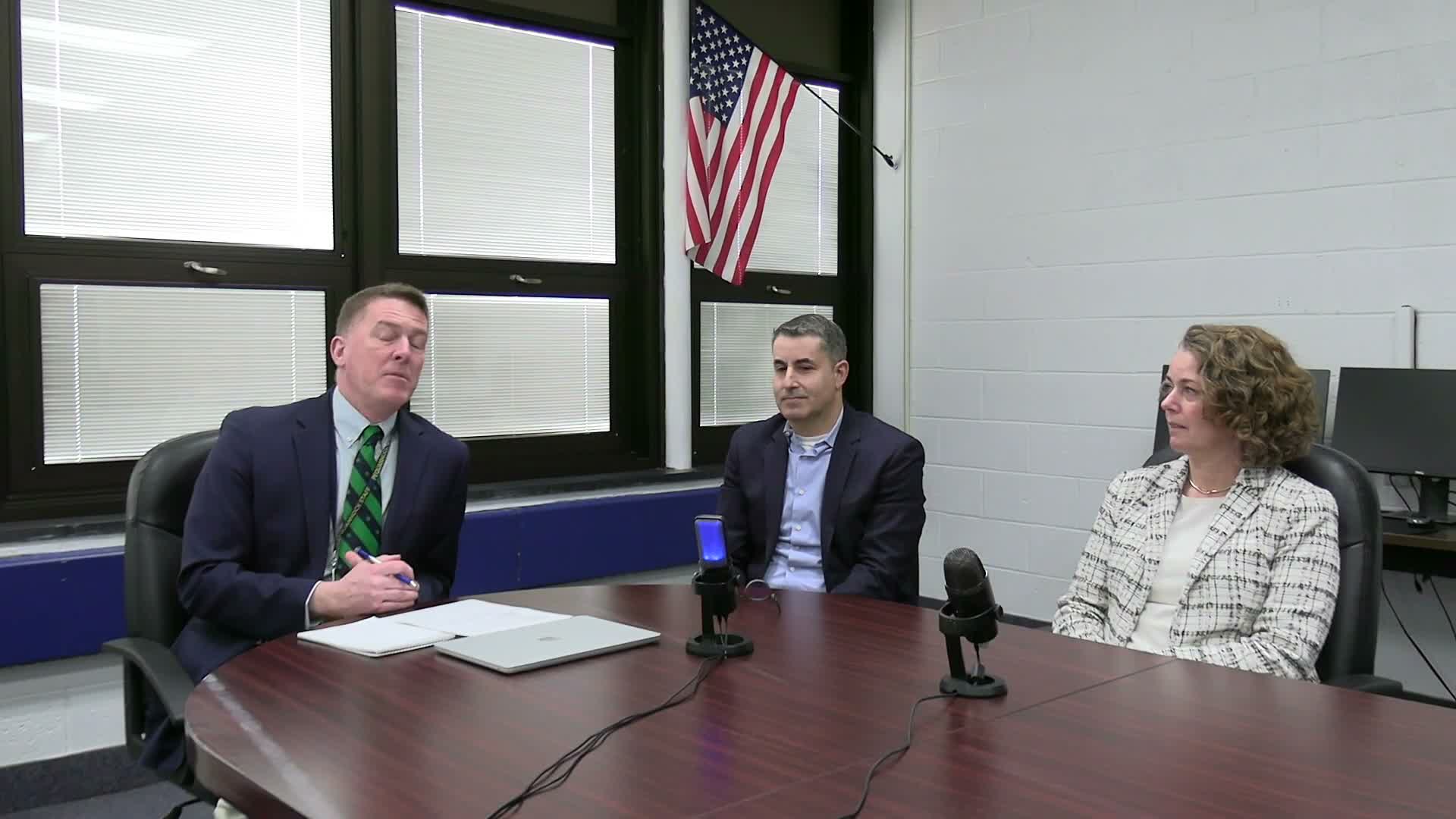
Summary
Three New Jersey superintendents told a podcast audience that steep health‑insurance hikes, state funding changes tied to enrollment and a 2% tax‑levy cap are forcing districts to consider cuts to programs and extracurriculars and are prompting coordinated legislative outreach.
Michael Portis, identifying himself as superintendent of the Pequannock Township School District, opened a podcast discussion with two neighboring superintendents about the pressures facing district budgets, saying recent cost spikes and state funding changes are forcing difficult tradeoffs.
"We had to find an additional million dollars in our budget," Portis said, describing how his district budgeted for a 16% health‑insurance increase and then learned a January change pushed the eventual increase to 32.9%. "It turned out to be 32.9." He said the jump left limited options because districts cannot simply tap large reserve funds for recurring costs.
Jean House, superintendent of Jefferson Township Schools, described a sharp enrollment decline and corresponding reductions in state aid that left Jefferson particularly exposed: "We lost 29% of our student enrollment and 60% of our state aid," she said, adding that the Highlands Act has constrained property‑tax ratable growth in her community.
Brad Siegel, superintendent for Mountain Lake School District, echoed the health‑cost concerns and said salary and contract obligations mean districts routinely face fixed costs that outpace the 2% tax‑levy cap. "Healthcare costs ... are the biggest factor," Siegel said, and he noted a temporary health‑care waiver allowed districts to exceed the cap this year but will require clear communication with community members seeing tax increases.
The group discussed how the School Funding Reform Act (SFRA) was intended to align state aid with enrollment but that some districts have not seen funding move proportionately. House said SFRA's implementation reshuffled the funding pot in ways that left some districts overfunded temporarily and others underfunded when enrollment shifted.
Speakers named several cost drivers: escalating health‑insurance premiums, higher fuel and energy costs for transportation and buildings, and rising prices for instructional technology such as Chromebooks. Portis gave a concrete example of fuel cost pressures, saying his district had seen roughly an $0.80 per‑gallon increase over a recent three‑week period.
They also raised the problem of unfunded mandates. Siegel said a recent cell‑phone restriction law will cost his district an estimated $40,000 to implement, an example of policy changes that add expense without a matching funding stream.
As a next step, Portis said county superintendents are organizing an ad hoc committee to press state legislators for help; he said he will chair that effort and hopes coordinated advocacy will produce legislative attention to the funding gaps and extraordinary cost spikes.
The superintendents framed the budget tradeoffs in student‑centered terms: when districts face constrained revenue, hard choices about staffing, class size and extracurricular offerings follow. "If we get into a fiscal situation where we have to make cuts ... it will have an impact on class sizes," Siegel said, warning that cuts to extracurriculars and program offerings are likely if costs continue to outpace revenue.
The podcast closed with the hosts urging broader public understanding of how budgets translate to classroom outcomes and with a commitment to continue the conversation with legislators and the community.