Resident—presses board over alleged FOIA and records noncompliance; commissioners follow counsel and deny fee appeal
Loading...
Summary
At a lengthy hearing, appellant Mr. Snowden alleged repeated FOIA deficiencies and statutory failures by Barry County to maintain required oath and bond records and to track ADA requests; after legal counsel reviewed the record, the board voted to follow counsel'9s recommendation and denied an excessive-fee appeal.
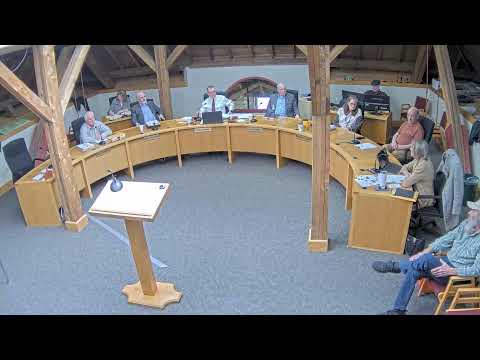
Mister Snowden told the Barry County Board of Commissioners on March 24 that a pattern of inconsistent FOIA responses and missing statutory records has prevented him from obtaining information and raised a question about the county'9s compliance with Michigan law.
"These are not discretionary issues. They are matters of statutory obligation," Snowden said, urging the board to make explicit findings about whether required oath-of-office and bond records exist and whether custodial responsibilities and fee practices comply with state law. He repeatedly cited Michigan statutes including MCL 15.1—15.5, MCL 15.235 and MCL 15.234 in arguing the county'9s responses were legally inadequate.
The claim matters because, Snowden said, where a statute requires a record to exist the county must either produce it or certify in writing that it does not exist following a diligent search. "If records do not exist and no labor could have been performed, then all fees must be vacated," he told the board.
Chair Anne Jackson acknowledged the volume and complexity of Snowden'9s submissions and said the county had asked its attorney for a written opinion. "Mister Snowden has pointed out perhaps procedural issues that should be reviewed by the board," Jackson said, adding the board had asked legal counsel for recommendations and for a review of billing estimates tied to voluminous requests.
County staff and counsel explained that the requests Snowden submitted were broad and that review and redaction across multiple departments and email systems can be time-consuming. Eric (county staff) described the process used to estimate labor and explained that, for privileged materials, the office must follow the statutory rule requiring review by the lowest-paid capable employee when calculating fees.
After discussion, the board made two motions based on counsel'9s advice. First, a motion (moved by Getty and supported by Hatfield) to accept counsel'9s recommendations and place relevant records on litigation hold passed by voice/roll call. Second, the board voted to deny Snowden'9s appeal of the estimated or excessive FOIA fees for the listed FOIA requests (motion by Smelker, support by Toonison). The clerk recorded the roll-call approvals.
Why it matters: Snowden framed the issue as more than a single FOIA dispute, arguing it reveals structural problems in how Barry County coordinates FOIA oversight and ADA accommodations. Commissioners said the matter might ultimately require judicial resolution and asked for counsel to brief them point-by-point so they could fully understand the legal distinctions Snowden raised.
What—happens next: The board voted according to counsel'9s recommendation; the decisions recorded at the meeting leave open judicial review as the next step for any party that chooses to pursue it.