Get Full Government Meeting Transcripts, Videos, & Alerts Forever!
Get email alerts on the Planning Processes topic
No spam. Unsubscribe anytime.
Los Ranchos planning staff: verbal promises at hearings are not legally binding
Summary
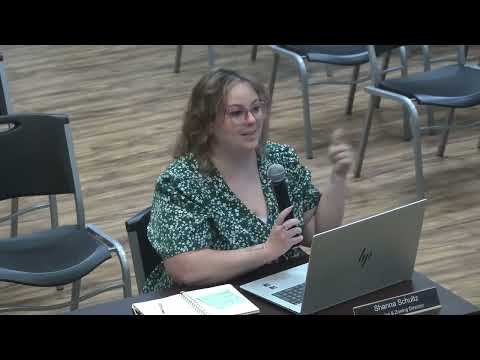
At the Feb. 10 Planning and Zoning Commission meeting, Director Schultz told a resident that verbal testimony does not create enforceable obligations and that the village relies on written findings or conditions and code enforcement to hold applicants to commitments.
At the Feb. 10 Los Ranchos de Albuquerque Planning and Zoning Commission meeting, a resident asked what authority the village has to enforce verbal agreements made during quasi‑judicial hearings. Director Schultz replied that verbal testimony by itself is not legally binding and that enforceable commitments must be written into findings or conditions attached to an approval.
"Verbal testimony is not a legal commitment," Director Schultz said, explaining that if the commission or Board of Trustees wants to require an applicant to do something, it must be done through a finding or a condition of approval. He added that staff tries to identify and draft conditions during hearings when a commitment is offered so the village has a way to enforce it.
Resident Vincent Sanchez, who identified himself as living at 6802 Rio Grande, told the commission he had seen instances where verbal statements given under oath were not fulfilled and asked what recourse exists. "What is the authority of the village to enforce verbal agreements during the quasi‑judicial proceedings if the agreement is not met in the future?" he asked.
Schultz said the village depends on the code enforcement office for routine zoning inspections and on Bernalillo County for more technical inspections. "When it comes to these planning and zoning items, that's when I have the opportunity to draft a finding or condition for this body to consider, and that's really how the village can hold an applicant's feet to the fire," he said.
Commissioners heard that staff will open investigations when complaints are warranted and that the minutes and posted video provide a public record that applicants and staff can review after meetings. Commissioner Bayless asked staff to include in the record a finding confirming that a final plat under consideration contains no changes from the previously approved preliminary plat; Director Schultz agreed to add that analysis before the item returns to the commission.
The exchange clarified the limits of oral commitments in planning proceedings and outlined the administrative steps residents and the commission can use to pursue enforcement.