Puerto Rico committee hears bill to offer 15-year tax exemption to attract and retain physicians
Loading...
Summary
Lawmakers and agency witnesses reviewed Senate Project 15, which would offer a 15-year preferential income-tax rate (12%) for qualified physicians in exchange for defined service requirements. Testimony praised the goal but agencies flagged major fiscal questions and recommended integrating the measure into a broader tax-reform package and consulting the Fiscal Oversight Board.
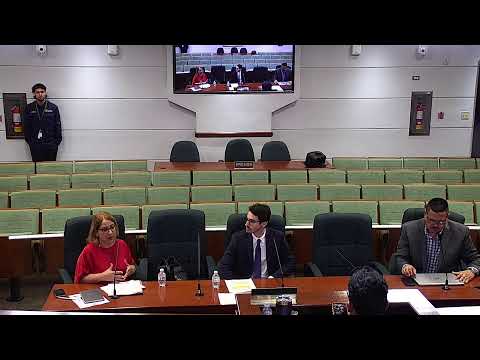
The House Commission on Economic Development heard testimony on Senate Project 15 during a session that reviewed proposed changes to Puerto Rico's incentives code to encourage physicians to stay or return to the island.
The bill would create a 15-year preferential exemption with a fixed 12% contributive rate for "qualified" physicians, conditioned on delivering services to patients covered by Plan Vital and meeting at least one practice standard such as five in-person hospital admissions or consultations per week, exclusive hospital practice, contractual practice with hospitals/primary care centers, or holding a clinical leadership role. Secretary of Health Vedctor Ramos told the commission the proposal is "a tool among many" to retain medical talent and said the Department of Health endorses the bill while urging coordinated fiscal review with Hacienda, the Department of Economic Development and the Fiscal Oversight Board.
"Esto sería una herramienta más," Secretary Vedctor Ramos said, adding that incentives must be combined with credentialing, licensing reforms and loan-repayment programs.
Why it matters: witnesses and legislators tied the proposal to an urgent shortage of specialists and to long waits for care in some regions. Mirna Quif1ones Feliciano, rector of the Recinto de Ciencias Me9dicas at the University of Puerto Rico, told the commission her campus managed roughly 400,000 patient encounters in 2025 and that about 75% of those patients are vulnerable or covered by Plan Vital. She urged lawmakers to protect academic faculty by considering a differentiated rate for full-time university clinicians.
"Una tasa contributiva uniforme no reconoce estas diferencias estructurales," Quif1ones Feliciano said, recommending retention measures that preserve the medical school's teaching and clinical missions.
Fiscal questions and different estimates: the Department of Economic Development and the Fiscal Advisory authority (AFAF) said the bill lacks a specified funding source and flagged potential conflicts with the certified fiscal plan under PROMESA. Witnesses cited differing fiscal estimates: the transcript records an OPAL estimate of about $505.4 million over five years, while AFAF cited roughly $100 million per year as a working figure. AFAF's Luis Roberto Rivera Cruz recommended the measure be analyzed as part of an integrated tax-reform package and that the government seek the Fiscal Oversight Board's review under PROMESA procedures.
Ernesto Zayas, director of the Office of Incentives, noted there are roughly 4,731 decrees previously approved under prior incentives regimes and that legal and court history (including litigation over Law 47/2020) limits the government's ability to process new applications without clearing those legal impediments.
Implementation details discussed: agencies agreed that administrative verification will be required for compliance (for example, ASES will be the certifying entity for service hours and admissions) and that regulations or circulars will be needed to standardize oversight. The bill allows limited administrative exceptions (for example, temporary public-service assignments) but committees and witnesses debated whether those provisions should be amended to avoid unintended giveaway of benefits to nonclinical appointees.
Professional societies testified in favor: the Sociedad Puertorriquef1a de Ortopedia y Traumatologeda, represented by Dr. Carlos Guevara Serra, said the prior decree materially increased return rates for orthopedics residents (from an estimated 34% pre-decree to an estimated 85% while the decree was active) and warned that current supply is thin: the society cited 117 active orthopedists, of whom 21 may be at or near retirement.
"Los incentivos contributivos no solo benefician a los me9dicos, sino que fortalecen el sistema de salud y la economeda de Puerto Rico," the society told the commission and provided age and residency counts the committee requested.
What the committee asked for next: lawmakers directed agencies to deliver specific follow-up items (within a short turnaround): multi-scenario fiscal impact analyses that reconcile OPAL and government figures; a list of existing decrees or incentives with low return on investment that could be repurposed; and residency and retention data disaggregated by program and specialty.
No final vote or formal action was taken at the hearing. Members said the authorship and agencies should seek early consultation with the Fiscal Oversight Board under PROMESA to reduce the risk of later litigation or suspension. The commission recessed with instructions to receive additional data and to resume consideration once the fiscal questions are clearer.