Senate passes permit, tax structure for event-driven "prediction" markets after amendment; sponsor stresses public-protection goals
Loading...
Summary
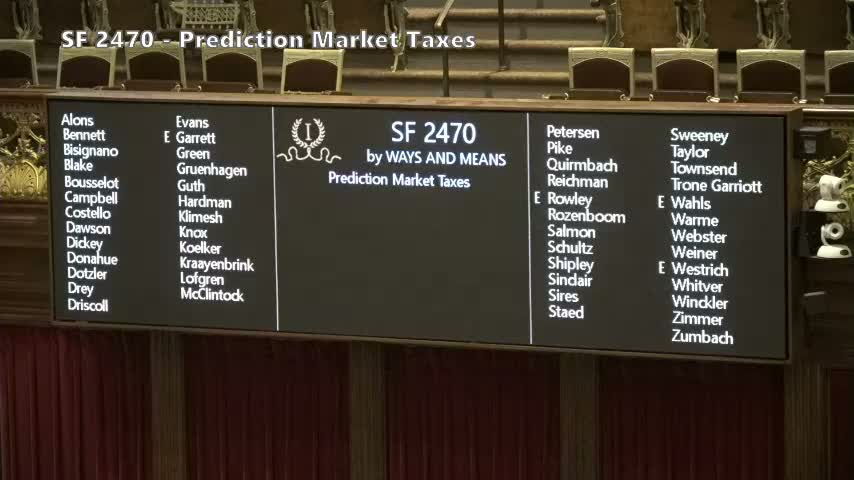
Senate File 24-70 establishes permits and taxes for event-driven contracts traded on dedicated contract markets (prediction markets). Sponsor Senator Dawson said the bill targets markets tied to sports, elections and legislative actions and includes contingency tax provisions and increased permit fees; an amendment addressing insider-participation was withdrawn and the Senate adopted amendment 51-42 before passing the bill.
Senator Dawson (Pottawatomie) opened Senate File 24-70, saying the bill sets a new tax and permitting structure for event-driven contracts traded on dedicated contract markets — commonly referred to on the floor as "prediction markets." Dawson said the legislation focuses on events with payouts tied to sporting activities, elections, lotteries, legislative actions, and economic indicators.
Senator Quornbach (Story) raised concerns about event-driven contracts, describing them as a form of betting and warning that public employees, elected officials, lobbyists, or their families could have insider information or influence that would allow them to profit from such markets. Quornbach asked that an amendment (51-46) that would prohibit such actors from participating be withdrawn; he reported a commitment from Dawson to pursue related language in a separate bill, and the amendment was withdrawn.
Dawson then described Senate Amendment 51-42 as a multi-pronged, technical package including an increase to initial permit fees, contingency tax provisions should courts rule against earlier provisions, and a pathway to bring contracts under Chapter 99F of the Code if legal appeals exhausted. Dawson told the chamber he anticipated litigation from market operators and said the amendment included fallback tax measures. The Senate adopted Amendment 51-42 and then passed SF24-70; the secretary announced that the bill title had been amended to describe permit, tax, adjusted revenue reporting and retroactive contingent effective dates in various divisions.