
Council split over whether to poll or rush library bond to ballot as patrons and advocates press for action
Get AI-powered insights, summaries, and transcripts
Sign Up Free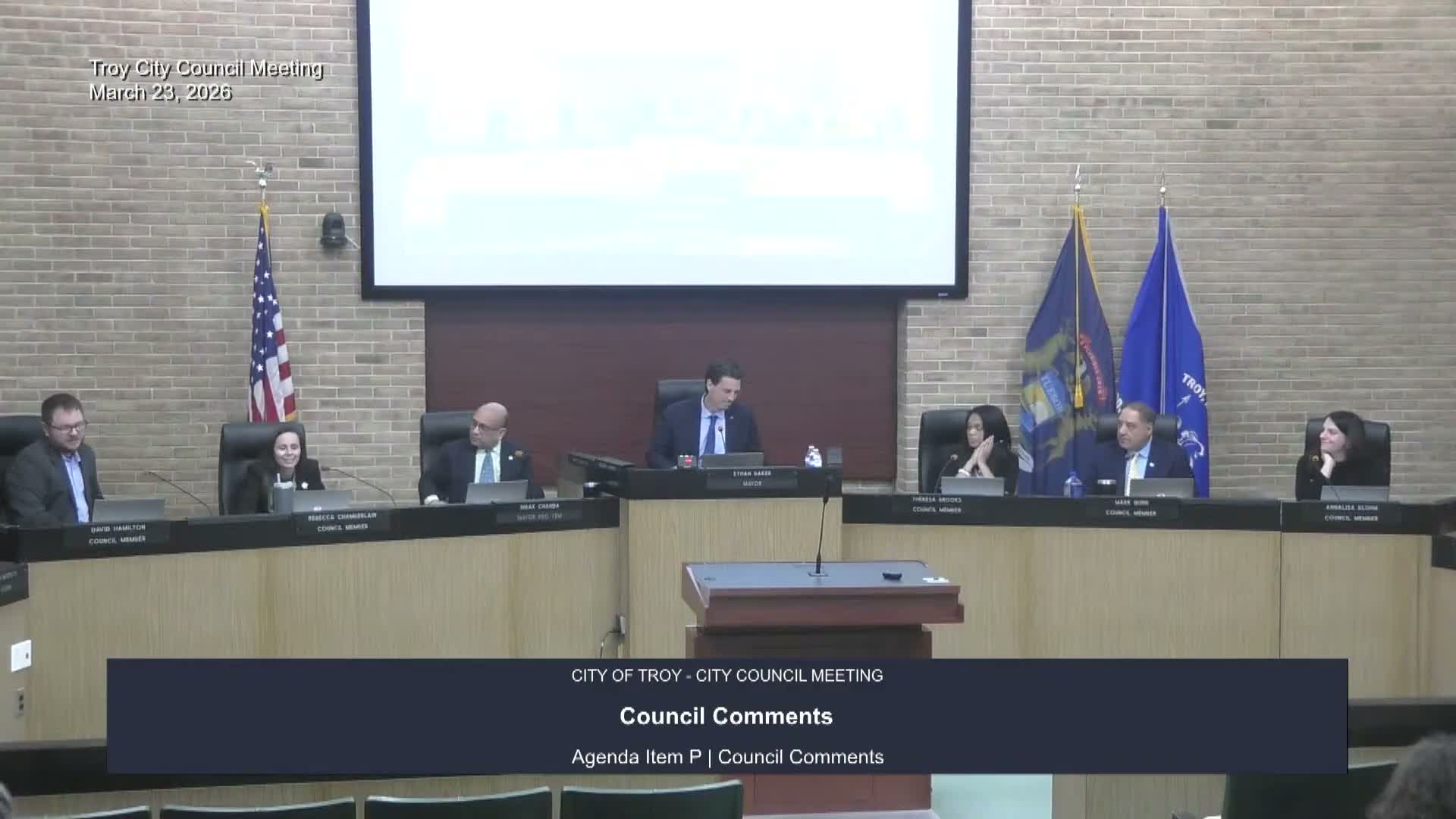
Summary
Council members clashed over a proposed quick poll and possible November bond placement for a new Troy Public Library. Proponents urged expedited polling and a November ballot; others cited staff capacity, needed qualitative engagement (focus groups/task forces) and overlapping school/county millages as reasons to delay.
An extended exchange at the March 23 Troy City Council meeting laid bare sharp differences over how and when to move forward on funding for a new Troy Public Library.
Council member David Hamilton pressed for a rapid third‑party poll and a July timeline so council could decide in time to place a stand‑alone library bond on the November ballot. Hamilton argued waiting would further expose library staff and patrons to a deteriorating building and that a timely poll could show whether a narrower, library‑only proposal would pass with higher turnout.
Opposing views: several council members — including Rebecca Chamberlain and others who comprised a working majority during the discussion — cautioned that staff capacity is constrained and that successful bond campaigns need both quantitative polling and qualitative engagement. Chamberlain proposed forming a task force or "financial ideas team" to bring residents in for two‑way discussions and to refine ballot options; she said focus groups and qualitative work are needed to understand why prior measures failed. Council members also raised concern about the timing of other ballot items (notably an Oakland Schools millage) that could affect voter appetite.
Friends of the Troy Public Library representatives and residents urged urgency. April Church, president of the Friends of the Library, and Mary Lynn Bowen cited usage statistics and repair needs (e.g., HVAC, doors, technology and elevator repairs) and said the bond's defeat had been discouraging to volunteers.
Council member Pro Tem Chanda and others urged a pragmatic middle ground: conduct targeted polling to establish a "sweet spot" for a bond amount (for example, whether the community would accept $40–70 million) but recognize polling alone does not substitute for engagement and messaging. Several council members asked city staff to get cost estimates from a third‑party firm (Cobalt) and to report back on what resources would be required to produce reliable polling and an engagement program before a July decision could be called.
Why it matters: the library is a highly used public facility; speakers said the building faces near‑term capital needs and that delaying action could force continued costly repairs or threaten services. Council members agreed the objective is to secure a sustainable solution but disagreed on timing and approach.
What council asked staff to do: council members asked staff to confer with Cobalt (a third‑party consultant) about what is required to produce a reliable, timely poll and to estimate the cost and staff input required to run both polling and a broader engagement campaign. Some members supported a short, targeted poll before July; others preferred a more deliberate timetable with qualitative outreach preceding any ballot placement.
Next steps: staff will return with more information about consultant costs, timing and required support. No final council consensus to place a library bond on the November 2026 ballot was reached at the meeting.