Residents press developer and council over Brookchester Shopping Center redevelopment
Loading...
Summary
Developer Brunetti presented a concept to replace the Brookchester Shopping Center with a four‑story, mixed‑use project of about 150 apartments and ~27,000 sq ft of retail; dozens of residents urged the borough to require school‑impact and environmental studies and warned of lost small businesses, parking and flood risks.
A developer proposed turning the Brookchester Shopping Center into a four‑story mixed‑use complex with roughly 150 residential units and about 27,000 square feet of retail, and New Milford residents responded with sustained, sometimes emotional public comment urging the borough to demand more data before approving any redevelopment.
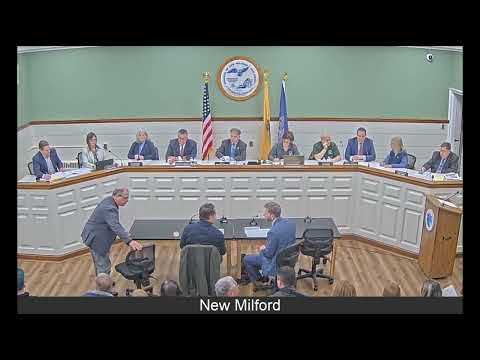
At a March meeting of the Borough of New Milford mayor and council, Andy Noran, an attorney representing the Brunetti organization, introduced the preliminary concept plan and said the development would include approximately 150 apartments and about 27,000 square feet of retail and commercial space. “We are proposing to redevelop it with a modern mixed use project that we think will be of great benefit to this community,” Noran said during the presentation. The developer said the CVS on the site would remain in place.
Project architect Jack Raker described the building as four stories built over a partially buried garage benched into the existing grade; he said the design provides residential amenities, on‑site trash management and roughly 390 physical parking spaces, and that the scheme would meet or exceed state residential parking standards (RSIS). Raker also said the project would provide EV‑ready stalls to meet state requirements.
Why the council and residents asked for more studies
Speakers from the audience — many longtime residents — pressed the developer and the council for information the presentation did not include. “I don't feel I learned very much how my town, my children's town is gonna be improved by your project,” said Christine Van Wee Brewster, who identified herself as a 50‑year resident. Other residents, including several parents and longtime neighbors, repeatedly asked for a formal school‑impact analysis, an environmental/stormwater plan and clearer answers about where displaced small businesses and their employees would go during construction.
Laurie Barton, a resident of nearly 48 years, asked whether the market‑rate units would include dens that could become bedrooms, and warned that a modest number of affordable 2‑ and 3‑bedroom units could still generate schoolchildren. “If we add more housing, where do we expect the additional children to be educated in a system already stretched thin?” she asked. Several commenters referenced a Rutgers study commonly used in such projects and asked the developer to supply local estimates rather than rely on generalized experience.
Concerns about parking and flood risk also dominated the discussion. Residents noted that Dorchester Lane — the proposed garage entrance — is an area that floods, and asked how vehicles would be protected if water levels rose. Mike Mulligan, who lives a block away, and others said existing overflow parking from nearby apartment properties already impacts neighborhood streets and called on the developer to address current parking shortages before adding new units.
Small businesses and community character
Multiple speakers said the proposal would remove longstanding local businesses at the shopping center and harm a neighborhood that depends on walkable commercial services. “These businesses are vital to our community's economic and social well‑being, and we don't want to lose them,” a resident said, noting the shops employ neighbors and provide everyday services within walking distance. Residents estimated that roughly 14 small businesses could be displaced.
Developer responses and process notes
Noran and project representatives said the presentation was a preliminary concept and that detailed studies (school‑impact projections, environmental and civil engineering work) would be produced later, at the site‑plan and redevelopment designation stages. "This is the first meeting that we're having. This is a preliminary concept plan," Noran said, adding that a formal student‑generation study would be done before approvals are requested. The developer also said the project team would try to accommodate existing tenants who wished to return to new retail space but acknowledged details are not yet worked out.
Borough attorney John Shmaiden told the audience that ongoing litigation related to the borough's affordable‑housing program could limit the council's or the developer's ability to answer some questions at the meeting. "There may be certain questions that they can't answer because if they answer them, that's a mission which will be used against them later on if there is further litigation," Shmaiden said.
What happens next
A medical emergency in the courtroom prompted police response and moved the meeting to a conference room; the mayor announced that “anything related to the Brookchester presentation will not happen at this meeting” and that the presentation would be continued at a later date. The developers and council did not request any final action at this session.
The proposal includes an explicit 20% affordable set‑aside (about 30 of the 150 units) cited by the developer; the project timeline and detailed school‑and environmental impact studies were described as forthcoming during the formal municipal review and site plan processes. Residents and council members asked that those studies be prepared and made available before any redevelopment approvals are considered.