Get Full Government Meeting Transcripts, Videos, & Alerts Forever!
Get email alerts on the Affordable Housing topic
No spam. Unsubscribe anytime.
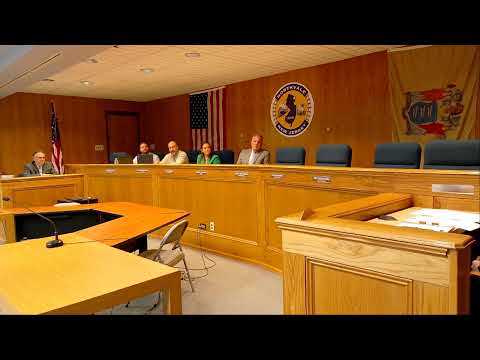
Northvale adopts overlay changes, raises inclusionary affordable housing minimum to 20%
Summary
The Northvale mayor and council approved amendments to its inclusionary overlay districts after a court-mediated settlement with Fair Share Housing, changing several zoning standards and increasing the minimum affordable-unit requirement from 15% to 20%; residents sought clarity about property values and incentives.
The Northvale mayor and council on an advertised public meeting approved amendments to the borough’s inclusionary-overlay zoning that raise the minimum percentage of required affordable units in multifamily projects from 15% to 20% and relax several dimensional rules in an industrial overlay district.
The changes, presented by borough staff as required by a state-involved settlement with Fair Share Housing, convert certain multifamily uses in the Paris Avenue overlay from conditional to permitted principal uses and alter standards in the industrial inclusionary overlay: the minimum lot area was reduced from 3 acres to 22,000 square feet, maximum density increased to 30 units per acre, minimum front-yard setback moved from 40 to 5 feet, minimum side-yard setback from 20 to 10 feet, minimum green area from 30% to 10% and maximum lot coverage to 75%. Mayor said the amendments were the product of court and mediation sessions with the builders’ organization and state involvement.
"There are penalties if we do not adopt it," Mayor said, describing the changes as necessary to avoid builder-remedy lawsuits and to keep the borough in compliance with state affordable housing obligations. Planning staff explained that making multifamily uses permitted rather than conditional shortens and clarifies the approval path for developers but does not, on its own, impose construction.
During public comment, Anthony Battaglia, a property owner at 173 Ludlow, asked how overlay status and the ordinance changes would affect property values and future uses, including whether an industrial buyer could still purchase and operate on an affected lot. "If someone were to purchase the property, they could purchase it as light industrial, but they could convert it to housing," Battaglia said; planning staff responded that existing permitted industrial uses remain and that conversion to residential would follow separate development approvals. Natalie Dion, another resident who received a notice about the overlay, asked whether the borough provides tax incentives for developers; staff replied there are no local incentives tied to this ordinance and that incentive programs (abatements or PILOTs) are separate, market-driven or state-administered decisions.
Council took roll call votes after public comment and adopted the ordinance changes. Borough officials said the amendments align Northvale with common municipal inclusionary-minimums and are intended to keep the borough out of costly legal remedies tied to state affordable-housing compliance.
The ordinance is the result of a negotiated settlement and state guidance; implementation will proceed through the borough’s planning and permitting processes for any future development.