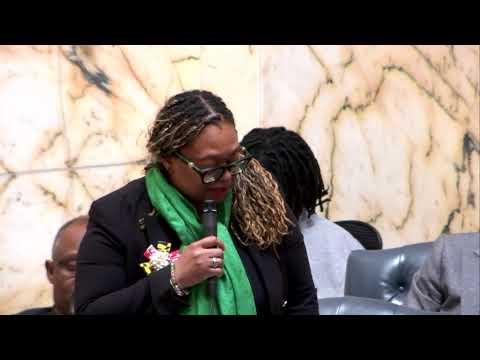
House advances commission to review historic, cultural and civic contributions in Maryland education
Loading...
Summary
The House adopted committee amendments to a bill creating a commission to review Maryland's curriculum for representation of diverse historic, cultural and civic contributions; proponents say it will deliver recommendations to MSDE and higher education bodies, while some members asked whether religious instruction and curricular changes would be mandatory.
The Maryland House of Delegates on March 16 adopted committee amendments to a bill that would establish a Commission on Historic, Cultural and Civic Contributions in Education to review the state's curriculum and recommend changes to the State Department of Education and the Maryland Higher Education Commission. The committee amendments, described by the chair as technical and substantive, were adopted by voice vote.
The chair of the Ways and Means Committee said the commission would be composed of subject-matter experts and community leaders "to review our Maryland state curriculum and ensure that it is reflective of a diverse, accurate, and complete curriculum in our state." The chair added that the commission would make recommendations, including suggestions about teacher professional development, but that recommendations would not automatically change curriculum without additional action by the State Department of Education or the General Assembly.
The bill's amendments also add a disability-community expert and inclusive language to the preamble. Delegates asked whether the commission would require new teacher training or alter school calendars. The chair replied that the commission would study practical constraints such as packed school calendars and the committee timed the commission's report to a four-year period to align with MSDE review cycles.
Some lawmakers raised concerns that the commission's membership emphasizes a broad set of identities and religions while they questioned whether specific Christian or Catholic histories would be adequately represented. One delegate asked why Christian history was not explicitly included; the chair replied that Christian history is already taught and that the bill seeks to ensure historically underrepresented populations see themselves reflected in curriculum.
The chair also reminded the body that the legislation was on second reader, which is amendment-focused, and broader debate will be available on third reader. With no further amendments offered, the bill was auto-printed for third reading.
The commission bill will return to the House calendar for third reading, at which point broader debate and additional amendments may be considered.