Committee approves year‑round fireworks sales bill amid questions on local rules and PTSD concerns
Loading...
Summary
Senate Bill 19-48, which would allow year-round fireworks sales, was advanced after members questioned how the measure interacts with city ordinances and raised concerns about effects on veterans with PTSD; the committee approved the bill, 10–1.
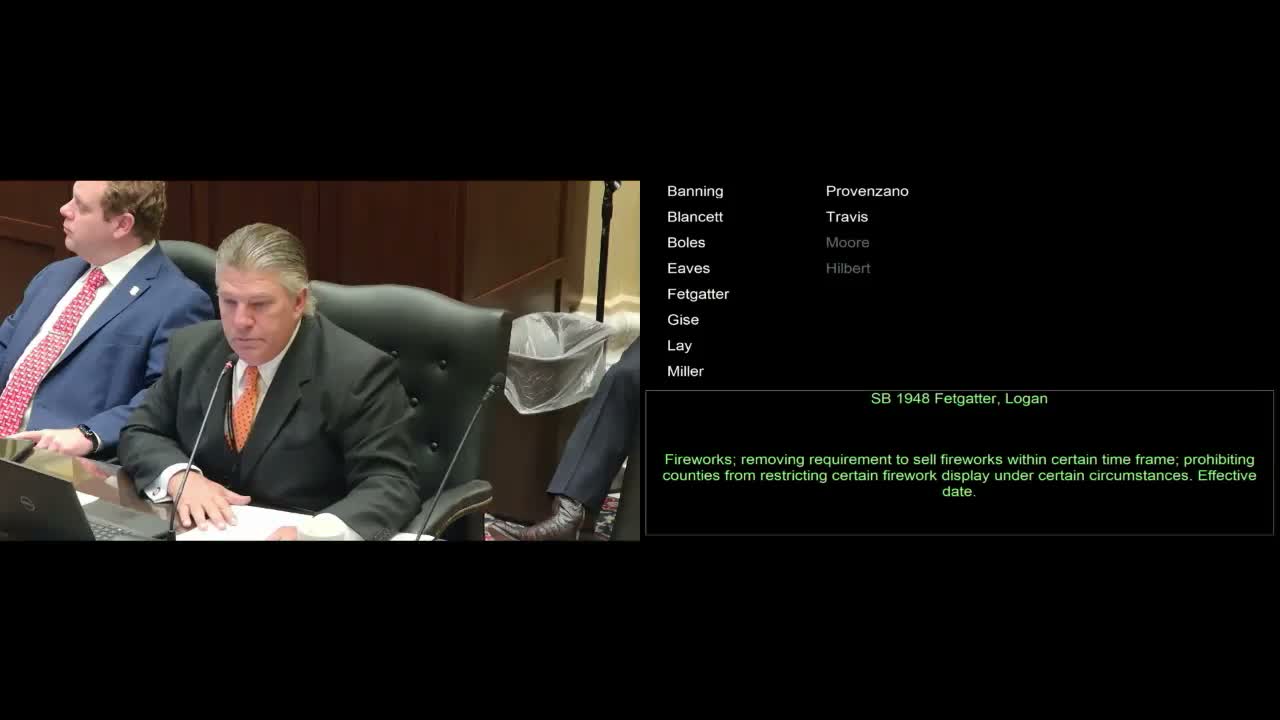
Representative Fettgater introduced Senate Bill 19-48 and told the committee the bill "allows the sale of fireworks year round in the state of Oklahoma." He said the legislation is intended to let private-property owners celebrate without county prohibitions and moved the bill for passage.
Representative Blansett pressed for specifics on what "private property" covers, asking whether the term applies to farms or to homes in dense neighborhoods. She also raised public-safety and health questions, saying she had heard concerns about "disabled veterans, or combat veterans, and how that triggers PTSD." Representative Fettgater replied that the bill does not supersede city ordinances and said the county language is aimed at preventing county-level prohibitions on private-property displays.
Chairman Bowles asked whether state law already restricts when fireworks may be set off and where people obtain fireworks; Representative Fettgater answered that people often travel to neighboring states such as Missouri to buy fireworks because sales windows in Oklahoma are limited, and argued the bill would level the playing field for in-state suppliers.
After debate and follow-up questions the committee moved and seconded the bill. The clerk announced the recorded vote as 10 ayes, 1 nay and declared SB 19-48 passed out of committee.
The committee did not adopt amendments in committee. The bill will proceed to the next legislative stage where municipalities and local ordinances may shape its practical effect.