Committee passes bill to require party registration ahead of primaries, drawing opposition from voters' groups
Loading...
Summary
SB 777, a bill to formalize party registration and require voters to declare affiliation up to 30 days before an election, passed committee after testimony from veterans' groups and election officials; it now goes to finance because of a fiscal note.
Senator Lowe’s bill to create a formal party-registration system and set a 30‑day cutoff for changing affiliation passed the State and Local Government Committee after a contested debate.
Sponsor’s explanation: Senator Lowe described SB 777 as establishing party registration for primary election seasons, allowing voters to register or change affiliation via existing online systems or at the DMV, and treating a ballot request as an indication of party preference in the next primary after enactment. He said the measure is intended to reduce "primary manipulation" and require voters to self-identify if they intend to vote in a party primary.
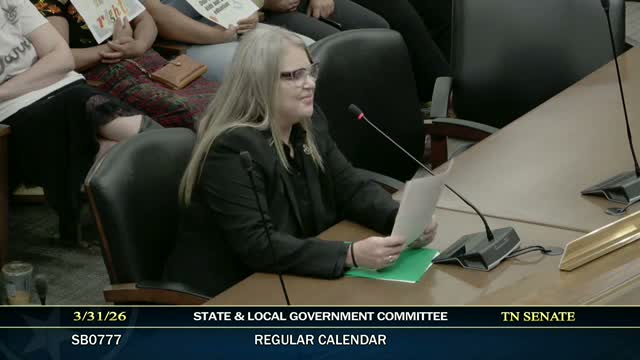
Public testimony and concerns: Shannon Rasmussen, an army veteran representing Veterans for All Voters and Open Primaries, testified the bill would "close Tennessee’s primary elections to independent voters," narrow participation, and shift power to party organizations. Mark Goins, the state coordinator of elections, explained the updated primary attestation form and warned that intentionally falsifying an election document can carry criminal penalties; he said poll watchers and prosecution are enforcement options.
Debate and outcome: Committee members argued over associational rights and turnout effects. Supporters said registration would reduce opportunistic crossover voting; critics warned the change could limit participation in an already low-turnout system. The committee voted 6–3 to pass SB 777; because the bill carries a fiscal note, it will be referred to the Finance Committee.