Princeton University president says endowment pressures require ‘tough choices’ but pledges continued town partnership
Loading...
Summary
University President Chris Eisgruber told Princeton’s mayor and council that lower long‑term endowment returns and rising costs mean the university must make difficult budget choices, but he emphasized commitment to campus–town collaboration on housing, transit and public safety.
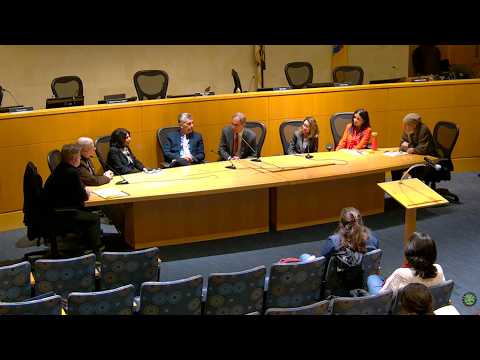
Chris Eisgruber, president of Princeton University, told the Princeton Mayor and Council on March 23 that the university faces sustained fiscal pressure and is making budget adjustments while seeking to preserve affordability and key partnerships with the town.
Eisgruber said the university’s long‑term investment returns have declined and that, under Princeton’s spending policy (roughly 5 percent of endowment distributions plus inflation), the university needs about an 8 percent average annual return “at a minimum” to maintain its current financial commitments and support student aid, salaries and capital projects. “We calculate that, we need to be able to generate 8% on average annual returns at a minimum to basically stay in equilibrium,” he said.
The president outlined recent campus investments — including a bioengineering institute, expanded graduate housing and a newly reopened art museum — and said they contribute economic activity to downtown Princeton. He framed the relationship between the university and municipality as essential: “We proceed toward that shared future, with values in common,” Eisgruber said, adding that Princeton intends to honor a voluntary contribution agreement with the town through 2028.
Council members pressed Eisgruber on several town priorities. One councilmember urged the university to help address housing needs for university staff and faculty and to reengage with the Witherspoon‑Jackson neighborhood, where a $1,250,000 settlement intended to support legacy homeownership has left residents seeking more transparency and clear outcomes. “Where is the transparency? Where is the accountability? Where are the tangible results tied to that investment?” the councilmember asked. Eisgruber said the university shares the goal of affordable, inclusive housing and highlighted existing and planned projects — including graduate housing outside municipal limits — and signaled a willingness to work with town staff and council to explore site‑specific opportunities.
Council members and the president also discussed mobility and public safety. Eisgruber praised recent town support for transit initiatives and said the university is open to zoning conversations around potential projects that could include inclusionary housing. On staffing and compensation, he noted the university has limited raises this year — citing a combination of lower endowment returns and rising health‑care costs — while continuing commitments to graduate stipends and undergraduate financial aid.
Why this matters: The university is one of Princeton’s largest economic and institutional partners. Its financial decisions — voluntary contributions, campus projects and housing choices — affect municipal revenues, downtown businesses and local housing markets. The council indicated it will continue to press for specific partnerships and assurances about how university resources and settlement funds are used in neighborhoods facing displacement pressures.
The council thanked Eisgruber for the discussion; staff and council members said they will take next steps to follow up on housing, zoning and transportation details with university liaisons.