Get Full Government Meeting Transcripts, Videos, & Alerts Forever!
Get email alerts on the Community Development topic
No spam. Unsubscribe anytime.
Deputy city manager presents Community Development annual report; council presses on housing, permits and historic preservation
Summary
Deputy City Manager Michael Maze told Boulder City Council the Community Development Department maintained steady permit activity, outlined historic-preservation work and said a new full-time building official will be hired to speed permit reviews; council members pressed staff on allotments, retail vacancies and use of RDA and grant funds.
Deputy City Manager Michael Maze presented the Community Development Department’s annual report to the Boulder City City Council on Oct. 28, summarizing building-permit activity, planning and zoning work, economic development efforts, code enforcement results and progress on historic preservation.
"For fiscal year 25, we had 11,760 inspections. We did 280 plan reviews. We issued 552 permits, and the permits issued had a valuation of $123,000,000," Maze said, adding that the department aims to turn around initial plan reviews within 15 days and is pursuing ways to reduce current review times.
The report stressed five primary departmental functions and several active initiatives: a planned overhaul of Title 11 (the zoning ordinance), outreach to historic-district property owners, continued promotion of Redevelopment Agency (RDA) grant programs for local businesses, and use of a $200,000 CCC Historic Preservation grant to restore the historic water filtration building and open it for public access. Maze also said staff is planning a town meeting for property owners in the historic district and expects to fill a new full-time building-official position next month to improve customer service and speed permit processing.
Why it matters: building-permit throughput affects renovation and new-construction timelines for residents and businesses; the zoning rewrite and historic-preservation work could affect property owners and future development.
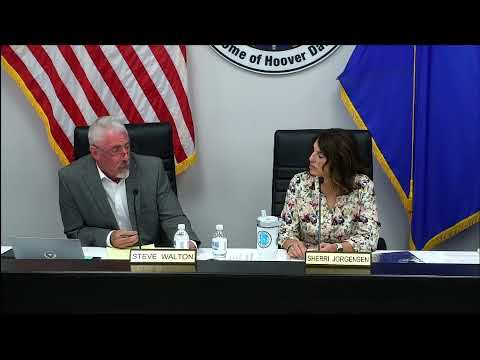
Council members asked detailed questions about permit counts, allotments for new dwelling units and retail vacancy rates. Councilwoman Booth sought clarification about how remodels are counted versus new-construction allotments; Maze said remodels and small permits (for example water heaters) are included in permit totals, while allotments are tied to new residential units and are limited in part because much vacant land in Boulder City is owned by the city and its sale requires a public vote. Council member Walton noted the difference between the 10-year total of building permits and the much smaller number of allotments for potential new structures, describing the gap as evidence that many permits are for renovations rather than new homes.
Maze reported a code-enforcement closure rate of 95% in the most recent fiscal year and said the city is on schedule to complete 12 of 17 strategies in its historic-preservation plan within the five-year timeframe.
The presentation closed with staff taking credit for improved customer-service survey responses and reiterating plans to continue outreach to businesses and residents. There was no formal council action on the report; Maze said the Title 11 rewrite will be brought back to the council for further direction over the next year.