Shelbyville airport staff warn FAAunleaded-avgas deadline will force costly fuel-farm and aircraft adjustments
Loading...
Summary
Airport staff told the Municipal Airport Authority that the FAA plans to require airports to offer unleaded aviation gasoline by December 2030, a change that could require new tanks, operational modifications and costs the airport has not budgeted.
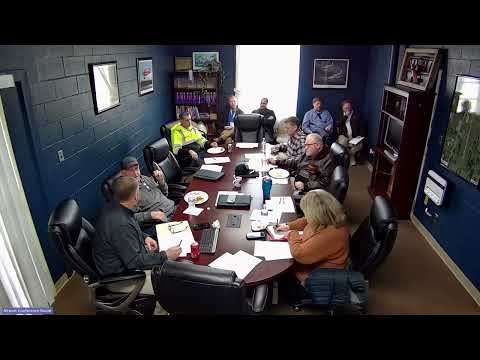
Airport staff told the Municipal Airport Authority on Jan. 22 that the Federal Aviation Administration is pressing the industry toward a replacement for 100LL avgas and has set a hard target that "everybody's gotta have unleaded fuel on their airports by the December 2030," according to Paul, the authority's operations lead.
Paul said the airport recorded more than 60,000 operations in 2025 and that the transition timetable leaves only a few years for airports and pilots to adapt. "We don't have the funds," he said, describing the logistical and financial challenges of installing separate tanks and filtration systems and of ensuring compatibility with existing piston aircraft.
A company representative who said his firm is one of five distributors participating in FAA testing described one candidate fuel (G100UL) and the industry's work to evaluate compatibility. "It is the only unleaded replacement fuel that is STC'd for all general aviation piston powered aircraft," the representative said, but he also warned of reported technical issues during testing, including swelling gaskets and paint degradation on some aircraft.
Board members and staff discussed potential responses: installing a second dedicated tank for unleaded fuel, using an interim trailer or temporary supply, or waiting to see which replacement product emerges as the market winner. Staff said aviation-specific tank installations require NFPA/ATA-compliant designs, double-wall containment and filtration systems and long lead times; a single aviation tank plus site work was discussed as an order-of-magnitude example in the hundreds of thousands of dollars.
Paul said the authority has placed a placeholder for a possible additional tank in its ACIP submissions and will pursue opportunities to work with fuel providers and larger distributors. He also noted FAA testing includes questions about whether mixing legacy 100LL with alternatives will be acceptable.
The board did not take a formal vote on a funding plan at the meeting; members asked staff to continue research, monitor FAA vendor selection and consider grant or partnership options before a larger capital commitment.
The authority expects to continue review of options as FAA test results and distribution commitments become clearer; staff will report back with cost estimates and any grant opportunities.