Appropriations Committee trims governor's tax-conformity package, decouples QSBS, charitable deduction and opportunity zones
Loading...
Summary
The Appropriations Committee voted 8–5 to amend the governor's supplemental tax-conformity proposal, removing or decoupling three major provisions — the qualified small business stock exemption, a limited charitable deduction phase-in and state conformity for opportunity zones — while leaving other conformity items in place.
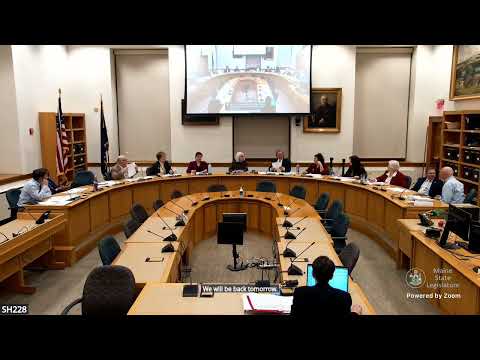
Representative Anne Matlak, the taxation lead on the Appropriations Committee, moved a package of changes that limits the state's conformity with several federal tax provisions in the governor's supplemental budget.
Matlak said the committee would "decouple the expansion of the qualified small business stock exemption" for stock acquired after July 4, 2025, arguing the federal change primarily benefits outside investors and would become an unsustainable revenue sink for Maine. "This approach allows pre‑OB3 stock purchases to continue to get the capital gains exclusion at the state level," Matlak said, "and eliminate the tax exemption at the state level post‑OB3." She added that many other states have taken similar steps.
On the charitable deduction (Part K5), Matlak said the committee would not phase in the limited federal deduction at the state level, noting the fiscal estimate for that change is modest but not necessary. Matlak told the committee the permanent renewal and enhancement of opportunity zones (Part YYY) would also be decoupled so that the state would retain those revenues to invest in local priorities.
Opposition centered on distributional and fiscal concerns. Representative Ducharme said the package represented an overreach on some issues and warned that decoupling could remove tools for local investment. Representative Dwyer and others pressed that the package fails to include provisions important to lower‑income Mainers — specifically a proposed $6,000 senior exemption and carve‑outs for tips and overtime — and argued those omissions would make the package less pro‑work and less pro‑affordability.
Office of Fiscal and Program Review director Chris Nolan provided the committee with fiscal numbers during the debate, saying the permanent renewal of the opportunity zones would keep an estimated $5 million in state revenues in 2027 and $10 million in 2028 and 2029. Matlak and Nolan also discussed larger out‑year effects and how the package interacts with the state's structural gap projections.
The motion to implement the Matlak package carried 8–5. Supporters framed the move as protecting state revenues from high‑net‑worth federal tax planning that does not benefit Maine communities; opponents said the changes give up near‑term relief to seniors and working families for long‑term revenue preservation.
The committee also moved related taxation language later in the session: Part N (a pass‑through entity tax with a refundable credit for tax years beginning 2026) was approved unanimously; Part O (a two‑year phase‑out of BETR reimbursements for retail sales facilities) passed after debate. Committee members noted business groups opposed the BETR change and that municipalities and small retailers could face transitional impacts.
Next steps: the committee's amended conformity language will be included in the supplemental budget forwarded by committee action; fiscal impacts will be incorporated into OFPR forecasts and the broader budget discussions ahead of the next revenue forecast.