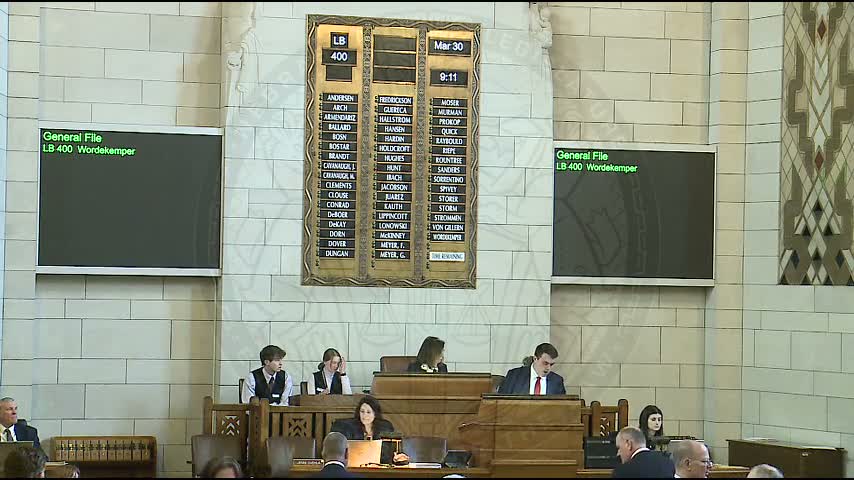
Nebraska senators debate LB400 to create cancer presumption for firefighters; amendments fail, cloture rejected
Loading...
Summary
After hours of floor debate, senators declined multiple amendments to LB400, a bill that would create a rebuttable presumption that certain cancers in qualifying firefighters are work‑related. Sponsors cited scientific studies and moral duty; opponents warned of potential unfunded local costs and administrative burdens. The bill was moved toward select file but faces further negotiation.
Lincoln — Lawmakers spent the greater part of a floor session debating LB400, a proposal that would add a rebuttable presumption to the Nebraska Workers' Compensation Act treating certain cancers in qualifying firefighters as job‑related.
Senator Werterkamper, sponsor of LB400, told colleagues the measure does not guarantee benefits but ‘‘flips a starting point’’ for claims so a firefighter diagnosed while serving does not have to carry the initial burden of proof alone. Werterkamper cited federal and academic research — including National Institute for Occupational Safety and Health findings and an International Agency for Research on Cancer classification — saying studies show elevated rates of several cancers among firefighters and that firefighting is considered a Group 1 carcinogen.
The bill defines eligibility and includes committee amendments that set thresholds for volunteer coverage and prescreening. Werterkamper said the committee amendment (AM702) requires a baseline physical at hiring and clarifies the preponderance‑of‑evidence standard employers must meet to rebut the presumption.
Opponents on the floor — including Senators Jacobson, Moser, Storer and others — said the change would impose an unfunded mandate on cities, counties and rural fire districts because employers or local governments could face increased workers' compensation claims and higher insurance premiums. Jacobson repeatedly urged tightening statutory language to require a stronger causal showing, warning that broadly defined carcinogen language could sweep in other occupations and exposures and that the bill as drafted was ‘‘not good public policy’’ for taxpayers.
Floor amendments offered by Senator Jacobson sought to narrow the statutory language (FA 11‑27), remove a post‑retirement subsection (FA 11‑28) and require a retirement‑period baseline exam (FA 11‑29). Each amendment was debated at length on the floor and put to a vote; the body voted first on FA 11‑27 (recorded 23 ayes, 13 nays) and the amendment was not adopted; subsequent amendments also failed to reach adoption.
Senators pressed practical questions about implementation: Who would qualify under the thresholds adopted for volunteers (10 years’ service, 40% training participation, 25% of emergency calls); how baseline medical examinations would be defined and financed; and whether mutual‑aid agreements or local budgeting would be affected. Supporters noted that roughly 1,491 paid firefighters are employed statewide while only a small subset would meet eligibility requirements under the adopted thresholds; opponents pointed to fiscal notes that estimate material costs if volunteers or larger groups were included.
In later action, a cloture motion to end debate was filed and put to a reverse roll call; the motion to invoke cloture failed, and the body recessed. Sponsors said select‑file amendments remain possible; opponents urged recommitment to the Business and Labor Committee for further negotiation.
The legislature did not adopt LB400 or enact any immediate change; the bill's future depends on negotiations before select file and whether sponsors can reach compromise language that tightens causation standards or narrows scope. The most recent procedural step recorded on the floor was a failed cloture vote and a recess; the bill remains live pending further committee or floor action.
Ending note: The debate illustrated a recurring legislative tension—balancing recognized occupational health risks cited by public safety proponents against concerns from municipal officials and insurers about potential costs and administrative impacts on local budgets.