Get Full Government Meeting Transcripts, Videos, & Alerts Forever!
Get email alerts on the Program Evaluation topic
No spam. Unsubscribe anytime.
Clark County staff present midyear outcomes report showing high participant satisfaction, staff to correct data error
Summary
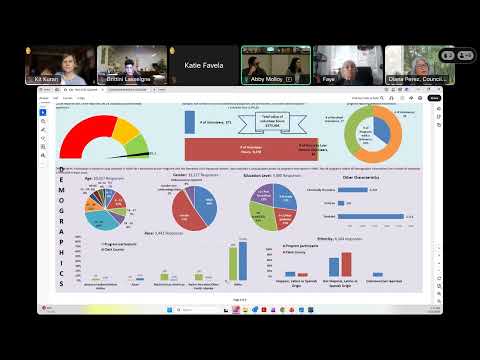
County staff reviewed the July–Dec 2025 outcomes report for contracted programs, noting ~50% of goals reached (mid-contract), a 25.6% survey response rate with 95.1% positive satisfaction, and 44 grievances logged; staff said an averaging error will be corrected for a follow-up report.
Clark County’s Community Action Board reviewed a semiannual outcomes report for the county’s contracted social-service programs on March 23.
County staff presented data covering July 1–Dec. 31, 2025, describing program lists, selected outcome measures, spending to date and demographic breakdowns. The report showed that many programs were about halfway through their contract year and therefore near 50% of annual goals. Staff said some newer programs are behind schedule and that they will continue monitoring performance through the year.
Why it matters: the outcomes report informs board funding recommendations and RFA design and helps the county track whether contractors serve populations proportionally across race and ethnicity, age and veteran/disabled status.
Abby (staff member) highlighted several headline figures: 575 survey responses yielded a 25.6% response rate and 95.1% of respondents reported a positive overall experience. Volunteers contributed 9,270 hours valued at $40.28 per hour (national average), producing a total volunteer value of $373,404, the presentation said. The report also noted 44 grievances across programs during the period; staff said 27 of those were resolved and that agencies use grievance data to identify training opportunities.
Board member Diana Perez asked for clarity about a chart comparing program participants with the Clark County population; staff agreed to relabel the legend to read “Clark County population” to avoid confusion. Another board member asked whether program data come from HMIS; staff said most data are in HMIS, while some programs (for privacy or operational reasons) submit anonymized aggregates outside HMIS and staff compile both sources in the report.
A measurement error in one table drew attention: a program goal percentage appeared above 100 percent because the report summed figures rather than averaging them. Staff acknowledged the mistake and said they would correct the calculation for the next release.
The board asked staff to prepare trend charts comparing the current report to prior periods; staff agreed to present multi-year comparisons at a future meeting.
The board did not take formal funding action on the report; it served as information for future decisions and for the RFA planning process.