Lifetime Citizen Portal Access — AI Briefings, Alerts & Unlimited Follows
Council committee discusses East Bend subdistrict: multimodal access, heights and environmental review
Loading...
Summary
Committee members and planning staff discussed the proposed East Bend subdistrict of the Downtown Code — how the DTC/DRC review would work, major/collector street plan timing, multimodal analyses, river‑gateway open‑space and view‑corridor protections, environmental testing and geotechnical constraints; no formal vote was taken on the East Bend text during the session.
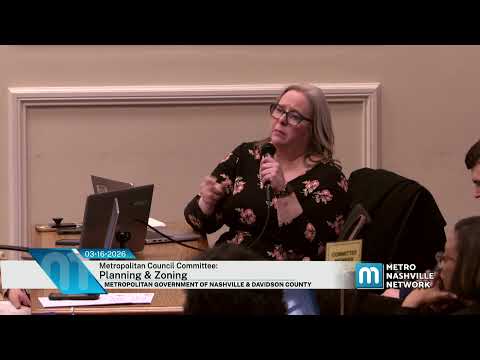
The Planning & Zoning Committee spent an extended portion of its meeting discussing the proposed East Bend subdistrict of the Downtown Code (DTC). The discussion focused on transportation planning, design review, environmental remediation, and rules intended to protect river views and open space.
Sponsor Council member Coopin explained he had held multiple community meetings and asked planning staff to describe how the DTC and the DRC (design review committee) would operate for projects in the subdistrict. Planning staff (Miss Milligan) said the downtown code is form‑based and design‑focused; the DRC is an appointed body that reviews design quality and architecture for projects in the DTC. Final site plans will still require multimodal transportation analyses and coordination with NDOT and WEGo for major/collector street changes and operational routing.
Committee members repeatedly raised traffic and parking concerns, warning the site could draw substantial automobile trips into East Nashville without careful multimodal mitigation. Planning staff said multimodal transportation analyses will be required for final site plans and that the subdistrict text establishes massing and orientation guardrails; a later major and collector street plan (MCSP) process will define streets and cross‑sections and is expected to begin in the coming months.
Members also pressed staff on river‑gateway protections, asked about view‑corridor widths and open‑space requirements, and sought assurances projects will not unduly block river views. Planning staff said certain river‑adjacent parcels have base entitlements (for example, 24 stories with additional height allowed subject to design review) but that the text also requires significant open space (staff referenced a 40% set‑aside and greenway easement in one instance) and orientation and floor‑plate controls to preserve porosity and sightlines.
On environmental questions, Matt Hall, an environmental consultant with Terracon, described Phase I and follow‑up environmental investigations showing shallow contamination (metals and petroleum) consistent with prior industrial use; he said TDEC has been engaged and that remediation approaches are feasible. A civil/civil‑engineer representative said deep foundations to bedrock are a common downtown solution if geotechnical conditions require them.
Planning staff emphasized the East Bend subdistrict is the first step in a multistep process that will include detailed transportation planning, design review, and final site‑plan analyses; they encouraged continued public engagement and said additional committee and East Bank committee meetings are planned. The committee did not take a formal vote on a rezoning in this reserved discussion period.