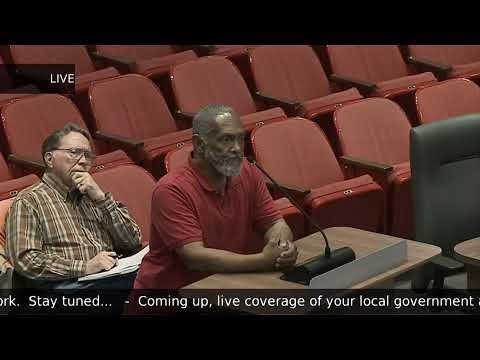
Council deadlocks, rejects resolution endorsing phased community responder plan
Loading...
Summary
After extended public testimony and council debate, the Knoxville City Council voted 4–4 on a resolution to endorse phase 1 of a community (alternative) responder plan; the tie vote caused the measure to fail, leaving questions about next steps, funding and county participation.
Council members voted in a 4–4 tie and failed to endorse phase 1 of a proposed community responder program after more than two hours of public testimony and council debate.
Supporters, including members of Knoxville Heart and mental-health advocates, urged the council to endorse the plan as a non‑budgetary step to keep momentum and to explore a pilot that could divert low‑level, nonviolent 911 calls from police. "We respectfully ask that you vote yes in support of this micro transit design study because this is a step toward dignity, access, and opportunity for so many in our city," Mary Alice Richardson, of Justice Knox, told the council in support of related transit and access work; Elizabeth Roland of Knoxville Heart described national experience with community responder programs and said of the programs the task force examined, "out of that 89 programs across the country...no one has been killed or seriously injured. 0." (Elizabeth Roland.)
Council member Debbie Parker, who introduced the resolution, said the plan offers a "continuum of care" distinct from the city's existing co‑responder teams and argued a pilot would allow the city to test the approach, identify funding and determine whether it can be scaled. "The two programs do have different purposes that we are seeing a need for in Knoxville," Parker said.
Opponents and some staff cautioned that Knoxville is larger and operationally different from several places cited in the plan, and they flagged open questions about cost, county involvement and whether 9‑1‑1 and other partners endorse the specific recommendations. Police Chief Noel told council he had met with consultants and raised concerns that were not addressed in the report; when asked whether KPD can "guarantee the safety of the people who are participating in this program," Chief Noel replied, "Can we guarantee their safety? No, sir." (Chief Noel.)
Council debate touched on funding estimates in the plan, which council members summarized as potentially substantial for an initial phase; speakers repeatedly asked whether Knox County would participate and whether the city should proceed without county cost‑sharing. Council members who supported the resolution said the proposal does not commit city funds now but would help the city pursue funding and design a pilot; those opposed said council should prioritize fully staffing and evaluating existing co‑responder teams first.
After procedural votes to end debate, council members cast a roll call: Parker, Thomas, DeBartleben and Grant voted yes; Adams, Fugate, Helsley and Lloyd voted no. Because the council is evenly divided, the resolution failed.
What happens next: With the formal endorsement rejected, council members who favor additional study or a pilot said they would continue discussions with community groups and county officials. Several members urged more reporting from existing programs and asked staff for clearer cost estimates and documentation of whether and how 9‑1‑1 and other agencies would adopt the plan's technical recommendations.
The council moved on to other business following the vote.