Get Full Government Meeting Transcripts, Videos, & Alerts Forever!
Get email alerts on the Vibrant Denver topic
No spam. Unsubscribe anytime.
Denver committee advances $410 million Vibrant Denver bond issuance and TriUnity contract to full council
Summary
The Finance & Business Committee heard a presentation on a roughly $410 million first issuance for the Vibrant Denver bond program and a proposed seven‑year, $45 million program‑management contract with TriUnity; the committee moved both items to the full City Council.
The Finance and Business Committee of the Denver City Council advanced to the full City Council a proposed first issuance of Vibrant Denver bonds totaling about $410 million and a related program‑management contract with TriUnity Inc.
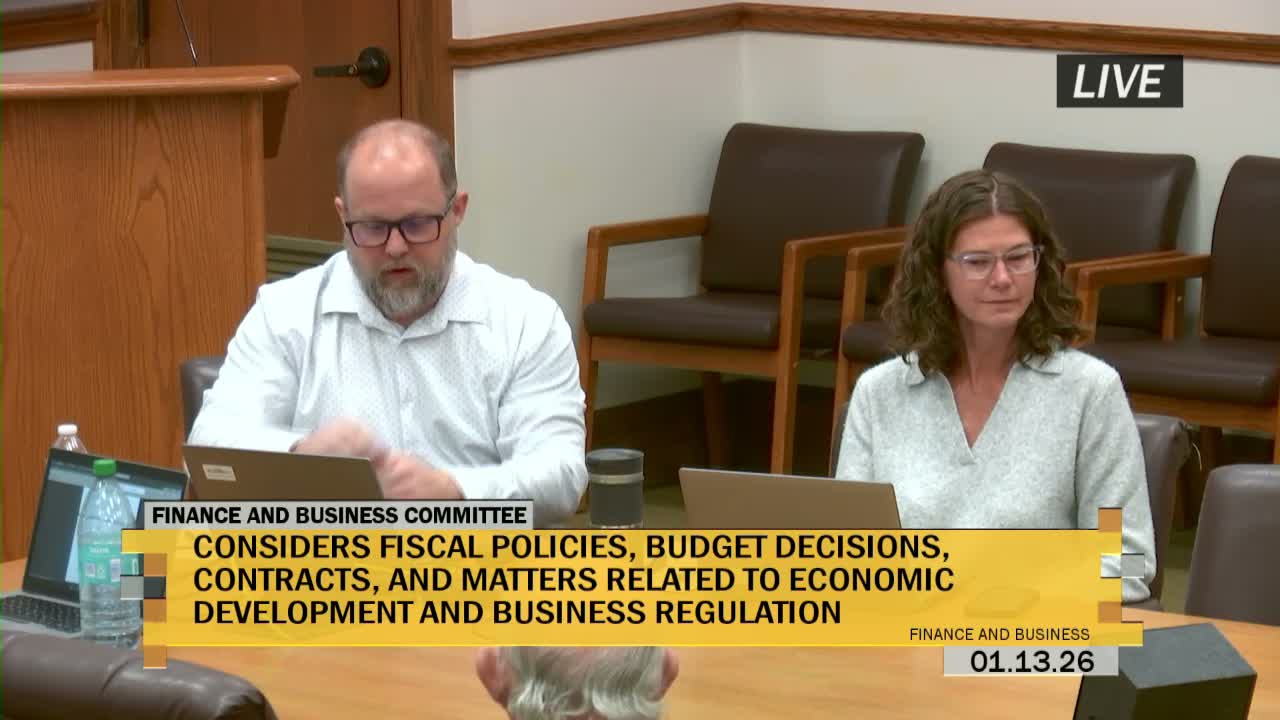
“Today is Tuesday, January 13, and we have really one big item on our agenda today,” said Chair Selena Gonzalez Gutierrez as she opened the meeting. City finance staff described two items for committee consideration: an ordinance authorizing two series of bonds (a tax‑exempt series and a taxable series) and a resolution approving a contract with TriUnity to manage the bond program.
Department of Finance staff said the first issuance is sized at roughly $410,000,000 with a planned market closing in early March 2026. Staff laid out a multi‑issuance schedule to keep the program on track for the six‑year delivery timeframe: an initial tranche in 2026, a second issuance in 2027, and a later issuance near the program’s end. Staff summarized the mayor’s commitments for the program: begin projects in 2026 at the projects’ next stage, publish an online project dashboard in 2026 and complete all projects by the end of 2031.
On the financing structure, staff explained the split between tax‑exempt and taxable debt and the practical constraints that drive that choice. “For the tax‑exempt bonds, we have certain spend requirements: 85% of those bonds have to be spent within the first three years and there is a 100% spend requirement for those bonds at a five‑year period,” staff said, explaining why the city would not issue the full tax‑exempt allocation immediately. Staff also gave a not‑to‑exceed breakout of $217.5 million in tax‑exempt bonds and $192.5 million in taxable bonds for the tranche discussed.
Council members pressed staff on two recurring topics: how projects were selected and how the city will coordinate community engagement. Jackson Brockway of Capital Planning and Programming said the Vibrant Denver projects will be incorporated into the city’s six‑year Capital Improvement Plan (CIP), which is on a roughly two‑year update cycle; council will receive briefings during the CIP update process. On outreach, staff said engagement will be tailored by project and coordinated with agency partners and council offices, and that staff will return for quarterly mayor/council briefings.
Council members also raised questions about why several health‑ and human‑services facilities were listed as taxable. Staff explained that the tax treatment can be driven by facility management arrangements: where a facility’s management is not structured as a qualified management agreement, bond counsel may recommend issuing taxable bonds to avoid private‑use complications. Staff noted programmatic private‑use thresholds city counsel and bond counsel monitor—roughly 10% related private use and a smaller unrelated threshold.
The committee also reviewed the proposed program‑management contract with TriUnity. Staff described TriUnity as a Denver‑based firm that began as an MWBE participant in the city’s DSPO program and was later acquired by Lochner; the proposed contract would run seven years (to cover the six‑year bond program and one year for closeout), have a $45,000,000 capacity for task orders, and carry a 20% MWBE participation goal.
A councilmember asked about a local Senior Tech Lab project and whether the space would be preserved; staff said the project is included in the first issuance and that real estate work is underway to adapt the space for senior center needs. Staff requested that council hold the program accountable to its implementation timeline.
At the meeting’s close Chair Gonzalez Gutierrez moved the items to the full City Council. The motion was seconded and the chair confirmed the items will be forwarded for consideration by the full body. The committee had no consent items and adjourned.
What happens next: the presenters indicated the ordinance and contract would be taken to mayor/council with a target first reading in early February and financial closing in March 2026 if the schedule holds.