Get Full Government Meeting Transcripts, Videos, & Alerts Forever!
Get email alerts on the Data Centers topic
No spam. Unsubscribe anytime.
Resident warns data centers could strain Denver’s water and power systems
Summary
A public commenter urged Denver City Council to reconsider local approvals for large AI-grade data centers, saying they consume substantial water and electricity and could shift infrastructure costs onto residents; the comment also flagged unverified CO2 estimates and other social harms.
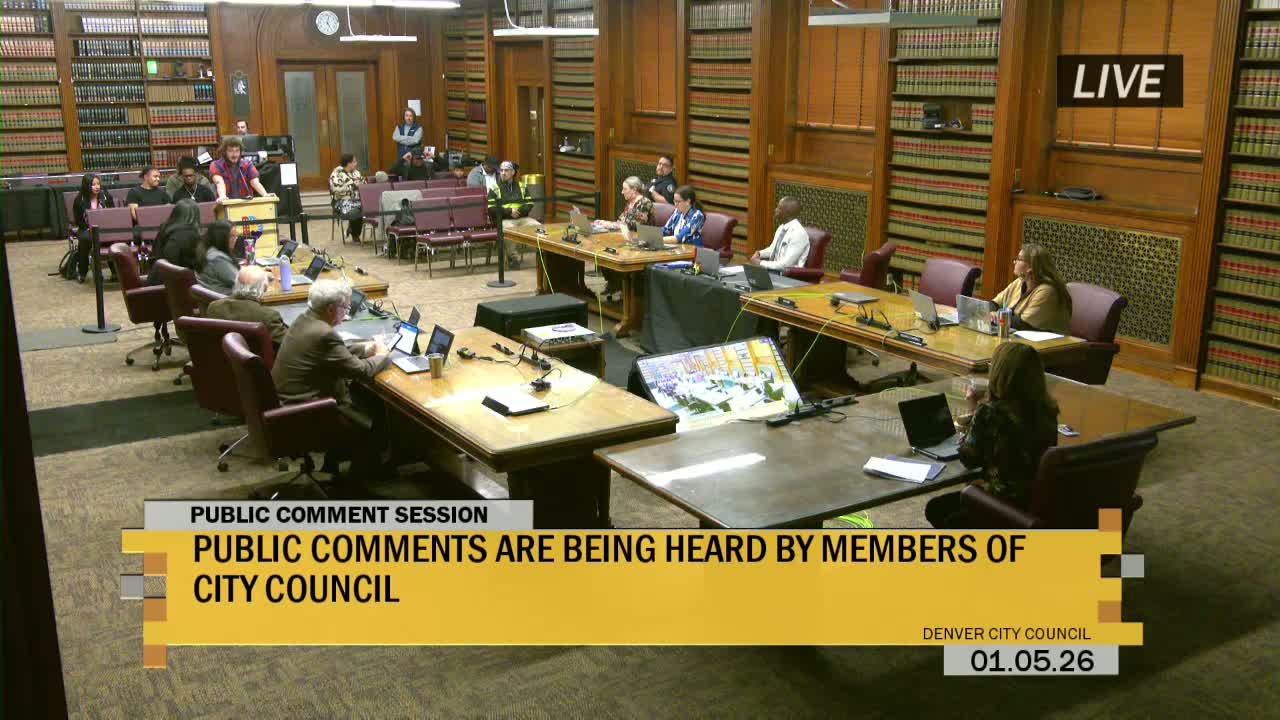
Robbie, a resident who asked to be identified only by his first name, told the Denver City Council during general public comment that the city should resist local expansion of AI-grade data centers because of their environmental and economic impacts. “Denver sits in a semi-arid region…do you think this is the best use case for an already scarce resource?” he asked, arguing such sites require large volumes of water and can intensify wildfire risk and fire-prevention challenges.
Robbie cited several specific figures, saying a 75-megawatt facility can consume “roughly 15,000,000 liters” of water and claiming that AI systems emitted “up to 80,000,000 metric tons of CO2” in the last year. He also warned that a single data center’s electric demand can be equivalent to “tens of thousands of homes” and questioned who would pay for upgrades if utilities must expand capacity.
The speaker linked the potential burden on residents to recent rate changes at Xcel Energy, saying higher bills could follow if the city approves large new facilities. He also raised a separate social concern about harmful uses of AI, saying the technology was being used to produce non-consensual explicit material.
The comment was presented as a call for council oversight and caution; no formal motion or vote occurred during the session. The council took public comment only and did not respond from the dais; staff may follow up with speakers if further action is warranted.