Get Full Government Meeting Transcripts, Videos, & Alerts Forever!
Get email alerts on the E Scooters topic
No spam. Unsubscribe anytime.
Committee flags 2026 California e‑scooter rules as enforcement and education priority
Summary
Vice Chair Wilson and committee members raised concerns about children riding oversized electric scooters and outlined new 2026 California requirements (minimum age 16, license/permit restrictions, helmet rules and a 15 mph cap); deputies said education is preferred for first-time violators and out‑of‑class bikes are being towed.
Committee members at the March 18 Cerritos Community Safety Committee meeting flagged growing concerns about electric bikes and scooters after several local incidents.
Vice Chair Wilson described the 2026 California e‑scooter rules to the committee, saying riders must be at least 16, carry a valid driver’s license or learner permit to operate certain devices, wear helmets if under 18, and that scooters are limited to 15 miles per hour and should ride in bike lanes rather than the center of the street. “These children are so little … they could get hit by a vehicle,” Wilson said, urging adherence to the rules and parental supervision.
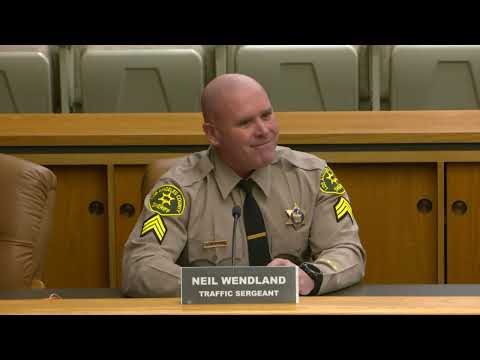
Deputy Neil Wendland noted the city has not seen problems at the scale of some other nearby cities but has recorded a few incidents, including one riverbed fatality and other collisions potentially tied to distracted riding. He said some devices fall outside the legal e‑bike classification because they exceed the regulatory speed threshold (over 20–28 mph in his description), and deputies are towing those vehicles when encountered.
On enforcement, staff said deputies generally prefer education, especially when riders appear to be unaware of new rules; deputies have issued very few parking citations tied to new school-area restrictions and prioritize warnings and outreach. The committee discussed the balance between education and enforcement as summer approaches and students are out of school.
Vice Chair Wilson also emphasized crime-prevention tips — exterior lighting, locking side gates, and neighborhood communication — and previewed planning for the next civilian academy.
No formal ordinance or enforcement policy change was adopted at the meeting; the discussion emphasized outreach, education-first enforcement and continued monitoring.