Get Full Government Meeting Transcripts, Videos, & Alerts Forever!
Get email alerts on the Animal Control topic
No spam. Unsubscribe anytime.
Denver officials defend behavior-based dog laws as public defenders urge changes to strict-liability penalties
Summary
Denver animal-control and city prosecutors outlined a behavior-focused enforcement system tied to a 1–6 bite scale and said prosecutions are handled case-by-case. The municipal public defender urged changing Chapter 8’s strict-liability penalties, and council members requested multi-year sentencing and charging data.
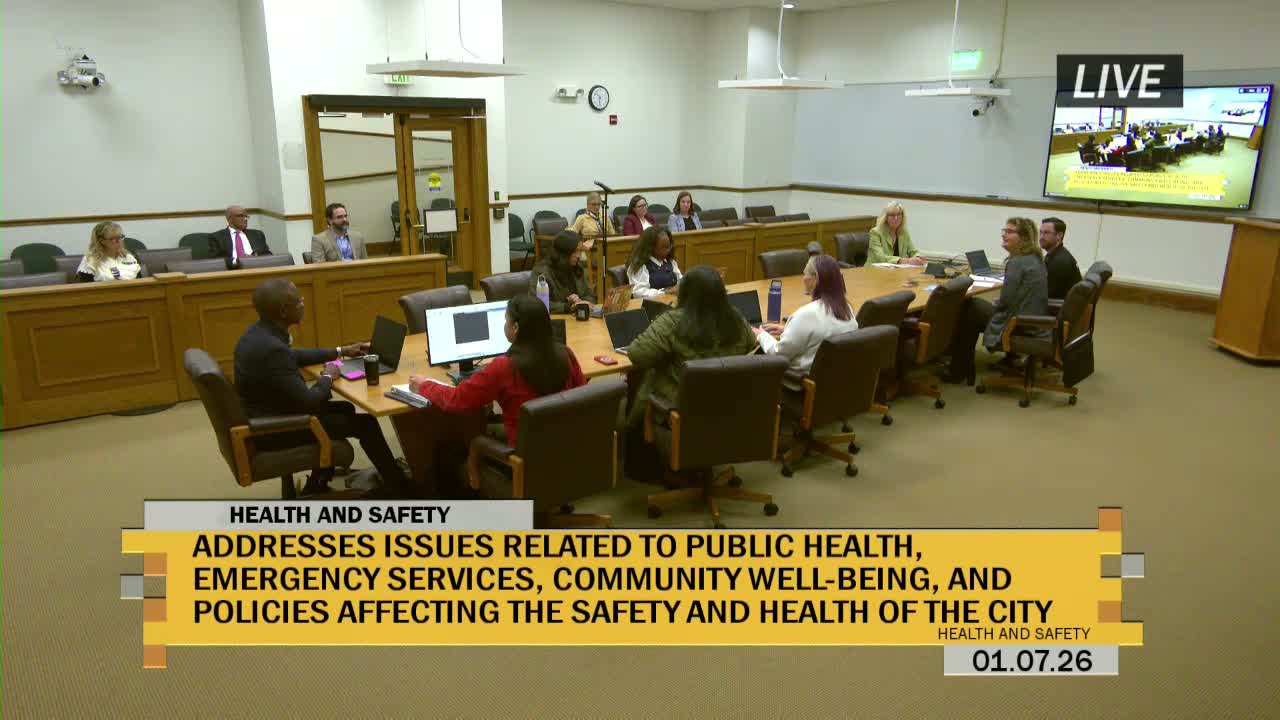
Denver (Consolidated County and City) — Denver Animal Protection and city prosecutors told the Health & Safety Committee that the city’s enforcement approach centers on an animal’s behavior, not breed, while the municipal public defender urged revisions to the city code that she said expose owners to harsh criminal penalties.
"The ordinance in Denver that governs that, is DRMC 8-61," said Lieutenant Joshua Rolfe of Denver Animal Protection, explaining the department’s use of the Dr. Ian Dunbar 1–6 bite-severity scale and a tiered enforcement protocol tied to those levels. Roland described level 3 as a mixed education/enforcement case and said the department focuses enforcement on level 4–6 incidents, with level 5–6 incidents sometimes recommending euthanasia.
Why it matters: The council discussion highlighted a tension between a public-safety approach that prioritizes evidence of dangerous behavior and concerns from defense attorneys that the city’s code can criminalize owners even where culpability is unclear. That tension affects potential jail exposure, community trust and how the city allocates enforcement and social services.
Rolfe and Denver Animal Protection director Melanie Sobel emphasized prevention and community support alongside enforcement. Sobel described free and low-cost services the department provides—regular vaccine and microchip clinics, spay/neuter assistance, a temporary pet housing program for families in crisis and community engagement to reduce surrenders. She said the department recorded a 44% increase in animal intake in 2025 compared with 2019 and reported return-to-owner rates of about 63% for dogs and 23% for cats; presenters attributed rising surrenders to socioeconomic pressures.
"We really try to focus enforcement on the more serious, like, level 4 and level 5 incidents," Rolfe said, adding the department uses an internal investigation protocol to align charging decisions across officers and to prioritize public safety and behavior change rather than automatic removal.
Claudia, a representative of the Municipal Public Defender’s Office, told council that Chapter 8’s animal violations expose clients to up to "300 days in jail and a $999 fine" and urged council to review which offenses should remain criminal and which should be civil infractions or include a mens rea element. "What we were asking for…is just to take a look at the code, see if there's some areas that we can clean it up," she said, arguing that strict-liability exposure risks criminalizing owners who were not culpable.
Marley, director of the prosecution section in the City Attorney’s Office, said prosecutors and animal-protection staff routinely coordinate and that the office often dismisses cases where charging an owner would be inappropriate. "We do see these…we're ending up dismissing that case," Marley said, and agreed to follow up with council on historical charging and sentencing data.
Council members pressed both sides on practice and outcomes. Council member Parady asked whether prosecutors pursue cases that lack apparent negligence; Marley said the office sees such cases but that charging decisions are informed by conversations with Animal Protection and that not all such matters result in prosecution. Parady asked for historical statistics (she requested multi-year data; she suggested three to five years) and Marley agreed to provide them.
Several council members raised cross-jurisdiction challenges after an example of repeat bite incidents near city borders: Rolfe said Denver staff will investigate incidents that occur in Denver but cannot issue municipal summons outside the city limits and therefore must rely on interjurisdictional collaboration when owners live across the boundary.
The committee recorded no formal votes on ordinance changes at the meeting. Presenters said they would provide follow-up materials and data: the City Attorney’s office agreed to supply historical charging/sentencing statistics on animal-related cases; Animal Protection agreed to provide operational and intake data and to coordinate with Parks & Recreation and neighboring jurisdictions as requested.
What’s next: Council members said they will follow up with departments on code cleanup, data requested from prosecutors and cross-jurisdiction protocols. No ordinance amendments were proposed at the session; any code changes would return later through the council’s legislative process.
Sources: Presentation and question-and-answer session with Denver Animal Protection and the City Attorney’s prosecution section at the Denver City Council Health & Safety Committee meeting (Jan. 7).