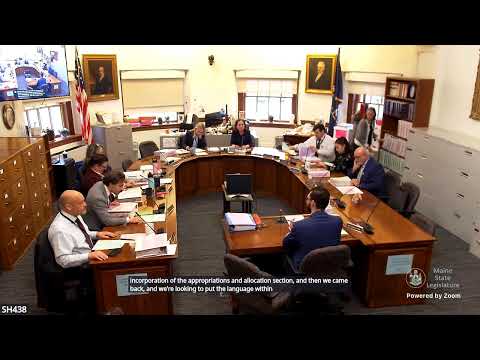
Judiciary panel split over keeping aquaculture testing results confidential
Loading...
Summary
Lawmakers debated LD2025, which would let the Department of Marine Resources sample aquaculture sites and keep some test results confidential. Supporters said protecting industry from misinterpretation is necessary; opponents said withholding results risks public trust. The committee deferred a final recommendation and will send a letter reflecting divided views.
The joint Judiciary committee spent most of its meeting debating LD2025, a bill that would create a limited-purpose aquaculture license and allow the Department of Marine Resources (DMR) to inspect and sample lease and license sites, keeping most test results confidential except when disclosure is necessary to protect public health, for enforcement, or when relied on in licensing decisions.
Janet Stocco, a legislative analyst, told members the amendment adds a new section to Title 12 that would let the commissioner or the commissioner's agents collect samples when they identify a possible risk to public health, animal health, or the health of other marine organisms, require 24 hours' notice to leaseholders, and keep sample results confidential with narrow exceptions.
The department's witness, Tole Canwit, director of the Bureau of Public Health and Aquaculture at the Department of Marine Resources, urged caution about making raw sample results public. "Sometimes you can see them doing a thing called gaping," Canwit said of oysters, describing how an animal-only disease or other nonhuman-health problem could look alarming without context. "In the case of paralytic shellfish poisoning…people can get very sick and potentially die," she said, describing the circumstances when DMR would make results public. Canwit said the department often lacks staff capacity to prepare explanatory write-ups for every sample and worried about incomplete information being "weaponized" against farms or used to damage a fledgling business.
Opponents of the blanket confidentiality carveout said an FOA exemption is not the right tool and that withholding test results could undermine public trust. Representative Dylan Pugh said he was "not convinced that e is met here," arguing the exemption could do more harm than good by preventing the public from evaluating health claims. Representative David Sinclair and others said the public has a legitimate interest in knowing that complaints were investigated and followed up on; Representative Adam Lee suggested reversing the bill's logic so preliminary materials are confidential but the final result—"health risk, no health risk"—is public.
Members pressed technical points in the statute: several caught a typographical discrepancy in the amendment (a word that should read "results" rather than "request") and asked whether the statute should require the department to disclose results when it determines a public-health risk (‘‘shall’’ vs. ‘‘may’’ language). Canwit said that, where a human-health risk exists, current federal and interstate programs (including the National Shellfish Sanitation Program and FDA audits) already require public reporting and traceback to protect consumers.
The debate also touched on operational detail: DMR staff said routine water-quality monitoring is already public but organism-level testing (necropsies, shellfish lab results) is not always analogous, and that in some cases the department would close a water body (for example, an Upper New Meadows closure described hypothetically) without naming a particular farm.
After hours of discussion, the committee did not adopt a single recommendation. Representative Lee said he would offer a report finding that the proposed exception does not meet the statutory criteria because it protects the wrong information; Representative Claire Pew offered an alternate report saying test results should remain public to enable independent review of public-health determinations. The committee agreed to send a letter that records these divided views and to recommend future consideration of whether certain preliminary records should be confidential while ensuring final determinations about human-health risk are public.
The committee did not take a final committee vote to approve LD2025's FOA language; instead members asked staff to capture concerns about the notice and tailoring and to include majority and minority views in the response to the originating committee.
What happens next: the Judiciary committee's forward-review letter will reflect both concerns about potential industry harm from premature disclosure and concerns that an FOA exception should not block transparency about public-health determinations. The originating committee and bill sponsors will receive the letter; any statutory change would require follow-up action in the legislature.