Get Full Government Meeting Transcripts, Videos, & Alerts Forever!
Get email alerts on the Capital Improvement Plan topic
No spam. Unsubscribe anytime.
Council hears new five-year capital improvement plan process; staff urges shovel-ready submissions
Summary
Council discussed a revised capital improvement program process that separates capital assets and projects, requires fillable project forms, and prioritizes shovel-ready projects for grant seeking; staff cited a backlog of roughly $54 million and urged council input ahead of a February 26 department prioritization meeting and a March presentation to council.
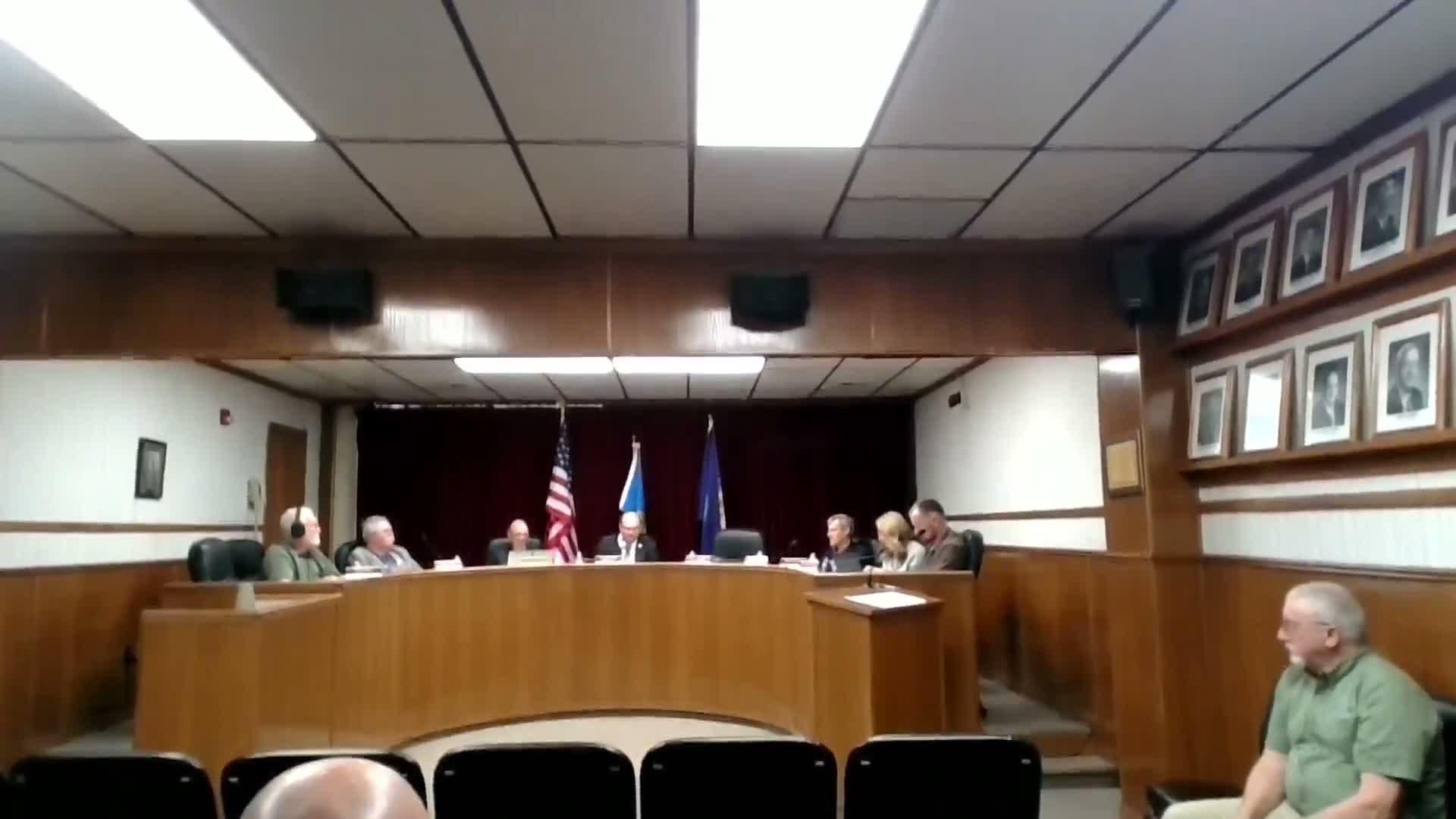
The council met in a special session to discuss a revised five-year capital improvement program (CIP) process that city staff said is intended to make projects "shovel ready" and easier to fund.
Weimer outlined a two-part structure that separates capital assets from capital projects and described a project book and a fillable PDF form staff will use to collect site photos, estimates and notes on outside contributions. He said department heads will return forms that Sherry and finance will collate into a single spreadsheet and that staff will meet as a group on February 26 to prioritize projects. Weimer said he will present the compiled five-year plan to the council in March.
Why it matters: Staff said the change is designed to streamline grant applications and reduce time spent chasing ad-hoc projects. Once a project reaches roughly 90% planning readiness, Weimer said it can be handed to Michael, the grant administrator, for targeted funding searches.
Councilors asked how projects that include outside funding or donated structures should be recorded; staff said those commitments should appear in the form's notes and be reflected in the project's total cost so grant matches or partial awards can be identified. Staff also said PSO rebates on lighting projects have typically been applied against project costs (or recycled into the next project) rather than being treated exclusively as general fund revenue.
Several councilors pressed staff on timelines and recurring coordination. Elizabeth and staff described an annual CIP cycle that feeds the budget process: the fiscal year begins July 1, the prioritized CIP will inform budget requests, and the city—s budget materials must be submitted before June. Staff emphasized that short grant application windows (for example, some grants may only be open about 90 days) make having shovel-ready documentation essential.
Staff and councilors also discussed the city's backlog of infrastructure needs. Officials said an earlier DWSRF program started with 28 water and sewer projects totaling about $30 million; 16 were completed, roughly three are expected to finish soon and about 10 remain unfunded. Weimer estimated additional unfunded work at about $22 million, placing the program backlog near $54 million. Separately, two large treatment-plant projects were described in aggregate as roughly $100 million (staff said the water treatment estimate alone had been near $43 million in prior work); staff said roads were not included in that $100 million example.
Regulatory pressure was cited as a complicating factor: Weimer warned a pending consent order tied to wastewater compliance could raise project priority and noted a possible enforcement fine he characterized as about $10,000 per year if compliance is not achieved. Councilors discussed whether heavy borrowing (including under a proposed charter change) would be feasible, and staff cautioned borrowing remains contingent on qualifying for loans and having sufficient revenue to service debt.
Practical guidance for councilors: Weimer asked councilors to submit prioritized project lists (their top 1-2-3 projects) and to contact staff when they need cost estimates; staff said in-staff experts (Tommy, Jamie and others) can generate site-specific quantities and quotes to populate the form. Staff reiterated that projects already on previous CIP books are carried forward and will be reconsidered and reprioritized each cycle, but being on the list does not guarantee funding in the near term.
What happens next: Staff will collect department submissions, meet with department heads on February 26 to prioritize the consolidated list, and Weimer will present a CIP recommendation to council in March to inform the FY budget cycle beginning July 1. The special meeting adjourned with no votes taken.
Quotes representative of the discussion:
"It allows us to target a specific project by saying, hey, we have money that's been earmarked by donation," Weimer said, describing how partial outside funding can make a project fundable.
"A lot of those, it goes towards the project," Elizabeth said about utility rebates from PSO, adding they typically offset project costs.
"We started out with 28 projects with 30,000,000. We got 16 done," Elizabeth said when describing the DWSRF program status and the remaining unfunded projects.
Ending: The council did not take formal action; staff asked councilors to prepare project submissions and to be prepared for a March presentation as part of the FY budget process.