Get Full Government Meeting Transcripts, Videos, & Alerts Forever!
Get email alerts on the Right Of Way Maintenance topic
No spam. Unsubscribe anytime.
Council debates shifting right-of-way maintenance to city amid cost and authority concerns
Summary
Councilors debated a proposal to have the city maintain rights-of-way and alleys rather than property owners, with concerns about budget, staff capacity and overlap with existing code enforcement; no ordinance was adopted and council asked staff to identify public-safety priorities.
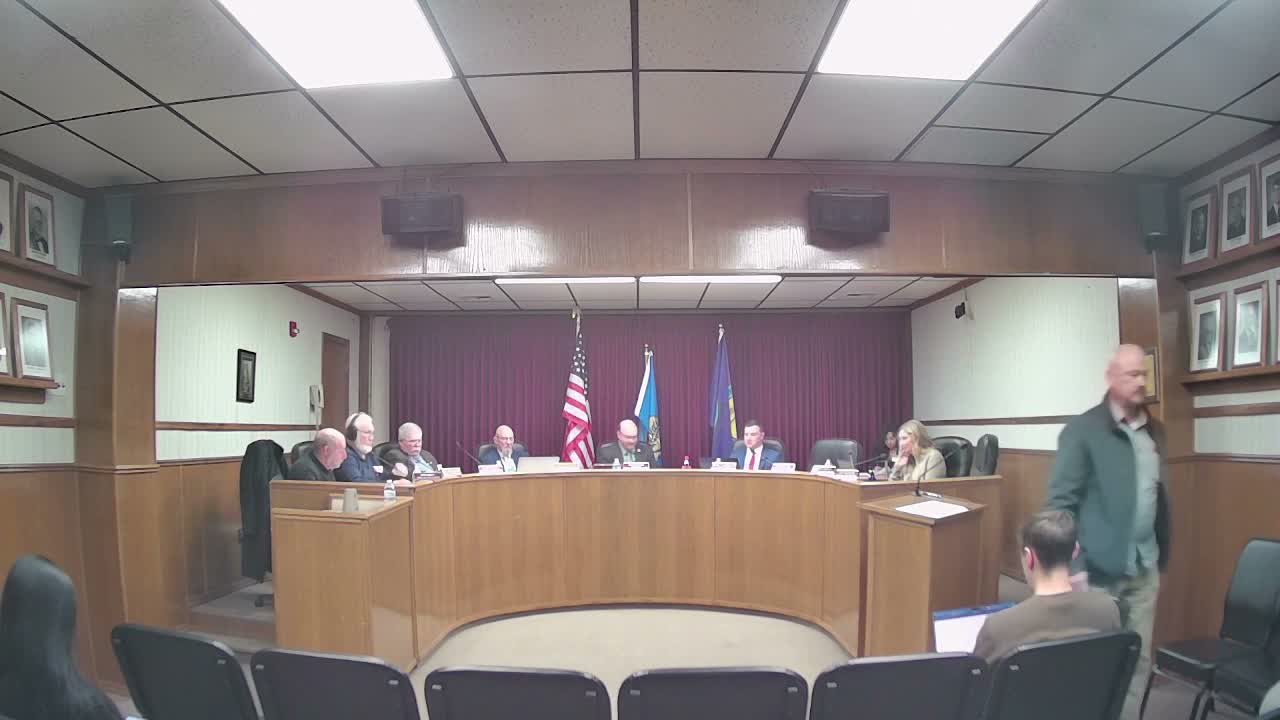
Councilors spent an extended portion of the meeting debating whether the city should resume responsibility for mowing and maintaining rights-of-way and alleys that have long been the property owners’ responsibility. A councilor said many neighbors in their ward, including elderly and low-income residents, cannot manage the upkeep and urged the city to take responsibility in cases of need. The proposal under discussion was framed as a direction to the city attorney to draft an ordinance making the city responsible for certain rights-of-way tasks.
Opponents and staff raised practical and legal concerns. The city attorney and public works staff warned that taking on citywide right-of-way maintenance would require significant new staffing and equipment, create ongoing operational costs, and raise enforcement questions unless objective eligibility criteria are established. "If we were to go down this route, some type of mechanical policy…here's who qualifies, here's who doesn't," the city attorney said, arguing that predictable criteria would reduce allegations of favoritism and possible constitutional challenges.
Public-works staff estimated cleanup and preparation work for overgrown alleys and trees could cost more than $1,000,000 for initial clearance if the city attempted a broad program to restore alleys to a mowable condition. Councilors and staff repeatedly noted that tree removal and recurring mowing are expensive and that the city previously cut back such services around 2013–2014 when resources tightened.
Councilors landed on a staged approach: identify specific locations where vegetation or tree limbs create public-safety hazards (blocked stop signs, impeded emergency access) and pursue those projects first, explore grant or mitigation funding (including fire-mitigation grants), and consider partnerships with nonprofits for volunteer cleanup days. No formal vote to change the municipal code was taken during the meeting.
Why it mattered: Councilors who hear regular complaints from older or low-income constituents framed the issue as an equity and public-safety concern. Staff cautioned that a blanket return to prior city services would create substantial and ongoing budget pressure.
What happens next: Council asked staff to inventory high-priority public-safety locations, estimate costs for targeted mitigation, and return with options rather than moving immediately to a citywide ordinance change.