Get Full Government Meeting Transcripts, Videos, & Alerts Forever!
Get email alerts on the Municipal Finance topic
No spam. Unsubscribe anytime.
McAlester accepts FY2025 audit; auditors cite low reserves and three accounting items
Summary
The McAlester City Council voted unanimously to accept the fiscal-year 2025 audit after auditors issued a clean opinion but highlighted low general-fund reserves, three internal-control comments and accounting changes that raised reported liabilities; no federal-grant findings were reported.
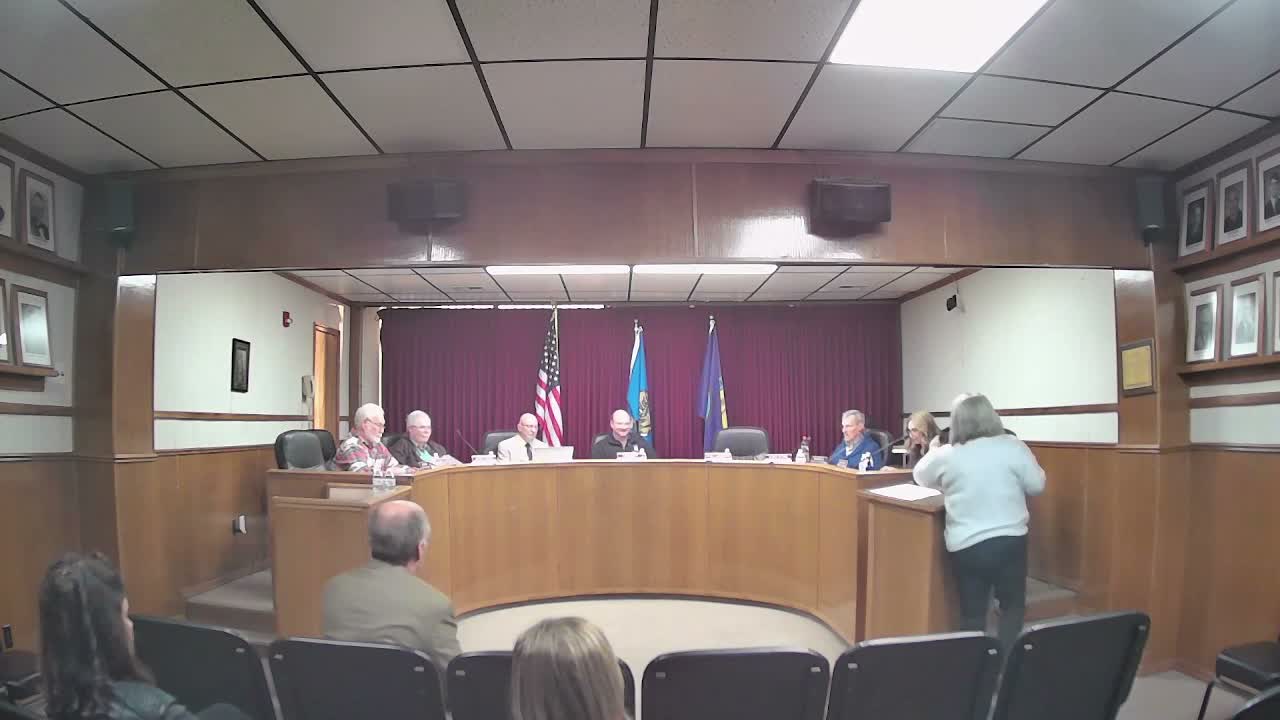
McAlester ' The McAlester City Council voted unanimously to accept the city's annual financial statements and independent auditors' report for the fiscal year ending June 30, 2025, after hearing a presentation from the city's outside auditors.
"These financial statements are materially correct," said Andy Kroner, a shareholder with HSBG, delivering the firm's audit opinion. He told council members the firm issued an unmodified (clean) opinion that the city can provide to the state auditor, banks or bondholders.
Kroner said the audit identified several matters of note. On reserves, he said the general fund's balance is on the low side of commonly recommended levels: "about a half a month to a month," he said, compared with a rule-of-thumb of one to three months of operating reserves. He recommended the council consider steps to rebuild that cushion.
The auditors also reviewed the utility authority, which Kroner characterized as financially healthy. He reported the authority's operating margin at roughly 17 percent, comparing favorably to a peer municipality, Stillwater, at about 18 percent, and said the authority's positive cash flow allows some transfers to the general fund.
Kroner summarized pension funding levels: "the fire is about 70% funded," he said, and the police pension is "a little over 90% funded," while the city's general employee plan is about 90 percent funded. He cautioned that actuarial ratios can fluctuate with investment returns and noted recently increased police benefits will raise future contribution requirements.
The auditors flagged an accounting-change effect on liabilities: "that increased your liability by about $1,000,000," Kroner said, describing a new rule on how to account for compensated absences that raised reported liabilities without constituting an immediate cash outflow.
Kroner said McAlester met the federal single-audit threshold this year because the city spent more than $750,000 in federal grants (including prior ARPA funds), so auditors performed compliance testing on federal-award spending; he reported no findings in the federal-compliance section.
On internal controls and compliance, the auditors listed three comments in the citywide report. Kroner told the council the city's allowance for doubtful accounts on long-outstanding receivables appeared low and had been increased during audit work (the auditors noted the prior estimate of about 50 percent had been raised toward 75'80 percent). He also said retainage and other payables tied to construction projects were not always recorded as liabilities when incurred and recommended consistent recording.
A third comment concerned a fund that showed a statutory deficit after the city paid reimbursable project costs ahead of receiving reimbursement from the water board. Kroner estimated that shortfall at "about 900,000 or so" and explained state statute prohibits a negative fund balance; the practical fix is for another fund (for example, the general fund or the utility authority) to temporarily cover the cash shortfall until the water board reimburses the city.
Sherry Webb, who introduced the auditors and answered council questions during the presentation, said staff will file the audit with the state auditor's office in the coming weeks and will meet with the auditors to smooth next year's process. Asked whether earlier water-plant repairs drove the reserve position, Webb clarified the general fund is separate from the city's emergency fund and that the relationship was not necessarily the sole cause of the low reserve level.
Mayor called for a motion to approve the audit. Councilor Gilmore moved to approve, Councilor Boatwright seconded; Elizabeth called the roll and Councilors Gilmore, Whitley, Stone, Ronan, Boatwright and Mayer each voted yes. The motion carried unanimously and the meeting was adjourned.
The audit acceptance advances the city's financial statements to formal filing with the state auditor; council and staff said they will pursue follow-up actions on the auditors' internal-control comments and discuss options to strengthen reserve levels in the year ahead.