Get Full Government Meeting Transcripts, Videos, & Alerts Forever!
Get email alerts on the Homelessness topic
No spam. Unsubscribe anytime.
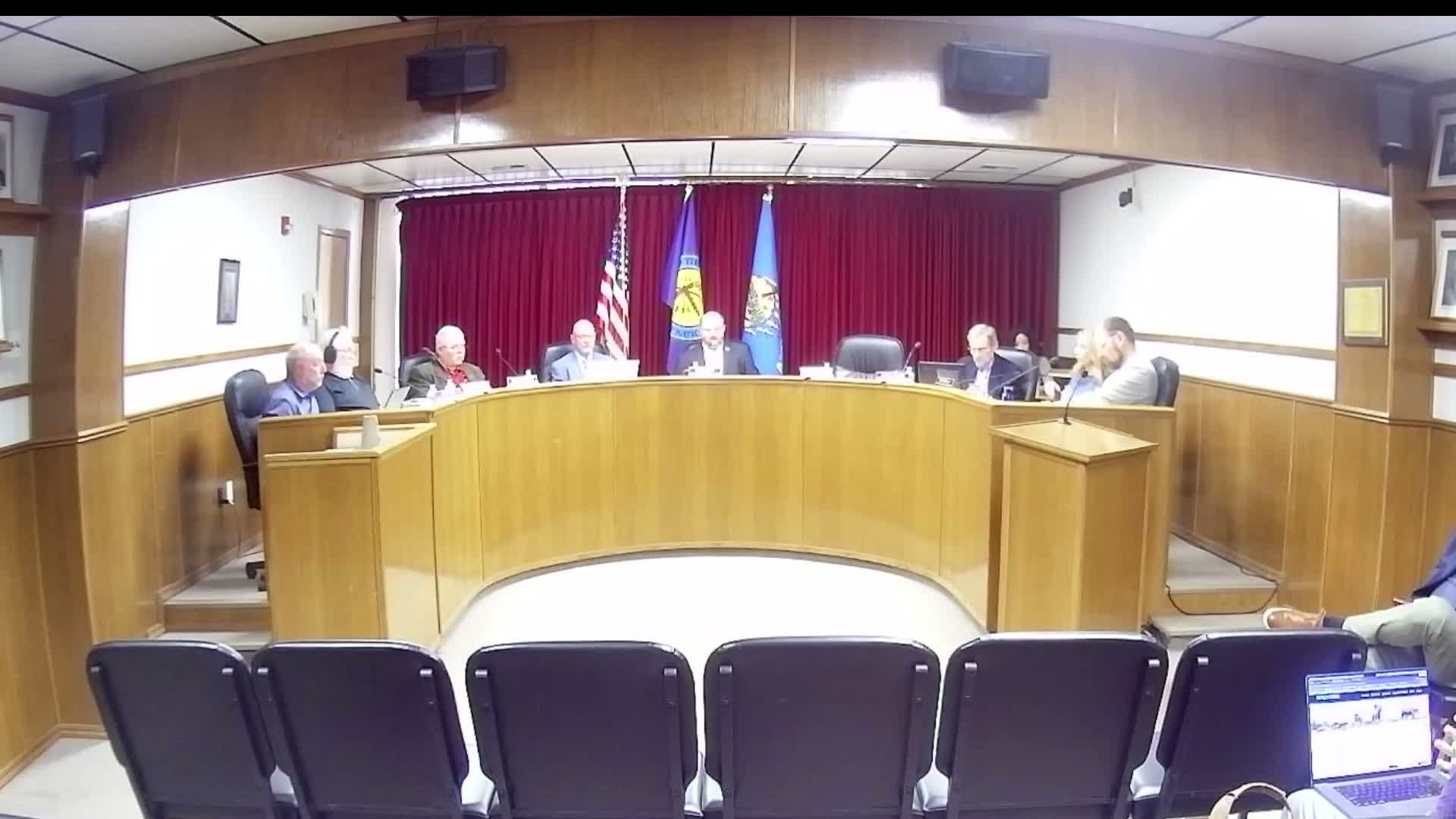
McAlester leaders hear business owners and outreach workers on downtown vagrancy, enforcement limits
Summary
At a discussion-only meeting, McAlester officials heard business owners and outreach volunteers urge a two‑pronged response—expanded services plus clearer local enforcement—while police and staff cautioned that tribal jurisdiction and existing ordinance language limit what the city can enforce.
McAlester officials on Wednesday heard extended public comment from downtown business owners and outreach workers about a rise in vagrancy, trespass and related safety concerns in commercial corridors, and discussed whether the city should revise ordinances or pursue service‑based solutions.
The mayor opened the single discussion item by asking the council to consider “the need to address vagrancy and loitering in commercial districts after hours.” Collie Stevens, a downtown property owner and member of a community action committee, told the council he has seen people sleeping in business lobbies, repeated break‑ins and fires, and instances of human waste on private property. Stevens said the committee supports a “two‑pronged approach” that combines humanitarian outreach with stronger tools for enforcement and offered the committee’s help drafting recommendations and proposals.
"I want to help people that need help and want help," Stevens said, urging the council to pair assistance with enforcement so businesses and residents are not repeatedly harmed.
The council and staff noted some recent “wins” on problem properties, including redevelopment of a promenade and work on the old Napa building, but speakers said problems persist in other downtown blocks. A city staff member read the municipal loitering/loafing ordinance aloud, highlighting language that prohibits remaining in a public place in a manner that "creates a danger of a breach of the peace, ... obstructs free passage of pedestrians or vehicles, or interferes with any person lawfully in a public place." That staff reading prompted a longer legal and operational discussion on what the city can practically enforce.
The police representative cautioned that the city faces limits when jurisdiction overlaps with tribal land. "Our ordinances don't apply to them," the police representative said, explaining that if a person is a tribal member and the alleged conduct occurs on tribal land, the city may lack enforcement authority and must coordinate with tribal or federal authorities. Council members and the police also discussed corridor‑based strategies, citing park curfews and designated areas as examples that would require layered funding and services.
An outreach worker who participates in local street outreach said that coordinated efforts in 2024–25 reduced the number of chronically homeless people sleeping outdoors to fewer than 50, but that many people now in McAlester appear to have arrived from other cities, including Tulsa and Antlers. That account, several speakers said, fits a broader regional pattern in which people move toward where services are available.
Buddy Gargan, a longtime resident, urged the council to draft a new ordinance to protect merchants and to hold meetings with the Choctaw Nation asking for assistance. "We have to have these meetings that talk about it... How can you help us?" Gargan asked, calling for coordinated action between the city and tribal leadership.
Councilors and staff did not vote on any changes at the meeting. Instead they asked staff and community groups to continue compiling model ordinances and best practices; the police chief and other staff said they would attend an upcoming community council meeting and bring examples from other cities. Council members acknowledged the complexity: several speakers warned that strict criminalization of sleeping or camping in public risks legal challenges and could be blocked or limited by higher courts.
The meeting closed with the mayor thanking commenters and noting the council would continue the discussion at future meetings.