Rural Infrastructure Authority asks for recurring funds to support statewide water and sewer projects
Loading...
Summary
Bonnie Ammons, director of the Rural Infrastructure Authority, told a Senate Finance subcommittee the agency awarded large ARPA‑funded grants statewide and is seeking $12 million in recurring funds each for rural and statewide infrastructure programs to help utilities plan and serve an estimated 50 communities.
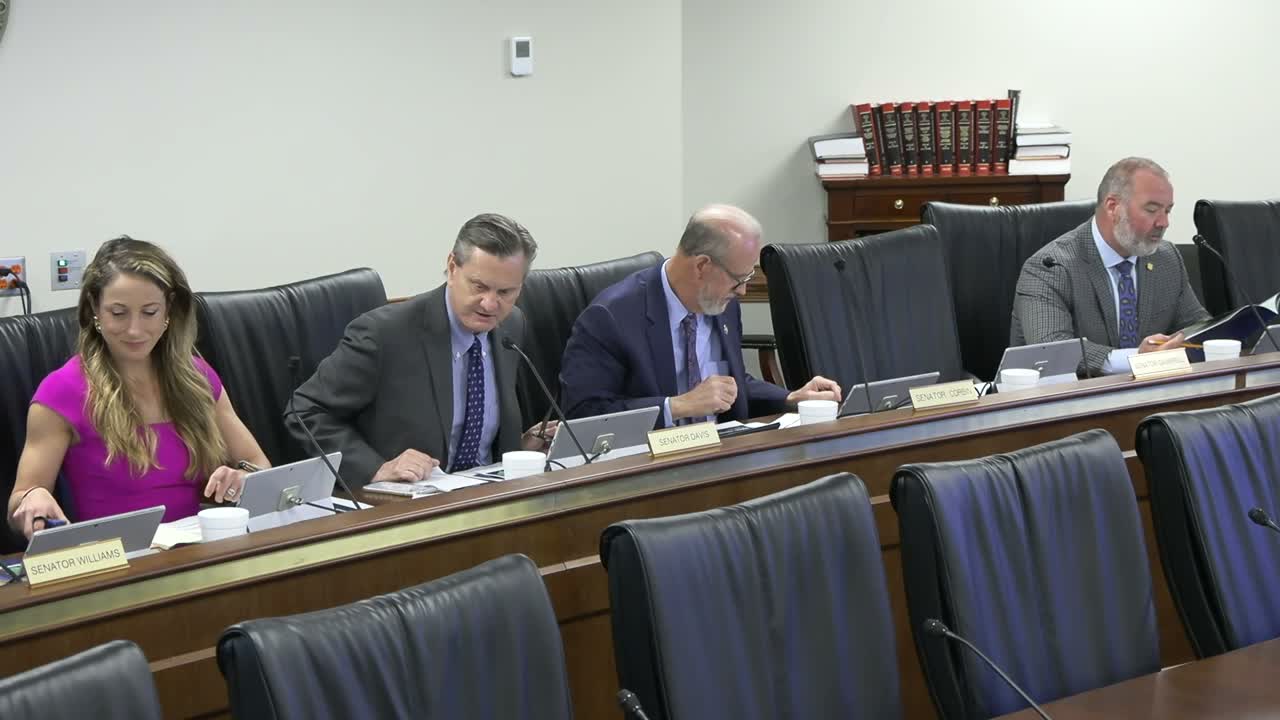
Bonnie Ammons, director of the Rural Infrastructure Authority, presented the agency’s annual report and budget request to the Senate Finance subcommittee, emphasizing water, wastewater and stormwater projects across the state.
Ammons said the authority administered South Carolina’s ARPA infrastructure program last year, noting the state awarded about $1,400,000,000 in grants through 216 awards and that 450 contracts were either underway or complete. "Through March, we have dispersed $920,000,000," she said, and added the federal December 31 deadline requires those funds be spent by year‑end. Ammons emphasized the program focused on serious environmental and public‑health needs, including septic‑to‑sewer projects in environmentally sensitive areas.
For fiscal year 2026, Ammons said the agency received $8,000,000 in the rural infrastructure fund and $8,000,000 in the statewide infrastructure fund plus nonrecurring allocations; the RIA seeks converting nonrecurring dollars to recurring: an increase of $12,000,000 recurring for the rural infrastructure fund and $12,000,000 recurring for the statewide water and sewer fund so communities can plan multi‑year projects. "Every year since we have been in existence, infrastructure needs have far exceeded the available funds that we have," she told the committee.
Ammons said higher construction costs have driven grant sizes up (from $500,000 previously to $1,500,000 now), which reduces the number of communities that can be served per funding cycle. She estimated the requested recurring increase would let the authority serve about 50 utilities statewide and stressed the agency requires a local match on grants to ensure community buy‑in: "Everybody has skin in the game."
Ammons cited a USC Darla Moore School of Business economic impact study that the authority said predicts an average of 3,075 jobs per year from these investments and about $2.4 billion in economic output tied to the program.
Senators thanked Ammons for the update and asked follow‑up questions about House funding recommendations and specific project examples, including a $10,000,000 water improvement to the City of Columbia that will indirectly benefit the Scout Motors site. The committee then moved on to Commerce’s presentation.