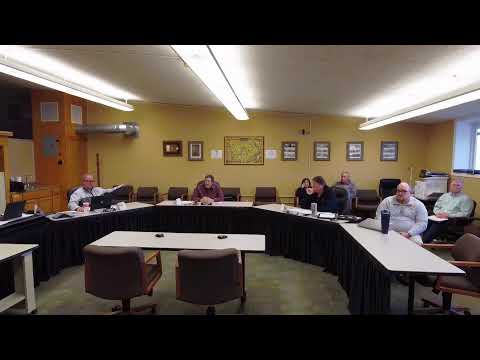
Questions raised about jail costs, sheriff—udget and armored vehicle funding in Benton County hearing
Loading...
Summary
Supervisors and residents pressed for details on juvenile detention bills, jail medical costs, federal inmate revenue and a $250,000 armored vehicle funded by ARPA; officials said hiring a full-time jail nurse and pursuing inmate collections could reduce costs.
Several speakers used the budget discussion to press on public safety spending and how the county offsets costs.
Committee members described a recent expensive juvenile placement that cost nearly $170,000 in housing and medical bills for a single youth and said the state does not fully cover those detention costs. "We paid almost a $170,000 in medical expenses," one supervisor said when describing the case.
Discussion moved to jail operations. The sheriff's budget was described as over $6 million this year. Supervisors said the county plans to charge $75 per day for federal inmates and that the jail was holding roughly 38 federal prisoners at times. "We went to $75 a day," a committee member said, adding the county has been pursuing a federal contract that would pay $90 $95 per day.
Officials said they hired a full-time nurse for the jail to reduce costly emergency-room transports and handle routine inmate care; the hire was funded this year in part from opioid fund money. The board noted the county can attempt to collect medical bills from inmates who have insurance or assets.
Board members also discussed equipment costs: replacing vehicle and body-camera systems now requires cloud storage (estimated in the transcript at about $100,000 per year), and the county made a down payment on an armored vehicle estimated at $250,000 that was paid from American Rescue Plan Act (ARPA) funds, not levy funds. "It wasn't technically tax dollars that went towards it," the Chair said.
The board said it reduced about $1,000,000 from the draft budget through line-by-line cuts but acknowledged some public safety costs are difficult to reduce because of staffing, equipment and statewide rules.