House advances bill to force age-estimation defaults and parental controls on large social platforms
Loading...
Summary
H 4591 would require major social platforms to use age-estimation signals and default child accounts to privacy-protective settings; sponsors say the measure targets platform conduct and provides private causes of action and AG enforcement under unfair-trade statutes.
The House advanced H 4591, the Stop Harm from Addictive Social Media Act, after adopting committee amendments and recording a unanimous second-reading vote. The bill requires covered social media platforms to estimate account holders’ ages once certain usage thresholds are met and to apply parental-consent safeguards before allowing child accounts to access addictive features.
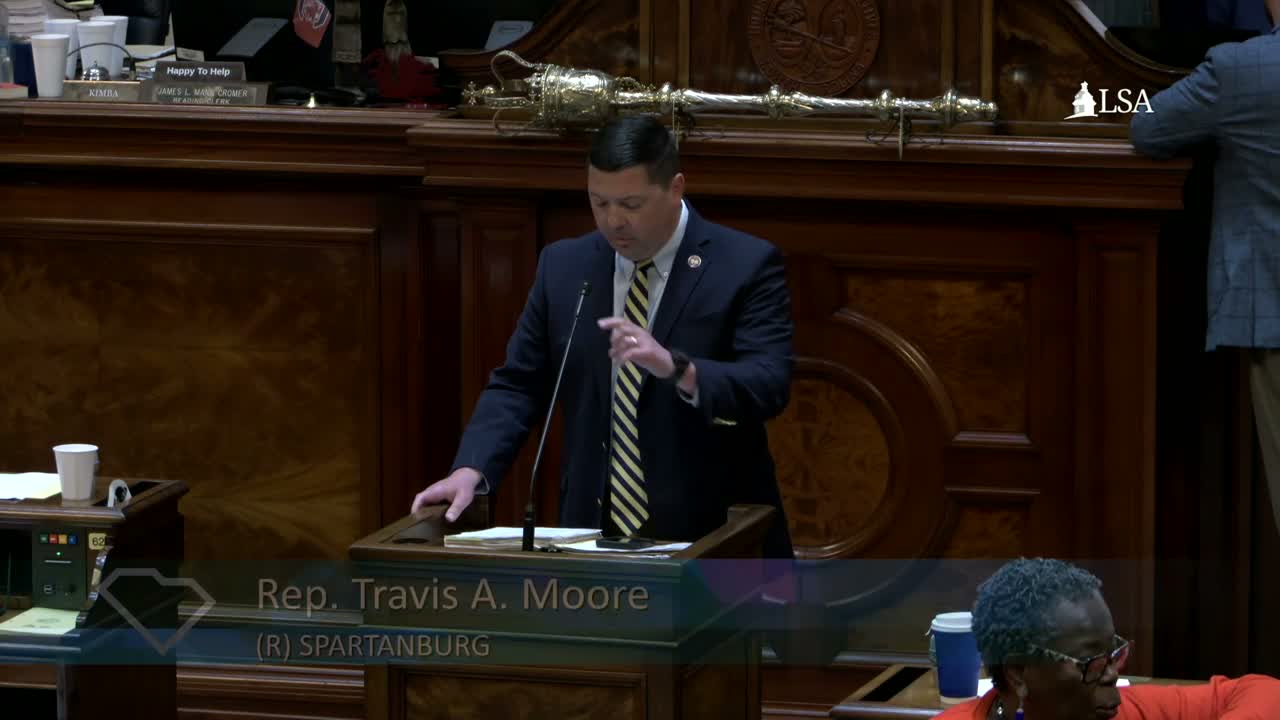
Representative Moore, who explained the judiciary committee report, said the approach uses platforms’ existing age-estimation tools rather than requiring government ID. "Age estimation, not verification," Moore said, describing it as a measure that targets how platforms engage users rather than restricting content. Sponsors and supporters argued the bill is content neutral and is designed to avoid First Amendment problems raised by earlier proposals.
Members asked how platforms would estimate age, how users would dispute determinations, and what role the attorney general would play. Representative Williams and others expressed concern about accuracy and federal litigation; supporters answered that platforms already collect behavioral signals that can estimate age at high confidence and that the bill ties enforcement to the Attorney General’s unfair-trade authority and a private right of action.
Representative Guffey, a sponsor, said the committee drafted limits to avoid burdensome ID verification while preserving parental tools and privacy defaults. The bill sets usage-trigger thresholds and includes dispute procedures and a provision that older accounts (7+ years) may be treated as adult accounts to reduce false flags.
After debate, the House adopted the committee amendment and recorded a second-reading vote of 114–0. Sponsors said the bill will be subject to additional drafting and legal review before final passage.