House advances bill increasing penalties for sexual exploitation of minors; members debate image-count thresholds
Loading...
Summary
Lawmakers adopted committee changes and advanced H 4804, which creates tiered penalties based on the number of images possessed; critics warned the thresholds may penalize users who inadvertently receive files and urged input from Internet Crimes Against Children prosecutors.
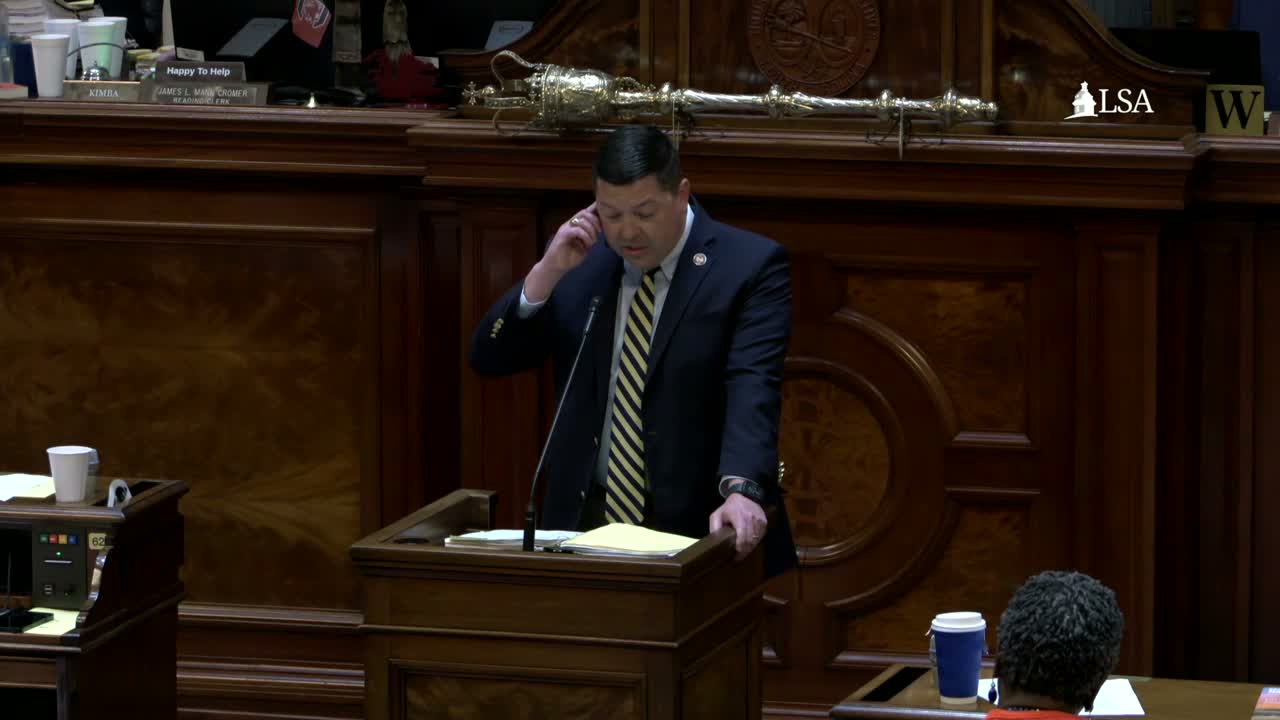
The House took up H 4804 Wednesday, a judiciary committee bill to stiffen penalties for sexual exploitation of minors and to adopt a tiered sentencing framework based on the number of images in a defendant’s possession. Committee sponsor Representative Moore said the revisions correct drafting issues and add mandatory minimums for repeat offenders; the House adopted committee amendments and advanced the bill on second reading.
The measure expands the statutory scheme by increasing mandatory minimum sentences for first-degree offenses, changing penalties in second and third degree, and creating a graduated framework for third-degree possession tied to image counts: 1–25 images, 26–250 images, and more than 250 images carry successively higher maximums under the committee draft. Moore said prosecutors and the Internet Crimes Against Children unit contributed input to the bill language.
Representative Rutherford expressed concern about the chosen metric and whether possession counts reflect culpable conduct. "If someone types a search term and images flood their computer, why should that determine prison time?" Rutherford asked, arguing the number of images may be a function of how web sources respond rather than an offender’s intent. Sponsor Moore responded that counts are analogous to quantity-based drug thresholds and that possession requires downloading and would be proven as evidence in prosecutions.
Members pressed the committee on whether trial-ready standards—such as proof of actual download, intent to view, or demonstrated distribution—would be required. The sponsor said prosecutors provided thresholds and that the subcommittee relied on their input; he said Senate testimony also informed the drafting. After debate, the House adopted amendment number 1 and recorded second-reading tabulation of 100–0.
The bill’s next steps are further floor consideration and, if passed by the House, transmittal to the Senate. Lawmakers said they expect prosecutors and law-enforcement partners to refine operational standards during implementation.