House adopts 'Roadway Safety and Protection Act' to criminalize organized street takeovers
Loading...
Summary
After hours of debate over asset seizure and broadly written penalties, the South Carolina House passed H 4292 to create criminal offenses for organizing or participating in coordinated street takeovers and to allow vehicle seizure and forfeiture upon conviction.
The South Carolina House on Wednesday passed H 4292, the Roadway Safety and Protection Act, creating a new misdemeanor and enhanced penalties for organizing, participating in or aiding street takeovers that block roadways and endanger residents. The measure passed on second reading after committee amendments were adopted and the full House recorded a vote of 109 to 1.
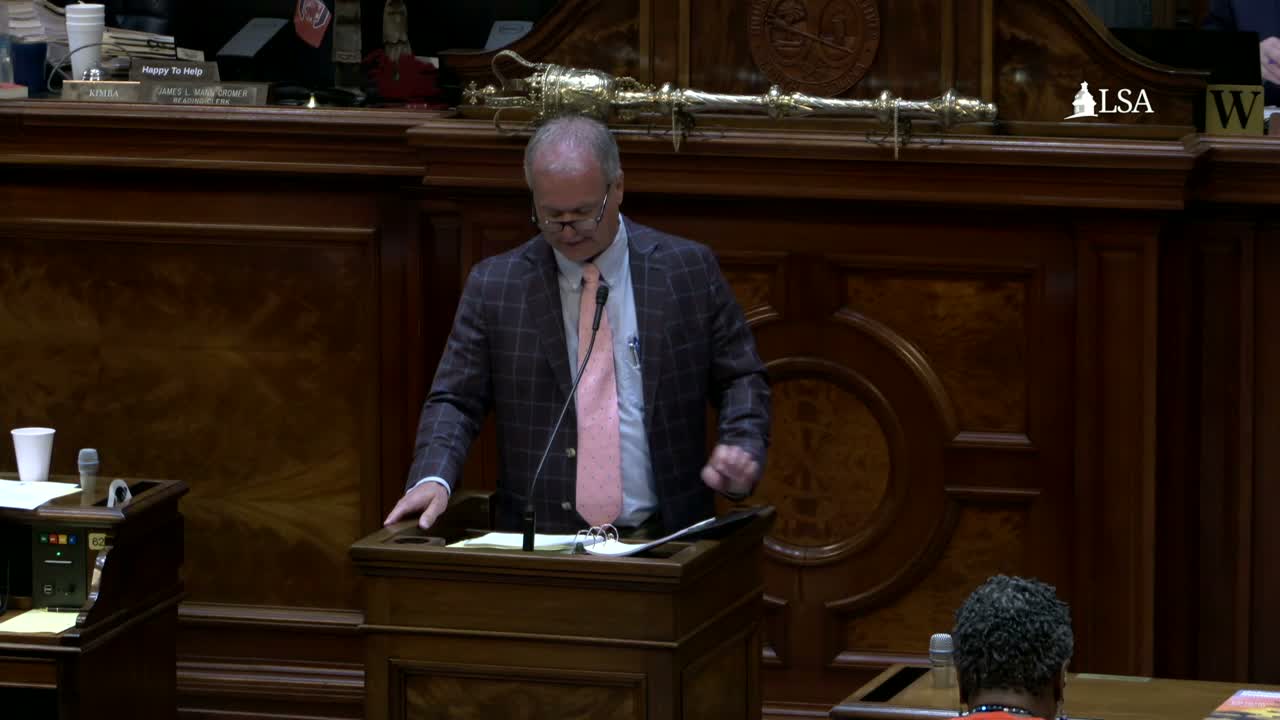
The bill’s sponsor, Representative David Martin, described the measure as a response to a growing problem in municipalities including Fort Mill and Charlotte, saying it fills a gap in state law by targeting the coordination and planning that enable mass road blockings and dangerous demonstrations. "This is one of the first bills I filed after speaking to law enforcement," Martin said, urging colleagues to support the committee-revised language.
Opponents and questioners pressed sponsors on the bill’s enforcement details. Representative Edgerton asked whether an uninvolved bystander could have a vehicle seized, calling civil-asset-forfeiture concerns to the floor. Sponsors moved quickly to remove the bill’s explicit reference to "spectator" from seizure provisions; the committee substitute deleted language authorizing pretrial holding and sale procedures for seized vehicles, and sponsors said forfeiture would require conviction.
Representative Rutherford, who questioned the need for the tougher sentences and asked officials for more data, repeatedly urged the House to pause and seek additional information before creating new penalties. "You all should demand more," Rutherford said, arguing members should understand when and how law enforcement deploys police dogs and other tactics before expanding criminal penalties.
Committee amendments narrowed some enforcement mechanics and clarified definitions to focus liability on three categories: the participant (the driver or active actor), organizers who plan or recruit, and aiders and abettors who facilitate takeovers. The bill creates tiered penalties for repeat offenders and includes misdemeanor and felony options where the takeover causes injury or death.
The bill’s passage moves it forward in the legislative calendar. Sponsors said the law is intended to give prosecutors tools to target organizers who use social media and other coordination to plan disruptive events; opponents warned to watch constitutional limits on seizure and due process when the bill’s mechanics are enforced.