
Senate committee debates data‑center siting amendments, weighing zoning, disclosure and utility contract rules
Get AI-powered insights, summaries, and transcripts
Sign Up Free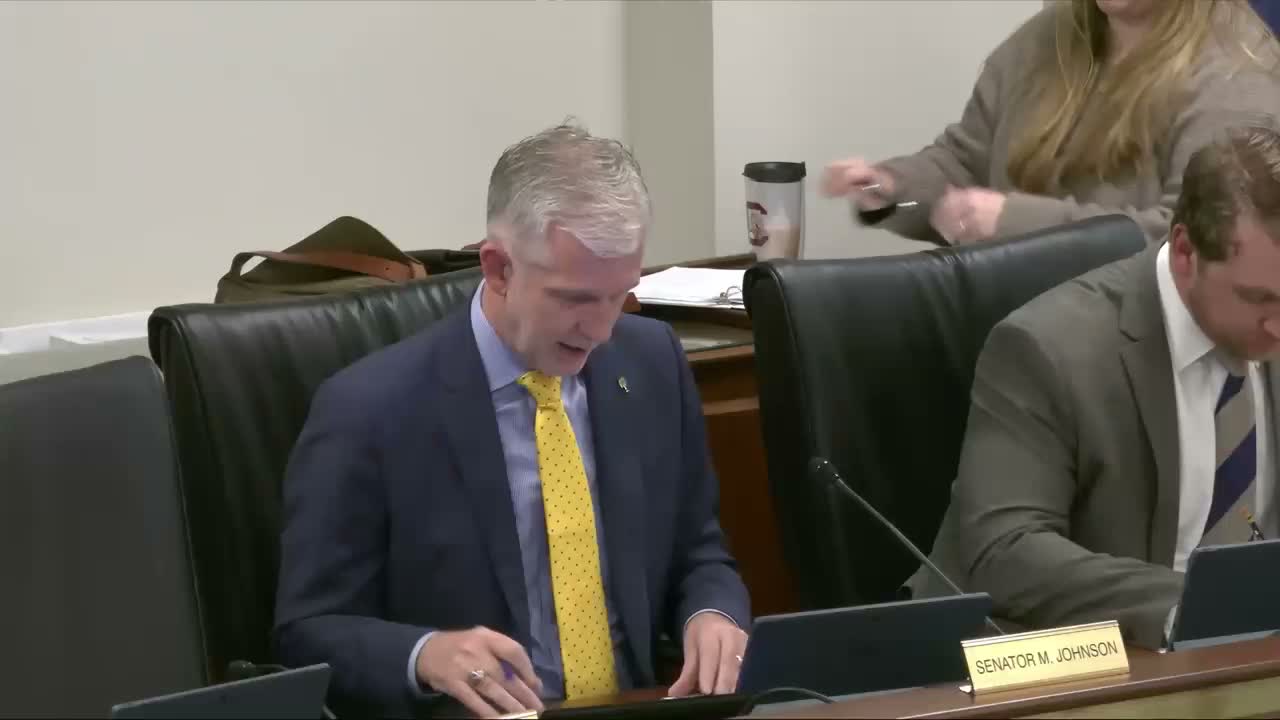
Summary
A Senate committee reviewed amendments to a proposed data‑center siting law that would require local permitting and public disclosure, set buffers and environmental limits, tighten reporting on water and noise, and require utility contracts be overseen by the Public Service Commission or cooperative boards; members asked for more county and stakeholder input.
The Senate committee met to work through amendments to a proposed data‑center siting bill, focusing on local permitting timelines, zoning versus nondisclosure rules, environmental buffers, and how utility contracts and rate impacts would be handled.
Chair opened the section‑by‑section discussion and said the goal is transparency: proposed language would bar a data center from starting construction until it had all applicable local approvals and would require notice to state agencies and local governments. ‘‘We don’t want you to break ground,’’ the Chair said, characterizing the change as meant to make the approval sequence clear to developers and regulators.
Why it matters: senators and county officials said the bill must balance protecting residents and local planning with not discouraging economic development. The committee discussed a tiered review framework and timelines intended to prevent projects from proceeding without preliminary checks, while members worried that automatic approvals or misaligned permit sequencing (local vs. DES and other state permits) could either stall projects or let them proceed prematurely.
Zoning and disclosure: A major point of contention was whether to require data‑center‑specific zoning or to rely on disclosure and prohibit nondisclosure agreements (NDAs). The Association of Counties representative told the committee that some counties (Chester, York) raised concerns about creating a separate data‑center zone and about counties’ technical capacity to assess electrical infrastructure needs. The Chair argued zoning or mandated disclosure was necessary so the public would know a data center was proposed before rezoning decisions advanced. One committee member warned against automatically labeling any brownfield as presumptively suitable just because a developer offers to clean it up; the panel agreed to leave brownfield incentives in for now but to consider narrowing presumptive suitability.
Environmental and community protections: The draft lists sites presumed not suitable (floodplains, wetlands, habitat areas, properties in conservation easements and land zoned residential within 500 feet). The bill would adopt dark‑sky requirements for lighting and set noise, vibration and light standards. Under newly added language, local governments could conduct noise testing at any time, require remediation if levels exceed limits and charge the data center for testing costs.
Water and technology: The committee agreed to permit advanced cooling approaches—closed‑loop, direct immersion, hybrid systems and other high‑efficiency reuse technologies—and to require annual reporting of total water consumption, total water withdrawn or purchased, and cooling system type. The Chair said DES would be asked to promulgate regulations and enforcement mechanisms (including fines) for late or missing reporting.
Utility contracts and rate protections: Section 3 would require contracts between investor‑owned utilities and data centers to be approved by the Public Service Commission; cooperatives and Santee Cooper would keep board approval authority but must comply with the statute. Committee members pressed whether contracts must guarantee that upfront costs for transmission or distribution upgrades be covered by the data center (through deposits or tight contractual terms) rather than shifted into rates paid by residential or other customers. A utility stakeholder told the panel that current proposals are ‘‘more along the lines of what we can live with’’ but flagged constitutional and federal constraints on rate recovery mechanisms; the stakeholder said large projects typically post deposits to cover upgrades while smaller projects currently do not.
Next steps: The committee paused debate to seek further input from county economic developers, zoning and planning directors, and utility stakeholders. The chair adjourned the meeting and said the panel will reconvene after the end of the legislative day to continue refinements.
Quote examples: Chair: ‘‘We don’t want you to break ground.’’ Senator from Greenville: ‘‘I just don’t know practically how it would work in the real world.’’ Stakeholder (utility representative): ‘‘These are the things we can live with’’ about recent energy language revisions.
The meeting did not record a formal vote; members asked staff to draft clarifying language on rezoning, NDAs, county disclosure timelines and cooperative‑board contract language for the next meeting.