
Subcommittee narrows bill to bar foreign‑adversary ownership of South Carolina farmland; reports favorably 5–0
Get AI-powered insights, summaries, and transcripts
Sign Up Free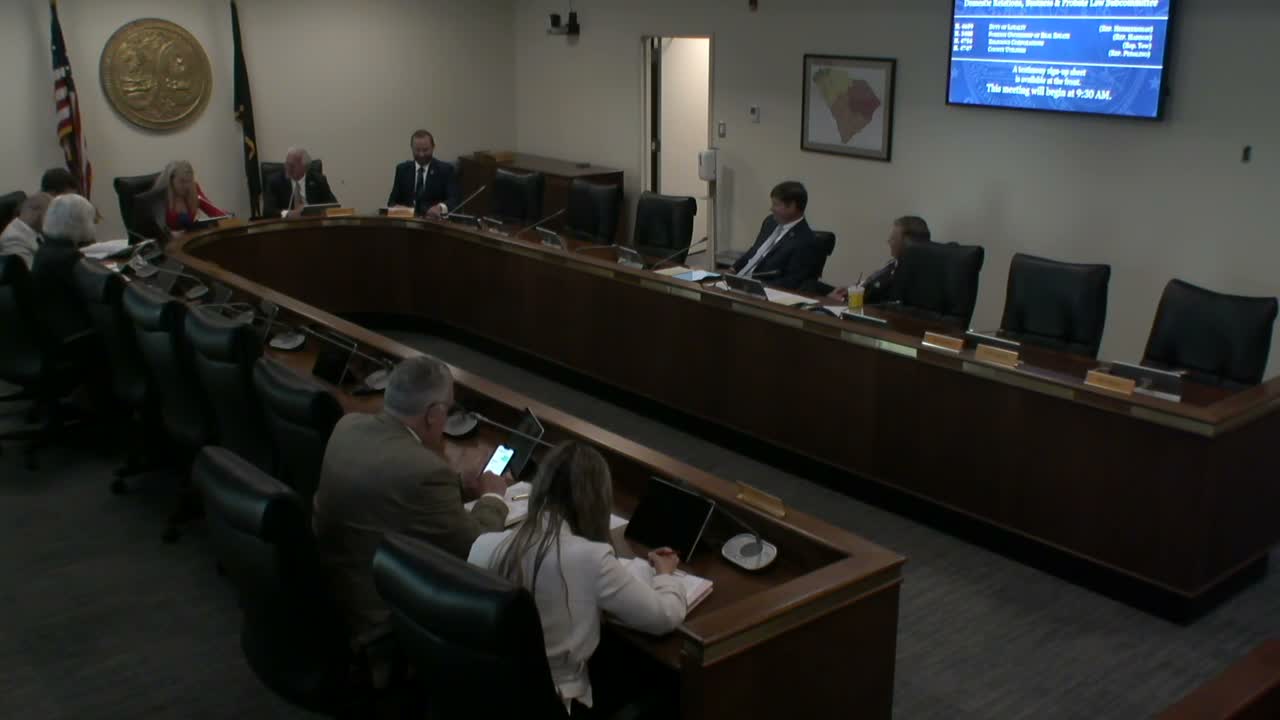
Summary
The Domestic Relations Business and Probate Law Subcommittee approved, 5–0, a narrowed version of a bill that would bar companies controlled by U.S.-declared foreign adversaries from acquiring agricultural land in South Carolina, with a July 1, 2026 prospective effective date and enforcement tied to federal determinations of foreign adversaries.
A House subcommittee on Wednesday voted unanimously to give a favorable report to a bill that would prevent companies tied to U.S.-designated foreign adversaries from acquiring agricultural land in South Carolina.
Representative Patrick Hadden, sponsor of the measure, told the Domestic Relations Business and Probate Law Subcommittee the proposal is a focused exercise of state police power to protect ‘‘farm security is national security, food security is national security.’’ Hadden said the bill targets entities controlled by countries on the federal foreign‑adversary list and is intended to protect farmland, military base perimeters and local agricultural economies.
Christopher Holton, a senior analyst at the Center for Security Policy, told the panel that states have adopted several models in recent years and pointed to examples where foreign‑linked purchases have raised national‑security concerns. ‘‘This is a pattern that has happened around the country,’’ Holton said, citing acquisitions near military installations in other states.
The subcommittee adopted a strike‑all amendment offered by Chair Rep. Beth Bernstein that narrows the original broad real‑estate restriction to agricultural land, ties the definition of ‘‘foreign adversary’’ to determinations made by the U.S. secretary of commerce under federal law, and makes the ban prospective — taking effect July 1, 2026 so existing holdings would not be divested automatically on that date. Bernstein described the change as aligning state enforcement with federal lists and focusing on farmland specifically.
Farmer Cody Simpson, testifying as a fifth‑generation producer, urged passage and said public records show significant acreage owned by Chinese interests in nearby states. ‘‘We have about 800 acres that are owned here in South Carolina by the communist party of China,’’ Simpson said. He recommended state monitoring in coordination with local Farm Service Agency offices.
Following discussion, the committee ordered a roll call. The clerk recorded five votes in favor, none opposed; the subcommittee gave House Bill 3,408 a favorable report to the full Judiciary Committee.
The bill, as amended, remains prospective in scope and provides civil remedies allowing state or local attorneys and non‑foreign‑adversary parties to seek court orders to clear title or remove a foreign adversary from property. The legislation also retains provisions that preserve valid liens attached during an acquisition but restricts foreclosure while the state holds title.