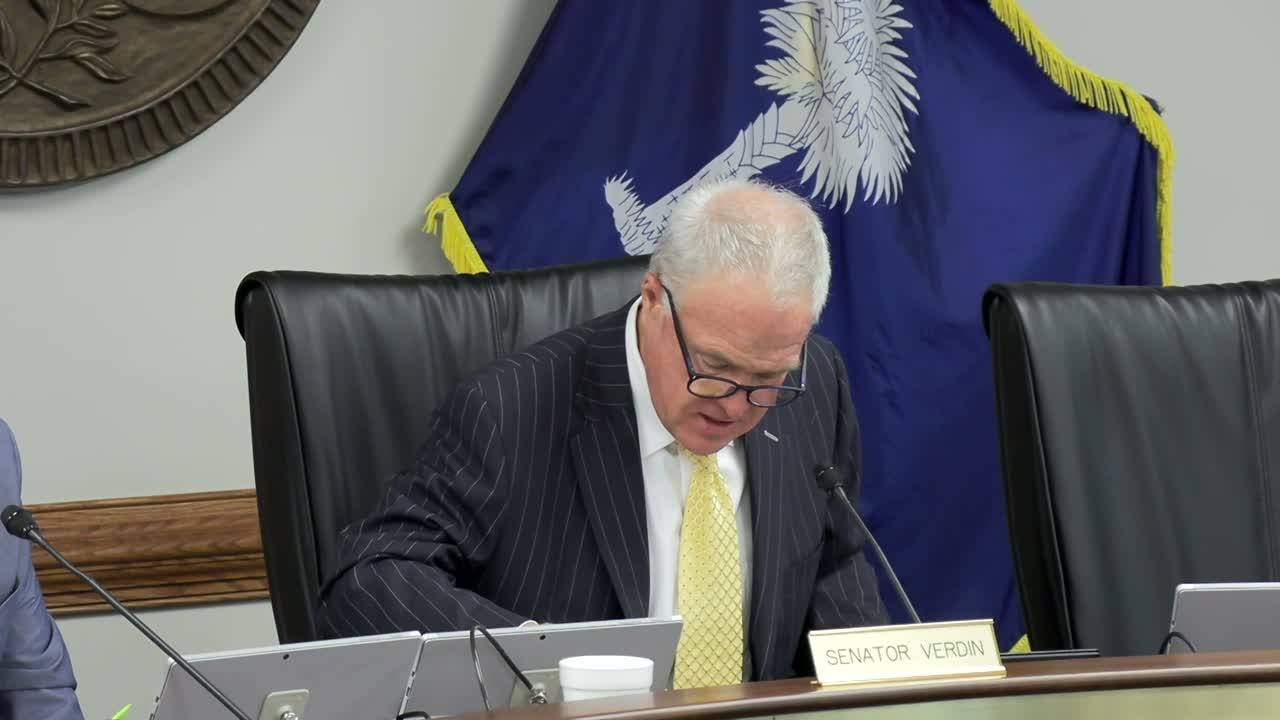
Panel advances renewable natural gas tax-credit bill with timeframe adjustments
Loading...
Summary
The subcommittee gave S.556 a favorable report after staff described a corporate tax credit to support equipment that produces renewable natural gas (biomethane) for commercial use; staff recommended tightening the bill’s sunset and carryforward dates to 2030.
The Senate subcommittee voted to forward S.556, a measure establishing tax credits to encourage commercial production of renewable natural gas, after staff summarized the bill and members discussed scope and timing.
Staff told the committee S.556 would provide a tax credit against corporate income tax and corporate license fees for the purchase and installation of equipment used to produce renewable natural gas from sources such as landfill gas. Staff described the credit as equal to 25% of qualifying equipment costs and said taxpayers could use up to a per-year limit (the draft ties annual use limits to either a percentage or a dollar cap). The draft made the credit nonrefundable but allowed certain credits to be carried forward under limited conditions.
Members asked whether the credit was limited to commercial entities (staff: yes) and whether landfill gas projects that collect and pipe methane for injection into transmission systems would qualify (staff: yes). Staff recommended shortening the bill’s sunset and related carryforward dates from 2032 to 2030 to align the program window with stakeholder intent; the committee adopted the staff timing adjustments without objection.
After discussion about cap options and program scope, the subcommittee moved and voted a favorable report to send S.556 to the full committee. The chair called for 'ayes' and reported, 'Ayes have it.'
The bill will advance to the full committee with staff-recommended timing changes; members asked staff to continue refining cap and carryforward language before final action.